
Beautiful Plants For Your Interior
Beautiful Plants For Your Interior
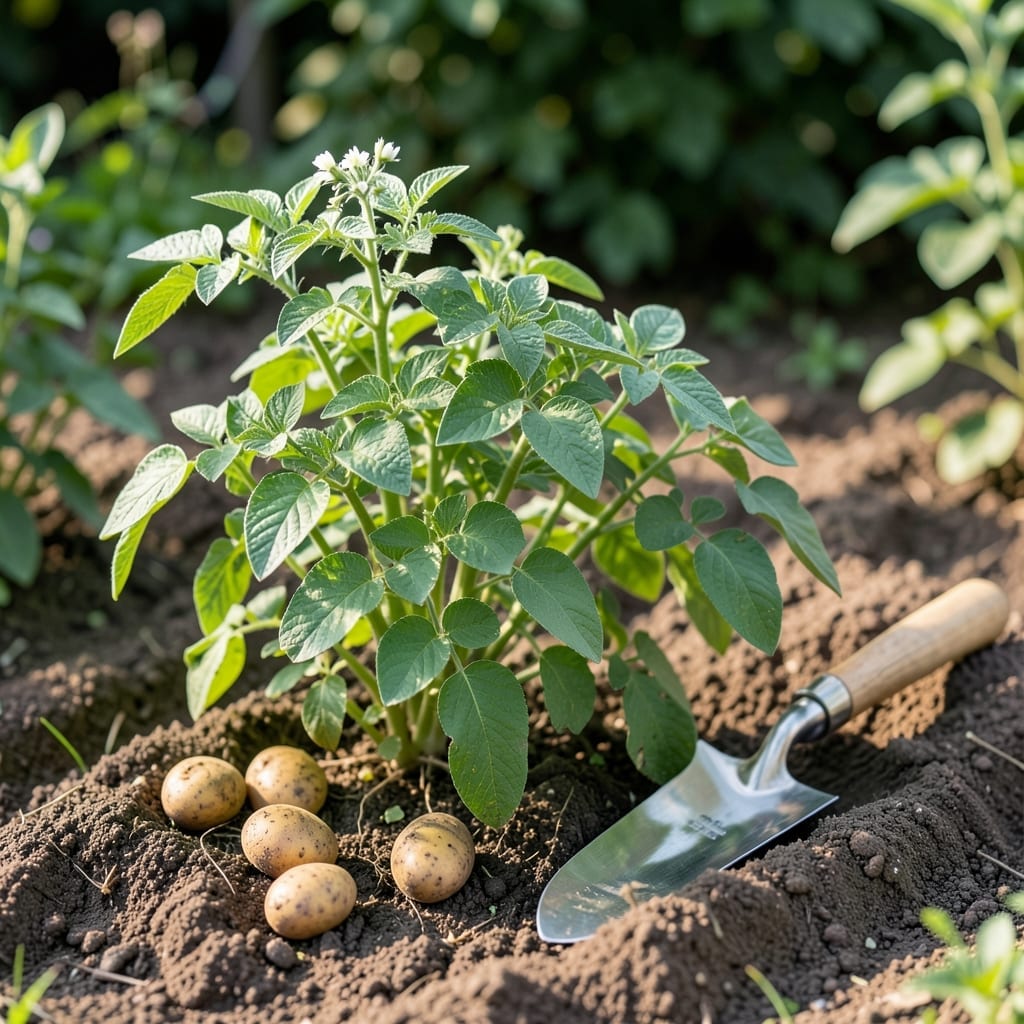
Planting potatoes at the right depth is the secret to a bountiful harvest, yet many gardeners unknowingly sabotage their crop by getting this step wrong.
The perfect depth ensures proper tuber formation, prevents disease, and maximizes yield for your 🥔 Potato plants.
Whether you’re a beginner or seasoned gardener, understanding this fundamental step can make or break your growing season.
Let me show you exactly how to get it right the first time and set your spring garden up for maximum success.

Getting the planting depth right is crucial for healthy potato development. I’ve found that most varieties thrive when planted 4-6 inches deep, but this can vary slightly depending on the type.
Early varieties, like Yukon Gold or Red Pontiac, do well at the shallower end of this range. Mid-season and late varieties, such as Russet or Kennebec, benefit from the deeper end for better tuber formation.
I always pre-cut my seed potatoes with at least 2-3 eyes per piece and let them heal for 24-48 hours before planting. This prevents rot and encourages strong sprouting from multiple points.
For sandy or loose soil, you can plant slightly deeper, as the soil drains well. In heavy clay, stick to 4 inches max to avoid waterlogging, which can cause the tubers to rot before they even form.
The initial planting depth sets the stage, but don’t forget about hilling. I start hilling when the plants reach 6 inches tall, adding soil around the stems to encourage more tuber growth along the buried stem.
Each time I hill, I add 3-4 inches of soil, repeating every 2-3 weeks until the plants begin to flower. This method not only increases yield but also prevents sun exposure, which can turn tubers green and toxic.
If you’re growing in containers or raised beds, aim for at least 12 inches of soil depth to accommodate the hilling process. Shallower containers will limit your yield, no matter how well you follow other steps.
I’ve noticed that consistent moisture is key after planting. Too little water can cause stunted tubers, while too much can lead to disease. A good rule is to keep the soil evenly moist but never soggy.
With the right depth, proper hilling, and good care, you’ll be rewarded with a hearty harvest of homegrown potatoes that taste far better than store-bought. 🌱
Many gardeners struggle with planting depth for potatoes, not realizing it directly impacts tuber development and disease resistance. Too shallow, and you risk green potatoes from sun exposure. Too deep, and sprouts may rot before emerging. 🌱
I’ve seen stunted growth when potatoes are buried over 8 inches deep, as the soil stays too cold and compacted. Meanwhile, surface-planted potatoes often produce small, sunburnt tubers that are inedible.
⚠️ Avoid These Depth Errors
Planting too shallow (2 inches or less) exposes tubers to sunlight, causing solanine buildup.
Planting too deep (10+ inches) delays sprouting and may suffocate stems.
Another common issue is inconsistent depth across the row. I recommend using a measuring stick or planting template to ensure uniformity. This simple step prevents uneven emergence and wasted seed potatoes. ☀️
If you notice yellowing leaves early on, it might signal poor drainage from excessive depth. Potatoes need loose, well-aerated soil to thrive, so 4-6 inches deep is the sweet spot for most varieties.
For sandy soils, you can plant slightly deeper—up to 7 inches—as drainage is better. But in clay-heavy soil, stick to 4 inches max to avoid compaction issues. Always test your soil before planting. 🌿
Finally, remember that hilling later in the season can compensate for minor depth mistakes. I’ll cover that process in detail next, but proper initial planting depth sets the foundation for a healthy, high-yield crop.