
Beautiful Plants For Your Interior
Beautiful Plants For Your Interior
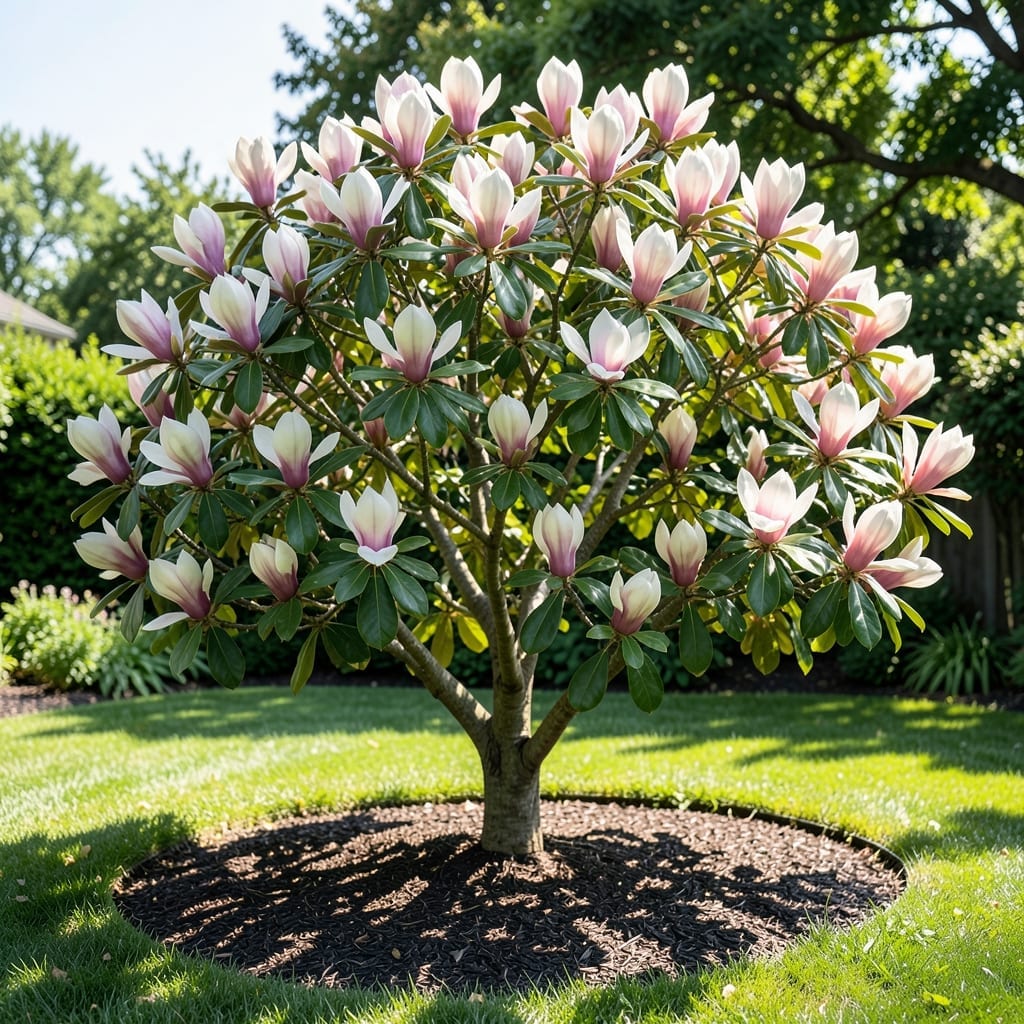
There’s something magical about watching a Magnolia Tree 🌳 transform your landscape with its grand presence. But before planting, it’s crucial to know just how large these beauties can become.
From compact dwarf varieties to towering giants, their mature size varies more than you might expect. This difference can make or break your garden’s layout.
Let me guide you through the typical dimensions and key factors that influence their growth, so you can plant with confidence.
If you’re planning to add a magnolia tree to your landscape, knowing its mature size is essential. Different varieties can range from compact shrubs to towering trees, each with unique space requirements.
Some magnolias stay small enough for containers, while others need ample room to spread their branches. Let me break down the most popular types and their typical dimensions.
| Variety | Mature Height | Mature Spread |
|---|---|---|
| Southern Magnolia | 60-80 ft | 30-50 ft |
| Saucer Magnolia | 20-25 ft | 20-25 ft |
| Star Magnolia | 15-20 ft | 10-15 ft |
| Little Gem | 12-20 ft | 8-12 ft |
| Jane Magnolia | 10-15 ft | 8-12 ft |
The Southern Magnolia is the giant of the group, often reaching 80 feet tall with a 50-foot spread. It’s perfect for large properties but overwhelming for small yards.
For smaller spaces, the Little Gem or Jane Magnolia are excellent choices. These dwarf varieties stay under 20 feet tall and work well in containers or tight gardens.
The Saucer Magnolia is a mid-sized option, typically growing 20-25 feet tall and wide. Its stunning spring blooms make it a favorite for many gardeners.
Meanwhile, the Star Magnolia offers a more upright growth habit, reaching 15-20 feet tall with a narrower 10-15 foot spread. This makes it ideal for vertical accents.
Remember that these are mature sizes, which can take 10-20 years to achieve. Most magnolias grow at a moderate rate, adding about 12-24 inches per year.
When planting, always consider the mature spread as well as height. A tree that grows 30 feet wide needs plenty of open space to thrive without crowding other plants.
I always recommend checking your local climate and soil conditions too, as these can influence final size. Some varieties may grow larger in ideal conditions.
While variety plays the biggest role in determining size, several environmental factors can significantly impact how large your magnolia tree ultimately grows. I’ve seen the same variety reach different sizes in different gardens.
From soil quality to sunlight exposure, these variables can either encourage vigorous growth or limit your tree’s potential. Understanding them helps you create ideal conditions for your magnolia.
In my experience, magnolias in poor soil often grow 30-40% smaller than their potential. Amending the soil with organic matter before planting gives your tree a strong start.
Sunlight exposure is another critical factor. Magnolias in full sun generally reach their maximum size, while those in partial shade may stay smaller but produce more flowers.
Watering practices during the first few years are crucial. I recommend deep watering once a week rather than frequent shallow watering to encourage deep root development.
Climate also plays a significant role. In warmer zones, magnolias often grow larger and faster. Conversely, in cooler climates, they may grow more slowly and stay smaller.
Remember that container-grown magnolias will naturally stay smaller than those planted in the ground, making them ideal for patios or small spaces.