
Beautiful Plants For Your Interior
Beautiful Plants For Your Interior
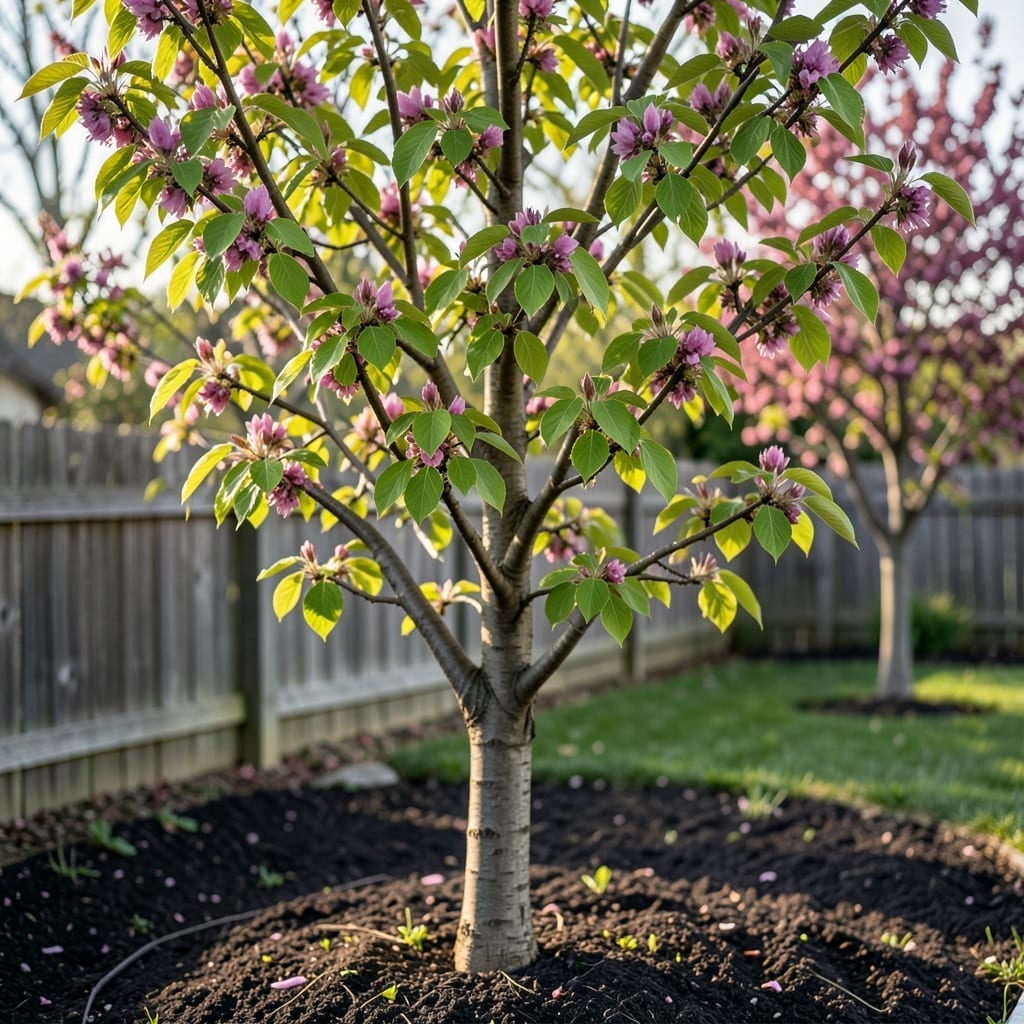
Nothing transforms a spring landscape quite like the 🌳 Redbud Tree with its bursts of pink and purple. But before you plant one, it’s essential to know how much space it will need as it grows.
These ornamental favorites can surprise you with their size, and proper planning ensures they thrive without overcrowding your garden. Understanding their mature dimensions helps you place them perfectly.
Discover the typical height and spread of Redbud Trees, along with the key factors that influence their growth. Let’s set you up for success.
When I first planted my Eastern Redbud, I was amazed by how quickly it grew. These trees typically reach a mature height of 20-30 feet with a spread of 15-25 feet, making them perfect for medium-sized landscapes.
But not all redbuds are the same. Western Redbuds tend to stay slightly smaller, while dwarf varieties like ‘Ace of Hearts’ max out at 10-12 feet. Their growth rate is moderate, adding about 12-18 inches per year under ideal conditions.
| Variety | Mature Height | Spread |
|---|---|---|
| Eastern Redbud | 20-30 ft | 15-25 ft |
| Western Redbud | 15-25 ft | 10-20 ft |
| Dwarf (Ace of Hearts) | 8-12 ft | 6-10 ft |
I’ve learned that soil quality plays a huge role in size. Well-draining soil with a pH of 6.0-7.5 gives redbuds the best start. They also thrive in USDA zones 4-9, where they get the right mix of sunlight and moderate moisture.
In my garden, I noticed that full sun locations produce the largest specimens, while those in partial shade grow more slowly but often have richer flower colors. It’s all about finding the right balance for your space.
Pruning can help control size, especially for dwarf varieties. I recommend annual pruning in late winter to shape the tree and remove any dead or crossing branches. This keeps them healthy and prevents overgrowth.
The canopy shape is another consideration. Most redbuds develop a rounded or vase-shaped form, with branches that spread gracefully. This makes them excellent as specimen trees or in group plantings for a natural look.
For those with limited space, I’d suggest the ‘Lavender Twist’ cultivar. Its weeping habit and compact size (10-15 feet tall) make it perfect for small gardens or even large containers.
Remember that watering deeply during the first year helps establish a strong root system, which directly impacts future growth. I water my redbuds weekly during dry spells, making sure the soil stays moist but not soggy.
Finally, I’ve found that mulching around the base with 2-3 inches of organic material helps retain moisture and regulates soil temperature, which can encourage steady growth throughout the season.
With proper care, your redbud will reach its full potential, rewarding you with stunning spring blooms and beautiful foliage for years to come 🌳
Managing the size of redbud trees starts with smart planting. I always recommend placing them at least 15-20 feet from structures to accommodate their mature spread and avoid future issues.
For smaller spaces, consider dwarf cultivars like ‘Ace of Hearts’ or ‘Lavender Twist’ which stay under 12 feet tall. These are perfect for urban gardens or container growing on patios.
I’ve found that proper pruning is key to maintaining desired size. Focus on removing dead wood and crossing branches first, then shape the canopy. This keeps the tree healthy while controlling its dimensions.
For container-grown redbuds, select a large pot (at least 20 gallons) with drainage holes. This restricts the root system, naturally limiting the tree’s overall size to about 60-70% of its potential.
In my experience, light conditions also affect size. Trees in full sun grow faster and larger, while those in partial shade stay more compact. Use this to your advantage when planning your landscape.
Remember that consistent care produces the best results. I make it a habit to check my redbuds monthly for new growth and adjust my pruning schedule accordingly. This proactive approach helps maintain the ideal size for my space 🌳