
Beautiful Plants For Your Interior
Beautiful Plants For Your Interior
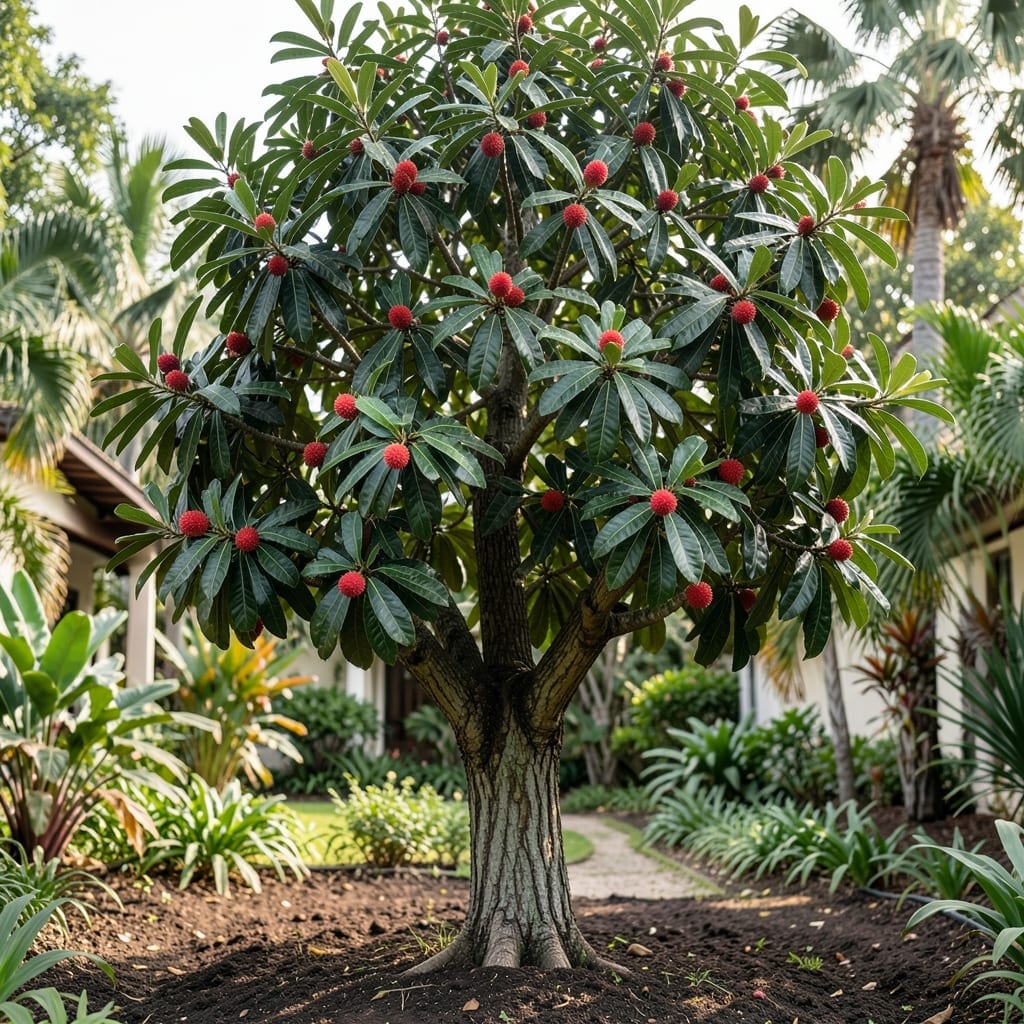
Picture this: a lush 🌳 Lychee Tree loaded with sweet, juicy fruit in your backyard. But before you plant one, there’s something you should know about their impressive size.
These tropical beauties can grow much larger than many gardeners expect. Understanding their mature dimensions helps you plan the perfect space and avoid future landscape headaches.
I’ll share the typical height and spread ranges you can anticipate, along with the key factors that influence their growth. This knowledge is the key to successful Lychee Tree cultivation.
Discover how to accommodate these magnificent trees in your garden while keeping them manageable. Let’s explore what it takes to grow them right.


When I first planted my lychee tree, I didn’t realize how massive it would become. These tropical beauties typically reach 20-40 feet tall at full maturity, with a spread of 15-30 feet. That’s taller than a two-story house!
the exact size depends on the lychee variety and growing conditions. Standard trees like Brewster or Mauritius hit the upper range, while dwarf varieties stay more compact at 8-12 feet. Climate and soil play big roles too. 🌳
| Type | Height | Spread |
|---|---|---|
| Standard Lychee | 20-40 ft | 15-30 ft |
| Semi-Dwarf | 12-20 ft | 10-15 ft |
| Dwarf | 8-12 ft | 6-10 ft |
In my experience, lychee trees grow fastest in USDA zones 10-11, where they get year-round warmth. In cooler areas, expect slower growth and smaller dimensions. Even in ideal conditions, they take 5-10 years to reach full height.
I’ve noticed that well-draining soil and full sun exposure encourage the most vigorous growth. Without these, a lychee may stay stunted or grow unevenly. Proper spacing from the start prevents future headaches.
The canopy spread often matches the height, creating a broad, rounded shape. This makes them excellent for shade gardens but challenging for small yards. I always recommend planting them at least 20 feet from structures.
For those with limited space, container-growing is an option, though it restricts size. Dwarf varieties like Sweet Cliff or Bosworth-3 are perfect for patios or small gardens. They still produce fruit but stay manageable.
Remember that pruning can help control size, but it won’t drastically reduce a mature tree’s dimensions. Regular thinning cuts improve air circulation and keep the tree at a more workable height for harvesting.
In the first few years, my lychee grew 2-3 feet annually under ideal conditions. After year 5, the growth rate slows as the tree focuses on fruit production. This is normal and nothing to worry about.
If you’re planting multiple lychees, space them 25-30 feet apart to accommodate their mature size. This prevents competition for sunlight and nutrients while allowing for proper air flow.
With their lush foliage and delicious fruit, lychees are worth the space they require. Just plan ahead for their impressive dimensions! 🌿
Many gardeners love lychee trees but worry about their large mature size. I’ve found that with proper techniques, you can keep them manageable even in smaller landscapes. Pruning is your first line of defense for controlling height and spread.
For those with limited space, consider dwarf varieties that stay under 12 feet tall. These compact trees still produce delicious fruit without overwhelming your garden.
I recommend container growing for patio gardeners. A large pot (at least 20 gallons) with good drainage can restrict root growth and keep the tree smaller. Just remember that potted trees need more frequent watering and feeding.
For in-ground trees, root pruning every 2-3 years can help control size. This involves carefully cutting the outer roots to limit spread. It’s a more advanced technique but very effective for mature trees.
Another approach is espalier training, where you train the tree to grow flat against a wall or trellis. This method works well for small gardens and allows for easier harvesting. I’ve seen beautiful espaliered lychee trees producing abundant fruit in tight spaces.
Remember that size control starts with variety selection. Always research the mature size of your chosen lychee cultivar before planting. Some varieties naturally stay smaller than others, making your job much easier 🌳