
Beautiful Plants For Your Interior
Beautiful Plants For Your Interior
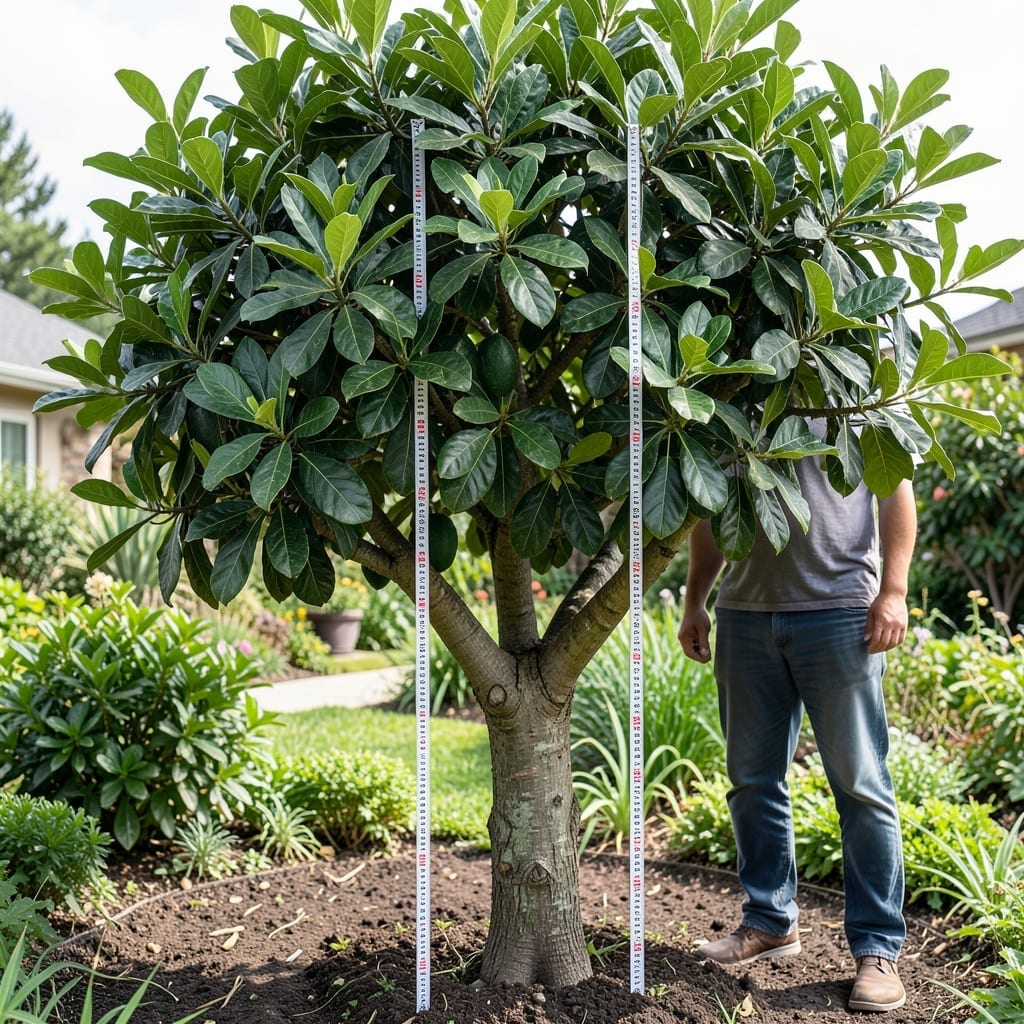
Thinking about adding an 🥑 Avocado Tree to your garden but worried about space? These trees can surprise you with their size, growing far taller than many expect.
From compact dwarf varieties to towering standards, their mature height varies dramatically. Your growing conditions and care choices play a huge role in how big they get.
Let me walk you through what to expect and how to manage their growth for your space. The right knowledge makes all the difference.
If you’re planting an avocado tree, the first thing to understand is that size varies wildly by variety. Standard types can soar to 80 feet tall, while dwarf varieties stay under 12 feet with proper care.
This difference comes down to genetics. Some cultivars like Hass or Fuerte are naturally larger, while Wurtz or Gwen are bred to stay compact. Your choice here determines your long-term space needs.
| Variety Type | Height Range | Spread Range |
|---|---|---|
| Standard | 30-80 ft | 20-40 ft |
| Semi-Dwarf | 12-20 ft | 8-15 ft |
| Dwarf | 8-12 ft | 5-10 ft |
| Container | 6-10 ft | 4-8 ft |
I’ve seen standard avocado trees in ideal conditions reach 60-80 feet, which is taller than a 5-story building. These giants need plenty of space and aren’t suitable for small yards.
Semi-dwarf varieties like Lamb Hass typically max out at 15-20 feet. They’re a great middle-ground for gardeners with moderate space who still want substantial fruit production.
For small gardens or container growing, dwarf varieties are your best bet. These stay between 8-12 feet tall and can even thrive in large pots on a patio.
Remember that spread matters too. A tree’s width often matches 50-70% of its height. So that 30-foot tree might stretch 15-20 feet wide, requiring careful placement.
I always recommend checking the specific cultivar you’re planting. Some Hass trees might stay at 20 feet if pruned regularly, while others can grow much larger if left unchecked.
In my experience, container-grown trees stay smallest, often under 10 feet. This is because root restriction naturally limits growth, making them perfect for balcony gardens or small spaces.
Choose your variety wisely based on your available space and long-term goals. A little research now can save you from major landscaping headaches later as your tree matures. 🌳
While genetics set the baseline for your avocado tree’s size, several environmental factors can significantly impact its growth. I’ve seen trees in optimal conditions grow much larger than expected.
Climate plays a huge role. Avocados thrive in USDA zones 9-11, where warm temperatures and frost-free winters allow for maximum growth potential. Cooler climates may result in stunted growth or even tree death.
Soil quality is often overlooked. Avocados need well-draining soil with a pH of 6-7. Poor drainage leads to root rot, which can severely limit growth or kill the tree entirely.
Your watering approach matters too. I recommend deep watering every 7-10 days for in-ground trees, allowing the soil to dry slightly between waterings. This encourages deep root growth, which supports a larger, more stable tree.
Pruning is your secret weapon for size control. Regular pruning not only keeps your tree at a manageable height but also improves air circulation and fruit production. I’ve maintained Hass avocados at 15 feet through annual pruning.
Don’t underestimate the planting method. Trees planted in large containers will naturally stay smaller due to root restriction. This is perfect for patios but requires more frequent watering and feeding to maintain health.
Finally, sunlight exposure directly affects growth rate. Trees in full sun can grow up to 30% faster than those in partial shade, reaching their maximum potential size more quickly. ☀️