
Beautiful Plants For Your Interior
Beautiful Plants For Your Interior
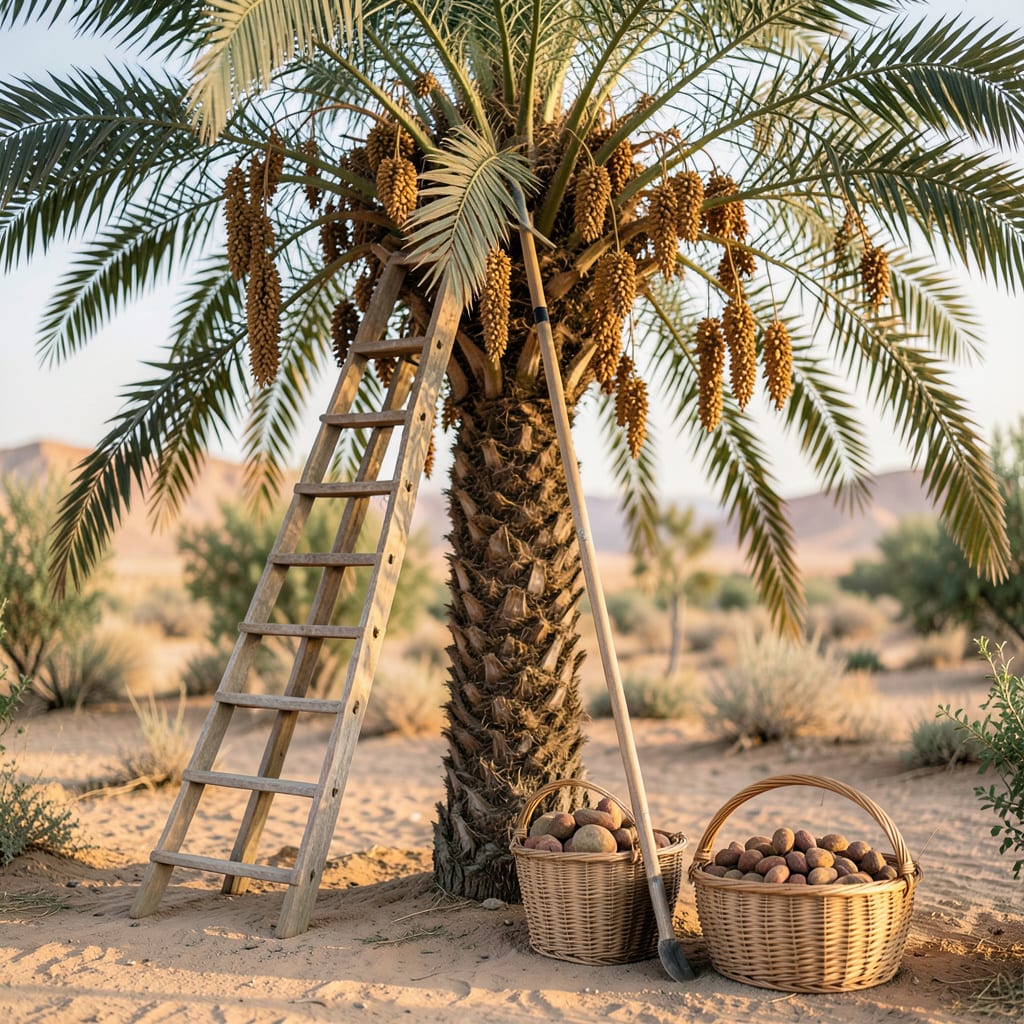
I’ve always been amazed by how the 🌴 Date Palm transforms from towering trees to the sweet fruit we love. The harvest process is where the magic happens, blending age-old traditions with modern efficiency.
If you’ve ever wondered how those perfect dates make it from branch to basket, I’ll walk you through the most important steps that ensure the best quality and flavor. Let’s discover the secrets behind this timeless practice.
I’ve always marveled at how date palms have been harvested for thousands of years using simple yet effective traditional methods. The process begins with understanding the three ripening stages: kimri, rutab, and tamar, each determining the fruit’s sweetness and texture.
In many regions, hand-picking remains the gold standard, especially for high-quality dates. Workers use climbing tools or ladders to reach the towering bunches, carefully selecting only the ripest fruit to ensure the best flavor.
| Stage | Description | Harvest Time |
|---|---|---|
| Kimri | Green and hard | Not ready |
| Rutab | Yellow to brown, soft | Partial harvest |
| Tamar | Fully ripe, wrinkled | Full harvest |
The best time to harvest dates is during the tamar stage, when they’re fully ripe and naturally sweet. In hot climates like the Middle East, this typically occurs in late summer or early fall, though timing can vary by region.
I recommend using sharp pruning shears or a curved harvesting knife to cut the bunches cleanly from the tree. This prevents damage to the date palm and ensures a smoother process for the next harvest cycle.
Traditional methods often involve family or community efforts, where multiple people work together to climb, pick, and collect the fruit. This not only makes the task easier but also preserves cultural practices passed down through generations.
For those growing date palms at home, timing is everything. Watch for the color change from green to brown and the fruit’s easy separation from the bunch—these are clear signs it’s ready to pick.
In desert regions, early morning harvests are ideal to avoid the intense midday heat. The cooler temperatures help maintain the fruit’s freshness and make the work more comfortable for harvesters.
One of the most fascinating aspects of traditional harvesting is the skill required to climb the tall palms. Workers often use ropes and harnesses for safety, demonstrating both agility and respect for the tree’s height and the fruit’s value.
By following these time-tested techniques, you can ensure a bountiful harvest of high-quality dates that honor the rich history of this incredible plant. ✂️
As date palms grow taller, reaching 50-75 feet, mechanical harvesting becomes an attractive option for commercial growers. I’ve seen how vibrating shakers and collection platforms can significantly speed up the process compared to traditional methods.
However, hand-picking still holds advantages, especially for high-value date varieties. The gentle touch of human hands ensures the fruit remains undamaged, preserving its premium quality and appearance.
| Method | Efficiency | Fruit Quality | Tree Health |
|---|---|---|---|
| Mechanical | Very high | Moderate | Lower impact |
| Hand-Picking | Low | Excellent | Higher impact |
In my experience, mechanical shakers work best for large-scale plantations where speed is crucial. They can harvest thousands of pounds in hours, but may cause some fruit bruising or premature dropping of unripe dates.
For home gardeners or small farms, I always recommend hand-harvesting. It allows for selective picking of only the ripest dates, which is especially important for varieties like Medjool or Deglet Noor that command premium prices.
The tree health aspect is another consideration. While mechanical methods reduce labor costs, the vibrations can stress the palm over time. Hand-picking, though labor-intensive, is gentler on the tree’s structure.
Ultimately, the choice depends on your scale and goals. For maximum quality and care, nothing beats the human touch. For efficiency and volume, mechanical methods have their place in modern date farming. ✂️
Once the dates are harvested, the real work begins to ensure they stay fresh and delicious. I’ve learned that proper post-harvest care is just as important as the picking process itself.
First, the dates need thorough cleaning to remove dust, debris, and any remaining fruit stems. This step prepares them for sorting and grading based on size, color, and quality.
After cleaning, I recommend air-drying the dates in a well-ventilated area or using a food dehydrator at a low temperature. This removes excess moisture while preserving their natural sweetness and texture.
For storage, airtight containers are essential to prevent spoilage. Dates can be kept at room temperature for short-term use or refrigerated for longer freshness. In commercial settings, controlled cold storage extends shelf life significantly.
Remember, the quality of your harvest depends on these post-processing steps. With proper care, your dates will maintain their rich flavor and chewy texture for months. ✂️
The best time is during the tamar stage in late summer or early fall. Look for deep brown color and easy separation from the bunch.
Use sharp pruning shears or a curved harvesting knife for clean cuts. For tall palms, you’ll need climbing gear like ropes and harnesses.
Mechanical methods are faster but may bruise fruit. Hand-picking preserves quality and is gentler on trees, making it ideal for premium varieties.
Never harvest when dates are still green or hard. Picking too early results in poor flavor and texture. Always wait for full ripeness.
