
Beautiful Plants For Your Interior
Beautiful Plants For Your Interior
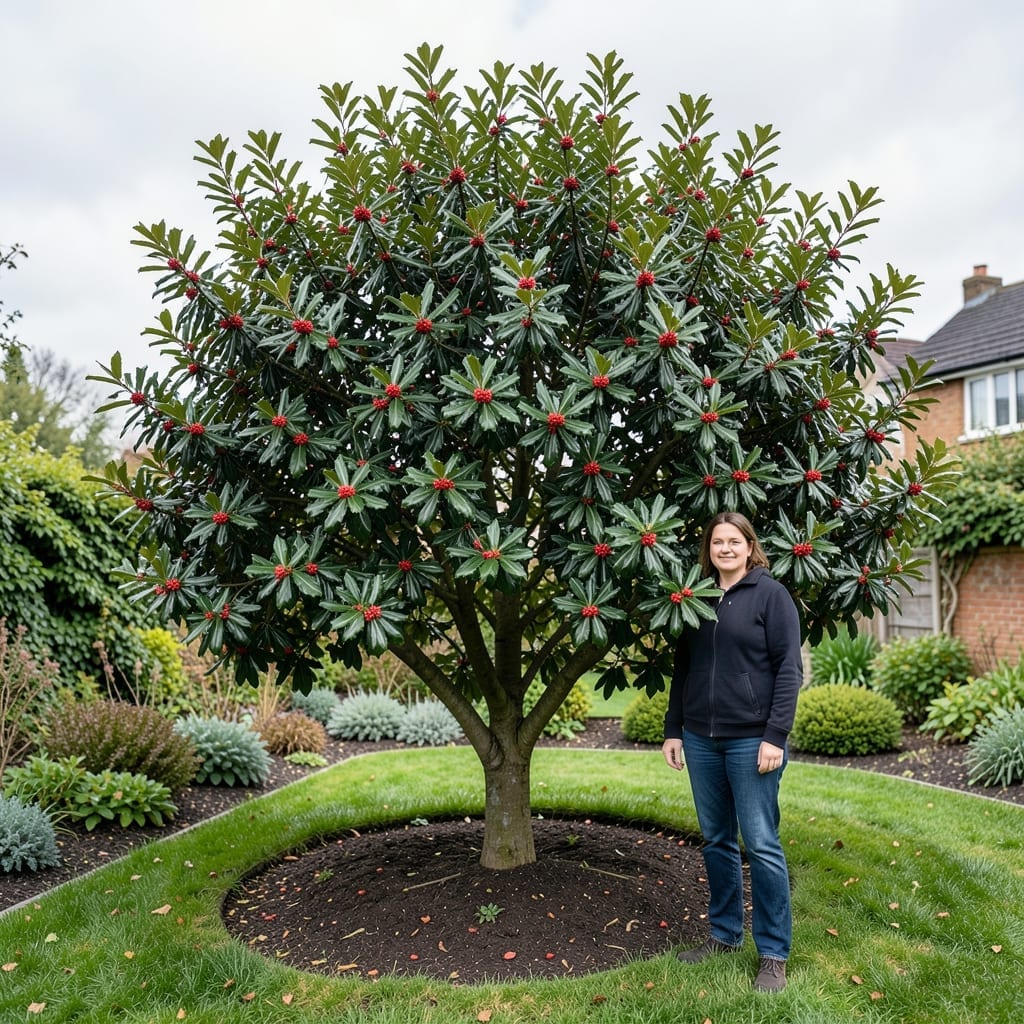
Holly trees are a stunning addition to any landscape, but their mature height can vary dramatically by species—from compact shrubs to towering giants.
Knowing the expected growth range helps you choose the perfect 🌳 Holly Tree variety for your garden. Some stay under 10 feet, while others can reach 50 feet or more.
Whether you’re planning a privacy screen or a small ornamental feature, understanding these differences is the key to success.
Let me walk you through the typical height ranges and how to maintain the ideal size for your space.

When I plan a landscape, understanding holly tree height is crucial for placement. These evergreens range from dwarf shrubs to 50-foot giants, depending on the variety and growing conditions.
For example, American holly typically reaches 15-30 feet, while English holly can soar to 30-50 feet in ideal climates. Dwarf varieties like Sky Pencil stay compact at 6-10 feet.
Soil quality and sunlight exposure significantly impact holly tree height. Rich, well-draining soil promotes healthier growth, while full sun encourages maximum height potential.
In my experience, climate zone plays a major role. Hollies in warmer zones (7-9) often grow taller than those in cooler regions (5-6). Always check your USDA zone before planting.
Water availability affects growth rate. Young hollies need consistent moisture to establish roots, while mature trees tolerate short droughts. I recommend deep watering weekly for the first year.
For container-grown hollies, height is naturally limited. Dwarf varieties thrive in large pots with good drainage. I’ve seen Sky Pencil holly stay under 8 feet in containers for years.
Pruning practices can control height. Regular top trimming keeps hollies at your desired size. I always prune in early spring before new growth starts for best results.
Remember that genetics set the ultimate height range, but environmental factors determine where your tree falls within that range. A Nellie R. Stevens in poor soil might only reach 15 feet, while one in ideal conditions can hit 25 feet. 🌳
If you’re planting near structures, consider root spread too. Holly roots typically extend 1.5x the tree’s height. For a 30-foot tree, that’s a 45-foot root zone to plan around.
Keeping your holly tree at the ideal height ensures it fits perfectly in your garden. I’ve found that regular pruning is key, but timing and technique matter just as much as consistency.
For most varieties, late winter or early spring is the best time to prune. This allows new growth to flourish while keeping the plant healthy and manageable.
When shaping your holly tree, always use clean, sharp tools to prevent damage. I recommend bypass pruners for smaller branches and a pruning saw for thicker ones.
If you’re aiming for a dwarf holly, select a naturally compact variety like ‘Sky Pencil’ or ‘Soft Touch’. These stay under 10 feet tall with minimal pruning.
For taller species like American Holly, annual maintenance helps control height without sacrificing its natural beauty. Remove no more than 25% of the foliage at a time.
Remember, over-pruning can stress the tree, so always follow up with proper watering and mulching to support recovery. A healthy holly rewards you with vibrant foliage and year-round interest 🌳