
Beautiful Plants For Your Interior
Beautiful Plants For Your Interior
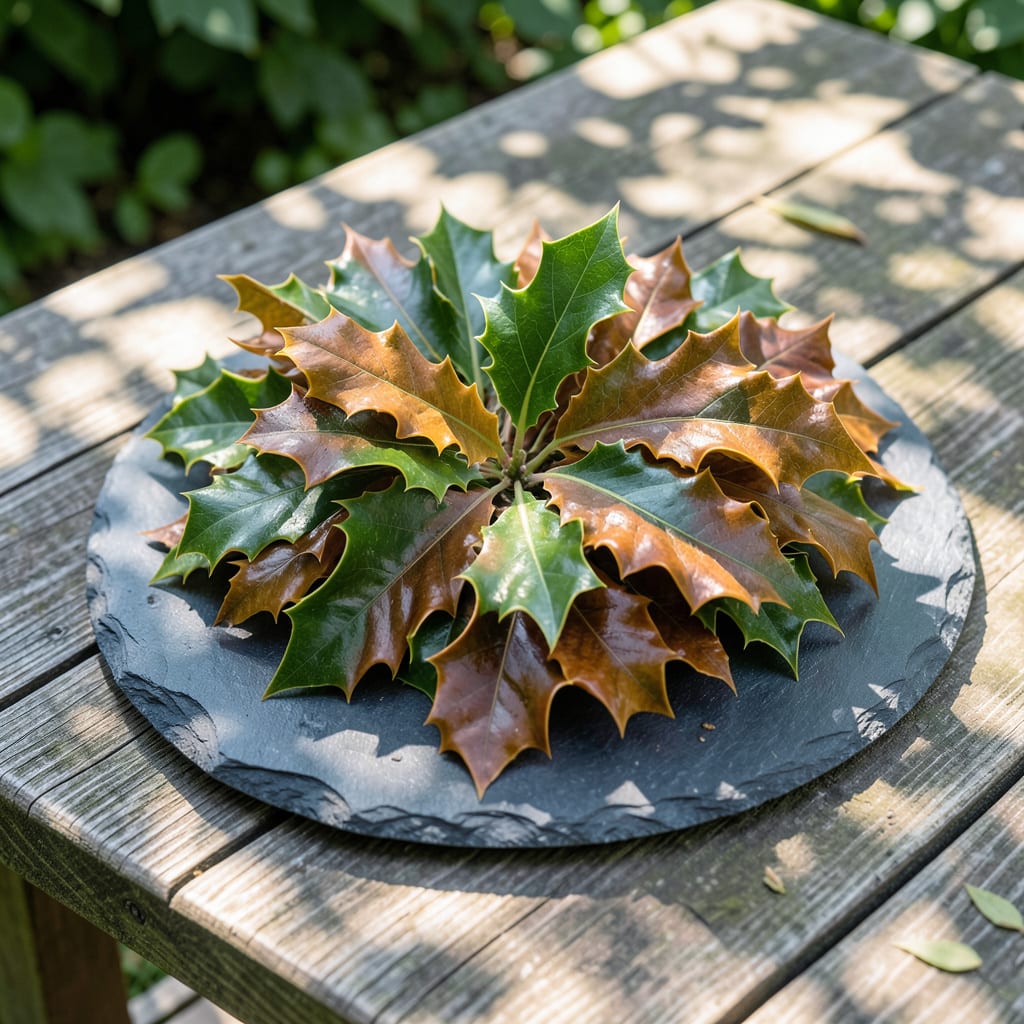
Brown holly leaves in summer always signal distress. I’ve seen this happen when heat stress hits hard, usually after a stretch of 90°F+ days without enough water or shade.
The leaves start crisping at the edges before turning completely brown. Often, it’s not just the heat—dry soil, poor drainage, or even sunscald on exposed foliage can push them over the edge.
Thankfully, the fix is straightforward once you spot the pattern. Deep watering, afternoon shade, and a layer of mulch usually bring them back within 2-3 weeks.
Catch it early, and your holly will bounce back stronger. Ignore it, and you risk long-term damage to the plant’s health and appearance.
Holly leaves turning brown in the heat of summer is usually a sign of environmental stress. Below are the most common causes, explained in clear terms so you can diagnose and fix the issue quickly.
Hollies are tough, but prolonged heat above 90°F (32°C) with low humidity can overwhelm their water supply. The plant’s roots struggle to absorb moisture fast enough, leading to scorched edges and crispy brown patches—especially on leaves exposed to direct afternoon sun. Drought compounds this by drying out the soil, cutting off the plant’s water source entirely.
Overwatering or underwatering both trigger browning. Soggy soil suffocates roots, while bone-dry soil forces the plant to ration water, sacrificing older leaves first. Hollies prefer consistently moist (not soggy) soil—aim for 1–1.5 inches of water per week, including rainfall, and water deeply at the base to encourage strong root growth.
Poor drainage or compacted, clay-heavy soil can smother roots, while nutrient deficiencies (like magnesium or iron) may cause yellowing that progresses to brown. A soil test can reveal imbalances—amend with organic matter (compost, peat moss) to improve structure and fertility.
Excess fertilizer salts or de-icing residues (from nearby walkways) can accumulate in the soil, burning root tips and disrupting water uptake. Flush the soil with water to leach out salts, and avoid high-nitrogen fertilizers in summer heat.
When your holly’s leaves start crisping up in the summer heat, quick action can save the plant. Below are targeted fixes for the most common causes, plus tips to keep it from happening again.
If the browning is from scorching sun, provide temporary shade with a light fabric or move potted hollies to a cooler spot. Water deeply at dawn or dusk—aim for 1–2 inches per week, including rainfall. Prevention tip: 💡 Apply a 2–3 inch layer of mulch to retain moisture and keep roots cool.
Check soil moisture 2 inches down. If bone-dry, water slowly and deeply to encourage deep roots. If soggy, improve drainage by amending soil with compost or sand. Prevention tip: ✨ Use drip irrigation to deliver water consistently at the root zone.
Inspect leaves for spider mites, scale, or fungal spots. Spray with neem oil or insecticidal soap for pests. For fungal issues, remove affected leaves and apply a fungicide. Prevention tip: 🎯 Space plants for airflow and avoid overhead watering to reduce humidity.
Yellowing with brown edges may signal a lack of magnesium or iron. Apply a balanced, slow-release fertilizer (10-10-10) in early summer. For iron deficiency, use chelated iron. Prevention tip: 🌡️ Test soil every 2–3 years to monitor nutrient levels.
No, browning isn’t normal. Hollies thrive in heat but need consistent moisture. 90°F+ days without water or shade stress the plant, causing crispy edges.
Water deeply 2-3 times per week during dry spells, providing 1-1.5 inches total. Check soil 2 inches down—if dry, it’s time to water.
Unfortunately, no. Once leaves brown, they’re damaged. Focus on improving care so new growth stays healthy. Remove brown leaves to help the plant recover.
Provide afternoon shade and water deeply at dawn. Add 2-3 inches of mulch to retain moisture. Results appear in 2-3 weeks.
