
Beautiful Plants For Your Interior
Beautiful Plants For Your Interior
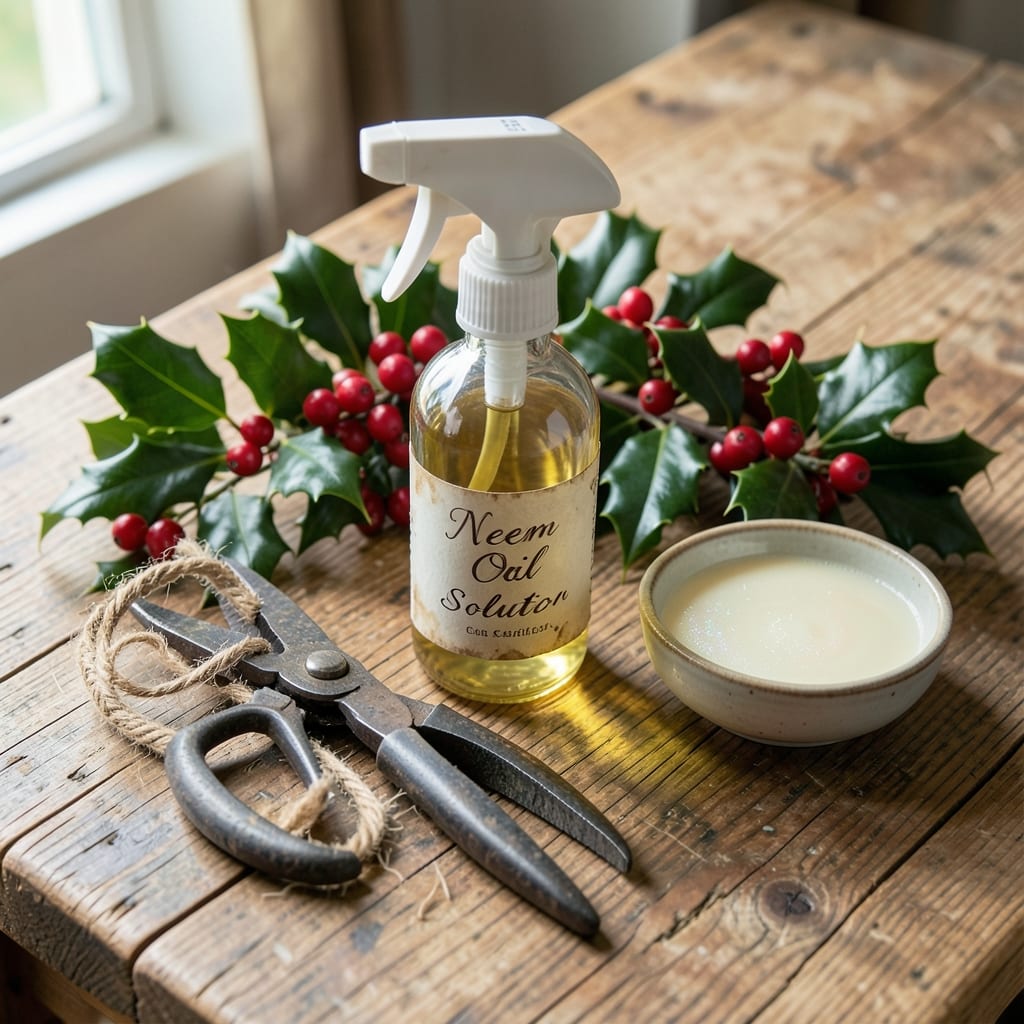
Black spots on holly leaves ruined my curb appeal last spring. Here’s the thing—this isn’t just ugly, it’s a sign your plants are struggling with a common fungal issue that spreads fast.
I fixed mine with a simple organic spray and better air circulation. Within 2 weeks, new growth came in clean and the existing spots stopped spreading. Your holly can bounce back too.
Short list of basics to clear up those black spots for good.
| Ingredient | Amount | Notes |
|---|---|---|
| Neem Oil 🌿 | 1 quart | Cold-pressed organic |
| Water 💧 | 1 gallon | Room temperature |
| Liquid Castile Soap 🧼 | 1 oz | Mild unscented |
| Spray Bottle 💦 | 1 piece | 1-gallon capacity |
| Pruning Shears ✂️ | 1 piece | Sterilized blades |
| Gardening Gloves 🧤 | 1 piece | Waterproof recommended |
| Baking Soda 🪴 | 2 tbsp | Food-grade optional boost |
| Horticultural Oil 🌾 | 1 quart | Dormant season alternative |
| Compost 🌱 | 2 gallons | For soil amendment |
[recipe_ingredient_scaler]
Neem oil is your best friend here—cold-pressed organic is most effective. Grab it from garden centers or online (I use Bonide brand). The spray bottle needs to handle at least a gallon; the cheap dollar-store ones leak under pressure.
No neem oil? Horticultural oil works in cooler months (trust me on this). Castile soap can be swapped for mild dish soap in a pinch. Baking soda gives the spray extra punch but isn’t mandatory for basic treatment.
Store leftover neem oil in a cool, dark place—it lasts 1-2 years. Pruning shears stay sharp longer if wiped clean after use. I keep a dedicated spray bottle for fungal treatments to avoid cross-contamination.
Here’s my go-to organic method for restoring your holly bush to vibrant, fungus-free health.
Put on the gardening gloves and use the pruning shears to cut away any blackened, spotted, or distorted leaves and stems. I always sterilize the shears between cuts with a quick wipe of rubbing alcohol to prevent spreading the fungus to healthy parts of the plant.
Collect all infected material in a sealed bag and dispose of it—never compost it, as the fungus can survive and reinfect. You’ll know you’ve caught it in time when the remaining foliage looks clean and green without dark splotches.
In the 1-gallon spray bottle, combine the 1 quart Neem Oil with the 1 gallon Water and add the 1 oz Liquid Castile Soap as an emulsifier. Shake vigorously until the mixture looks uniformly milky—this ensures the oil disperses properly and coats the leaves evenly.
Spray the solution thoroughly on all surfaces of the holly bush, especially the undersides of leaves where fungal spores often hide. Apply in the early morning or late evening to avoid leaf burn from the sun. Reapply every 7-10 days or after rain until the fungus is gone.
Spread the 2 gallons Compost in a 2-inch layer around the base of the holly bush, keeping it a few inches away from the trunk to prevent rot. I like to work it gently into the top 1-2 inches of soil to improve drainage and introduce beneficial microbes that help suppress fungal growth.
Water the area deeply after applying to help the compost settle and start breaking down. You’ll see renewed vigor in the plant within 2-3 weeks as the soil structure improves and the holly begins to recover.
If the infection persists or recurs, use the 1 quart Horticultural Oil during the dormant season (late winter) as a preventive measure. Mix it with water according to the label instructions and apply it to the holly bush when temperatures are above 40°F but below 70°F.
This oil smothers overwintering fungal spores before they can take hold in the spring. I apply it on a calm day to ensure even coverage and minimal drift. One treatment is usually enough to break the cycle.
For a bold twist on holly bush black fungus treatment, try a spicy Texas-style spray. Mix 1 gallon of water with 2 tablespoons of cayenne pepper powder, 1 tablespoon of dish soap, and 3 minced garlic cloves. Let it steep overnight, then strain and apply with a spray bottle. The capsaicin in the peppers deters pests while the garlic adds antifungal properties. Best for warm climates!
Combine 1 cup of compost tea with 1/4 cup of molasses and 1 teaspoon of baking soda for a nutrient-rich, fungus-fighting blend. The molasses feeds beneficial microbes, while baking soda adjusts pH to inhibit black fungus growth. Spray weekly for prevention.
Opt for an organic neem oil solution: mix 2 tablespoons of neem oil with 1 gallon of water and 1 teaspoon of mild soap. This lightweight spray smothers fungus spores without harsh chemicals. Ideal for eco-conscious gardeners!
In fall, use a copper fungicide alternative: blend 1 tablespoon of copper sulfate with 1 gallon of water and 1 tablespoon of lime to prevent black fungus as temperatures drop. Apply every 2 weeks during damp seasons.
