
Beautiful Plants For Your Interior
Beautiful Plants For Your Interior
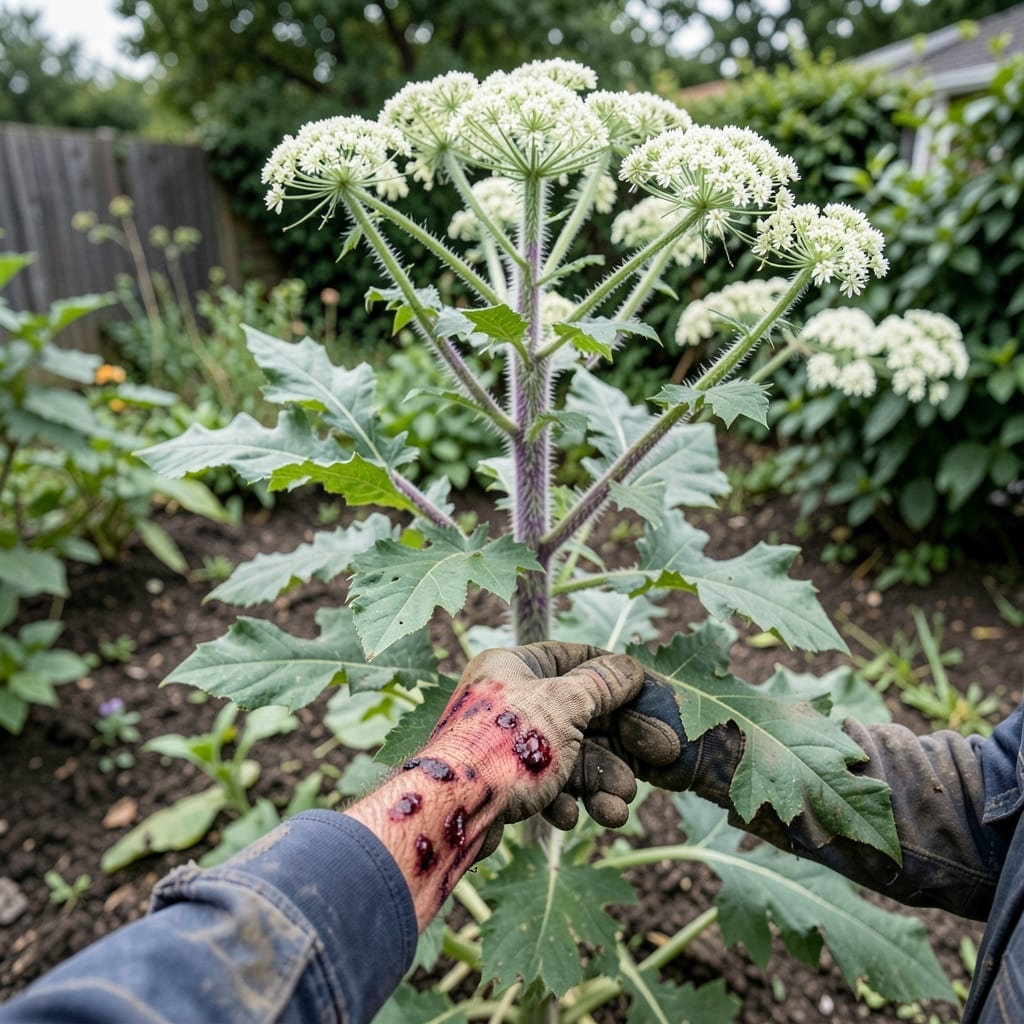
That towering white flower cluster might be giant hogweed—and it’s dangerous. I learned the hard way that its sap causes severe burns when skin meets sunlight, leaving scars that last for years.
Identification is your first defense: look for purple-spotted stems, jagged leaves up to 5 feet wide, and umbrella-shaped flower heads. Even brushing against it can trigger a reaction within 48 hours.
If contact happens, wash the area immediately with soap and water, then keep it covered and out of sunlight. The faster you act, the less damage you’ll see.
Never touch or cut the plant without protective gear. Removal requires caution, gloves, and long sleeves—this isn’t a plant to take lightly.
The severe skin reaction caused by hogweed exposure is due to a process called phytophotodermatitis. This occurs when the plant’s sap interacts with sunlight, leading to painful burns and blisters. Below are the key causes:
Hogweed contains furocoumarins, a group of light-sensitive chemicals. When these compounds touch your skin and are exposed to UV light (even from indirect sunlight), they trigger a toxic reaction. This disrupts DNA in skin cells, causing inflammation, redness, and severe blistering within 24–48 hours.
Sunlight is the catalyst. Without UV exposure, furocoumarins remain inert. But once activated, they penetrate the skin, increasing pigmentation and causing phototoxicity. This explains why burns often appear in irregular, streaky patterns—where sap contacted skin and sunlight followed.
Brushing against hogweed or breaking its stems releases sap. Even minimal contact (e.g., wiping sweat from your face after touching the plant) can transfer furocoumarins. The reaction intensifies with sweat, moisture, or heat, as these help the chemicals penetrate deeper into the skin.
Unlike immediate allergies, hogweed burns develop slowly. The initial exposure may go unnoticed until UV light triggers the reaction, often 12–48 hours later. This delay can make it harder to connect the burn to the plant.
If you’ve come into contact with hogweed, act fast to minimize skin damage and discomfort. Here’s how to address each issue and prevent future exposure.
Rinse the affected area immediately with cool water and mild soap to remove the plant’s harmful sap. Avoid scrubbing, as this can push the toxins deeper into your skin. After washing, apply a steroid cream (like hydrocortisone) to reduce inflammation. For severe blisters or pain, seek medical attention—doctors may prescribe stronger treatments or antibiotics to prevent infection.
Hogweed makes skin extremely sensitive to sunlight, leading to painful burns. If you’ve touched the plant, stay out of the sun for at least 48 hours. Cover the area with clothing or use a broad-spectrum sunscreen (SPF 30+) to shield it from UV rays. Reapply sunscreen every two hours if you must be outside.
If sap gets in your eyes, rinse them with clean water or saline solution for 10–15 minutes. Avoid rubbing, as this can worsen irritation. Wear sunglasses afterward to protect your eyes from sunlight, and see a doctor if redness, pain, or vision changes occur.
Quick action and caution are your best defenses against hogweed burns. Stay informed, stay protected, and enjoy the outdoors safely!
Burns typically last 1-6 weeks depending on severity. Mild cases clear in 7-10 days, while severe blisters may take months to heal completely and can leave scars.
For mild exposure, wash with soap and water, apply hydrocortisone cream, and avoid sunlight. Seek medical help for blisters, severe pain, or burns on the face or eyes.
Wear full protective gear: long sleeves, gloves, and eye protection. Cut stems at the base and dispose in sealed bags. Never burn or compost it, as this can release harmful sap.