
Beautiful Plants For Your Interior
Beautiful Plants For Your Interior
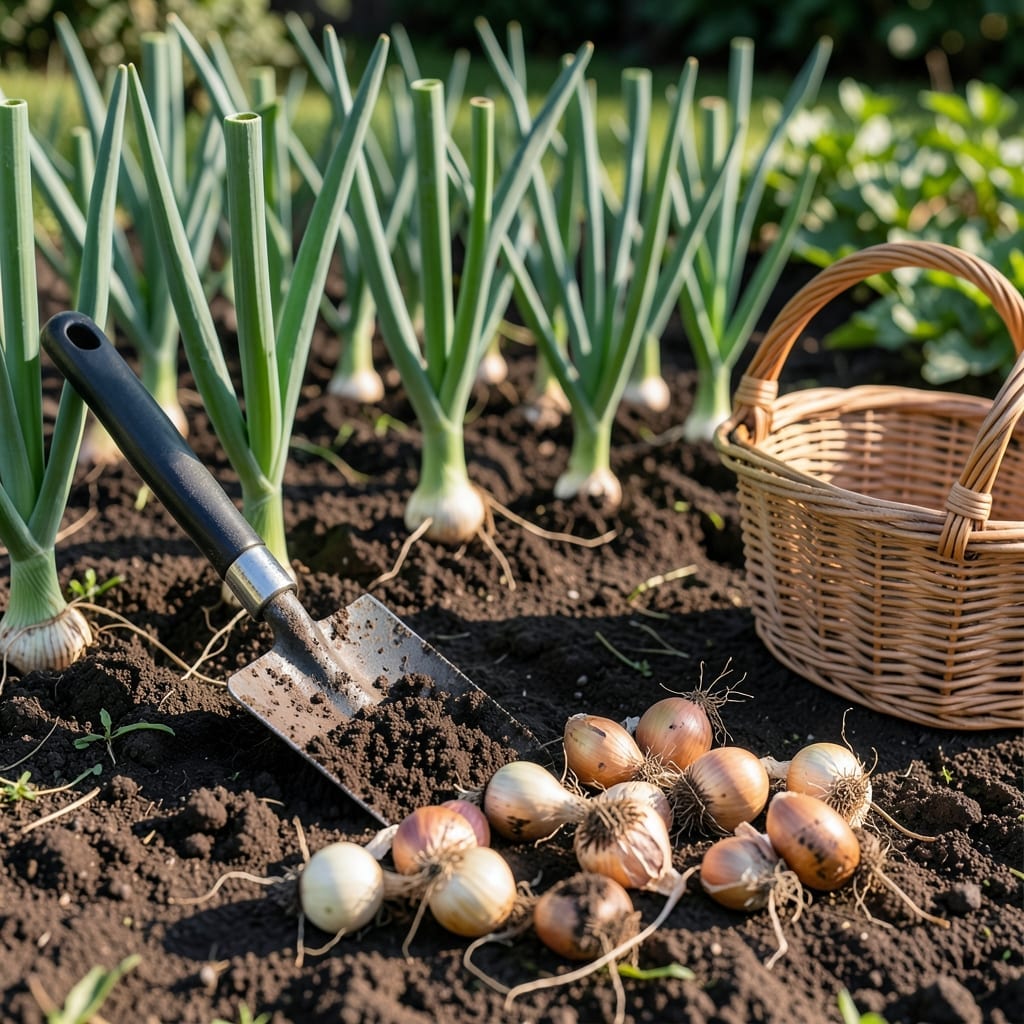
There’s nothing worse than pulling your 🧅 Onion crop too soon and missing out on that full, robust flavor you’ve worked so hard for. Timing is everything when it comes to harvesting these garden staples.
I remember my first attempt at growing Onions – I yanked them from the soil the moment I saw green tops, only to end up with tiny, underdeveloped bulbs. That’s when I learned the most important lesson: patience pays off.
Whether you’re a seasoned gardener or just starting out in Zone 6, knowing the right signs to look for can make all the difference. From yellowing foliage to soft necks, your Onions will tell you when they’re ready.
Discover how to read these signals and pull your crop at the perfect moment for the best storage life and flavor. Your future dishes will thank you.


Knowing when to harvest onion sets can make or break your crop’s flavor and storage potential. I’ve learned that timing is everything—pull them too soon, and they won’t have developed their full sweetness or pungency.
The most reliable sign is when the tops yellow and fall over naturally. This signals that the bulb has reached maturity and is ready to be pulled from the soil.
| Harvest Sign | What to Look For |
|---|---|
| Foliage Color | Brown and dry tops |
| Neck Condition | Thin and dry necks |
| Outer Skin | Papery and dry texture |
| Weather | Dry conditions for 2-3 days |
Another key indicator is the neck softening. When the stem just above the bulb feels soft rather than firm, it’s a sure sign your onions are ready. This typically happens about 90-120 days after planting.
I always check the outer skin too. A mature onion will have a dry, papery skin that rustles when touched. If it’s still moist or translucent, the bulb needs more time in the ground.
Weather plays a crucial role as well. I recommend harvesting during a dry spell when the soil isn’t waterlogged. Wet conditions can lead to rot or mold during curing, which ruins your harvest.
For storage onions, wait until at least 80% of the tops have fallen over. Sweet onion varieties can be harvested a bit earlier when about 50% of tops have yellowed.
If you’re growing different onion varieties, remember that long-day onions mature faster in northern climates, while short-day varieties do better in southern regions. Always check your specific variety’s maturity timeline.
I’ve found that harvesting in the early morning on a sunny day gives the best results. The bulbs are firmer, making them easier to pull without damage, and they’ll have the whole day to begin drying in the sun.
Don’t rush the process. Even if most of your onions are ready, it’s worth waiting for the entire crop to mature. Patience at this stage ensures maximum flavor development and the longest possible storage life. 🌱
I always say that harvesting onion sets properly is just as important as planting them. The key is to use the right tools and gentle techniques to avoid bruising the bulbs. A garden fork or hand trowel works best for lifting them from the soil.
Begin by loosening the soil around your onion sets to make removal easier. Insert your tool a few inches away from the bulbs to prevent piercing them. This step ensures the roots stay intact during extraction.
Once the soil is loosened, gently lift the onion sets from the ground. Avoid pulling them by the foliage, as this can damage the neck and roots. Instead, grasp the bulb itself or use your tool to pry them up carefully.
After lifting, shake off excess soil but don’t remove it all. A little soil left on the bulbs can help protect them during the curing process. Just be sure to brush off any large clumps that could trap moisture.
If the weather is dry, you can leave the onions in the garden for a day or two to start the curing process. Otherwise, move them to a well-ventilated area out of direct sunlight. This step is crucial for long-term storage.
Finally, inspect your onions for any signs of damage or disease. Discard any that are bruised or soft, as they won’t store well. Properly harvested and cured onion sets can last for months in a cool, dry place. ✂️