
Beautiful Plants For Your Interior
Beautiful Plants For Your Interior
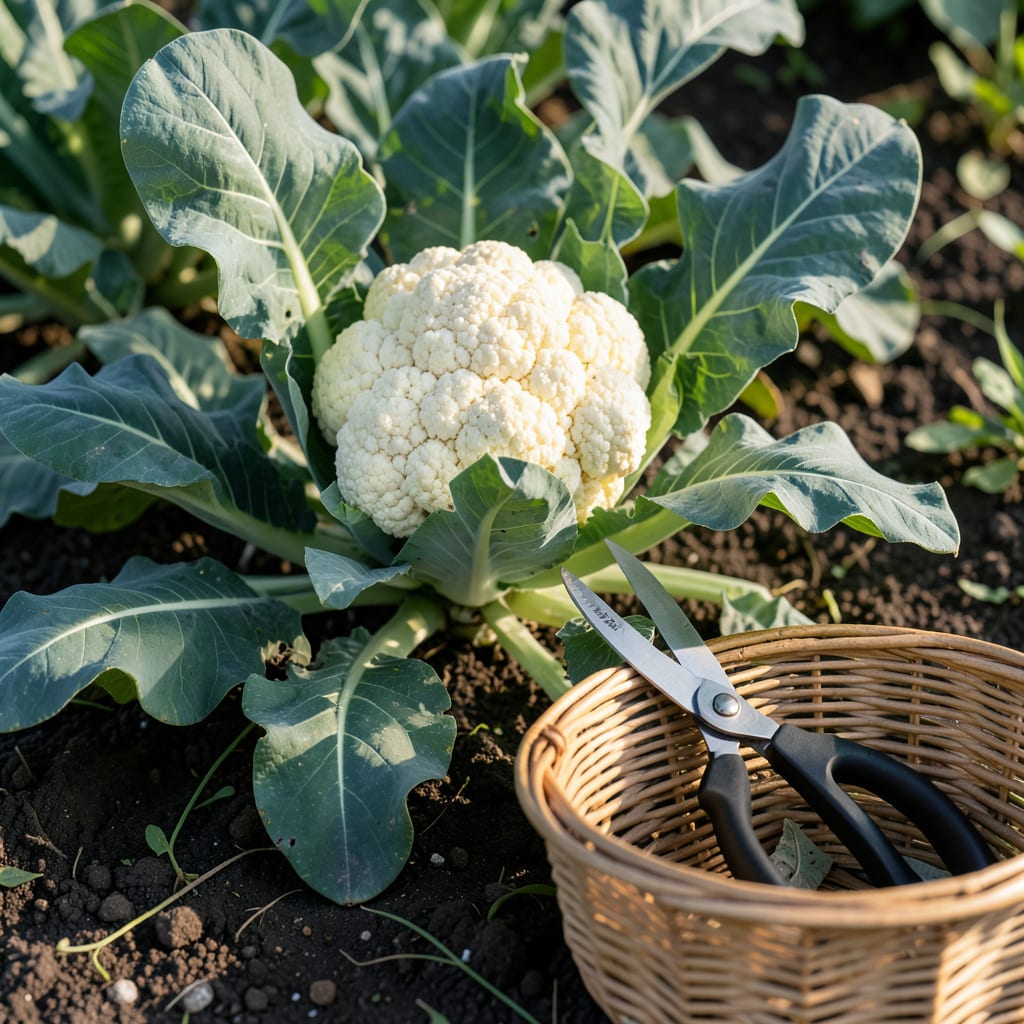
Ever cut into a cauliflower head only to find it bitter or underdeveloped? The difference between disappointment and a perfect 🥬 Cauliflower harvest comes down to timing.
I’ll show you the exact signs to watch for so you never pick too early or too late. With these tips, you’ll bring in firm, flavorful heads every time.


Timing your cauliflower harvest perfectly is an art that separates the pros from the beginners. I’ve learned that watching for specific visual cues is far more reliable than just counting days from planting.
The most telling sign is the head size—it should reach 6-8 inches in diameter. But size alone isn’t enough; you’ll also want to check the firmness and color uniformity of the head.
| Sign | Description |
|---|---|
| Head Size | 6-8 inches in diameter |
| Firmness | Compact and solid to touch |
| Color | Uniform and bright for variety |
| Leaf Behavior | Leaves start separating from head |
I always check the leaf behavior too. When the inner leaves begin to separate slightly from the head, it’s nature’s way of saying, “I’m ready!” This is especially true for white cauliflower varieties.
For colored varieties like purple or green cauliflower, the color becomes more vibrant as it matures. A dull color means it’s not quite there yet, while an overly bright hue might indicate it’s past its prime.
The weather plays a huge role too. In cooler climates, cauliflower may take up to 100 days to mature, while in warmer zones, you might see heads ready in as little as 50-75 days.
I’ve found that morning harvests work best. The heads are firmer after a cool night, and you’ll avoid the wilting that can happen in the afternoon heat. Always use a sharp knife to make a clean cut.
Don’t wait for the head to get too large. An overmature cauliflower will start to separate and lose its tight, compact form. If you see the curds (the tiny flower clusters) beginning to loosen, it’s time to harvest immediately.
Remember that blanching (tying leaves over the head) can help keep the cauliflower white and tender, but it’s not always necessary. I skip this step for colored varieties since they need sunlight to develop their hue.
If you’re growing multiple varieties, keep track of their maturity dates. Some early varieties like ‘Snowball Y’ are ready in 60 days, while others might need the full 100 days. Check seed packets for specifics.
Finally, trust your instincts. If the head looks and feels right, it probably is. With practice, you’ll develop an eye for the perfect harvest window every time 🌱
Even experienced gardeners can misjudge the harvest window for cauliflower. I’ve seen too many heads left in the garden until they split apart or turn bitter from over-maturity.
The most common mistake is waiting for the head to get bigger than 8 inches. Larger isn’t better with cauliflower—it usually means the curds are separating and the flavor is declining.
Harvesting late cauliflower leads to bitter taste, loose heads, and bolting. Check daily once heads reach 6 inches.
Another pitfall is harvesting after a heat wave. Cauliflower prefers cool weather, and high temperatures can cause the heads to mature too quickly, leading to poor texture.
Some gardeners also forget that different varieties have different timelines. A ‘Snowball’ might be ready in 60 days, while a ‘Romanesco’ could need 100 days. Always check your seed packet.
I’ve learned the hard way that ignoring leaf signals can cost you the harvest. If the outer leaves start yellowing or the inner leaves are tightly wrapped, the head might be past its prime.
Lastly, don’t harvest in the midday sun. The heads can wilt quickly, and you risk bruising the curds. Early morning is ideal for the firmest, freshest cauliflower 🌱
Harvesting your cauliflower correctly ensures the best flavor and longest storage life. I always start by examining the head carefully to confirm it meets all ripeness criteria before cutting.
Use a sharp knife to make a clean cut about 2 inches below the head, leaving some of the stem attached. This helps protect the curds during handling and storage.
I recommend leaving 2-3 wrapper leaves attached to the head. These act as a natural protective layer, keeping the curds clean and reducing moisture loss during storage.
For storage, place the whole head in a perforated plastic bag in the refrigerator. Properly stored, your cauliflower should stay fresh for 7-10 days. Avoid washing before storage unless absolutely necessary.
If you need to store for longer, consider blanching and freezing. Cut into florets, blanch for 3 minutes, then cool in ice water before freezing. This preserves texture and flavor for months. ✂️
Check for a firm, compact head that’s 6-8 inches across. The color should be bright and uniform, and inner leaves may start to separate from the head.
Overmature cauliflower develops a bitter taste and loose, separated curds. The head may also split open or begin to bolt. Always check daily once heads reach 6 inches.
Early varieties like ‘Snowball Y’ may be ready in 60 days, while others like ‘Romanesco’ can take up to 100 days. Check your seed packet for specifics.
Early morning is ideal. The heads are firmest after a cool night, and you’ll avoid wilting from midday heat. Use a sharp knife for a clean cut.
