
Beautiful Plants For Your Interior
Beautiful Plants For Your Interior
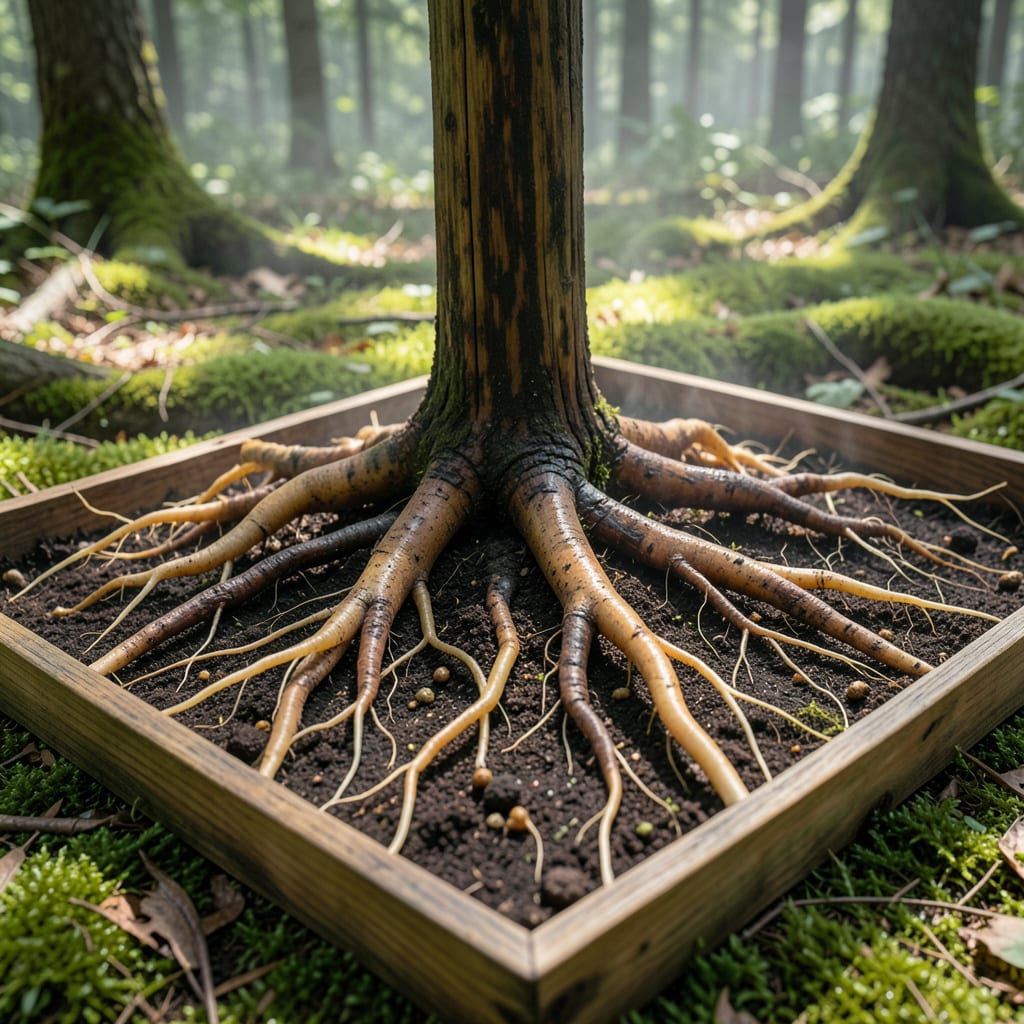
Hackberry trees anchor themselves with a root system that surprises most gardeners. Deep taproots combined with wide-spreading laterals create stability that outlasts storms and droughts alike.
I’ve planted these in clay and sandy soil, and they adapt by sending roots 10-15 feet out while the taproot dives 3-5 feet deep. Just keep them 20 feet from foundations to avoid future headaches.
📚 In This Guide
This resilient tree develops an extensive network that anchors it firmly while supporting impressive growth.
Hackberry trees initially establish a deep taproot that can extend 10-15 feet downward in ideal conditions. This central root provides the tree’s primary stability and accesses moisture from deeper soil layers during drought periods. You’ll notice this vertical growth is most pronounced in young specimens.
The taproot’s development is most vigorous during the first 3-5 years of growth. After this period, the tree begins allocating more energy to lateral root expansion. This early investment in depth explains why mature hackberries withstand strong winds so effectively.
As the tree matures, it develops a widespread network of lateral roots that typically extend 1.5 to 2 times the diameter of the tree’s canopy. These horizontal roots form the bulk of the root system and are responsible for most water and nutrient absorption. You can often see surface evidence of this spread where roots create visible bumps in the soil.
The lateral roots branch into finer fibrous roots that explore the top 12-18 inches of soil. This dense mat of roots is particularly efficient at absorbing surface moisture after rainfall. The combination of deep and shallow roots makes hackberry trees remarkably adaptable to various soil conditions.
Hackberry roots exhibit remarkable plasticity, adjusting their growth pattern based on soil conditions. In compacted or rocky soils, the taproot may remain shorter while lateral roots spread more aggressively. Conversely, in deep, loose soils, you’ll find the taproot developing to its full potential.
This adaptability extends to the tree’s ability to form root grafts with other hackberry trees when roots come into contact. These natural connections allow for resource sharing between trees, creating a more resilient forest ecosystem. You might notice clusters of hackberries performing better than isolated specimens.
Root development follows distinct seasonal patterns, with most growth occurring in early spring and late fall when soil temperatures are between 50-75°F. During summer’s heat, root growth slows significantly as the tree focuses energy on foliage and fruit production.
The tree’s root system also stores significant energy reserves during the growing season. These reserves fuel the explosive root growth you’ll see in early spring before leaves emerge. This timing ensures the tree can maximize water uptake before the demands of summer transpiration peak.
The hackberry’s extensive root system provides excellent soil stabilization, preventing erosion on slopes and along waterways. The dense network of roots binds soil particles together while allowing water to percolate through, reducing runoff.
This root structure also creates ideal conditions for mycorrhizal fungi associations. These beneficial relationships enhance nutrient uptake, particularly for phosphorus, and contribute to the tree’s overall vigor. You’ll often find hackberries thriving in soils where other species struggle to establish.
Understanding these details will help you recognize and appreciate the complexity of this system.
The Depth Factor: In Step 1, note that the taproot can reach 10-15 feet downward in ideal conditions, which is why young hackberries establish such strong stability early on. This depth is particularly crucial during drought periods when surface moisture is limited.
Lateral Expansion Insight: As mentioned in Step 2, the lateral roots extend 1.5 to 2 times the tree’s canopy diameter. This is why you might see visible bumps in the soil—these indicate the spread of the root network, which is doing most of the water and nutrient absorption work.
Seasonal Timing: Step 4 highlights that most root growth happens in early spring and late fall when soil temperatures are between 50-75°F. If you’re observing growth patterns, focus on these seasons for the most active development.
Hackberry roots typically extend 15–25 feet deep, with a wide-spreading system that can reach 2–3 times the tree’s canopy width. This depth provides stability and drought resistance.
Yes, hackberry’s aggressive, shallow roots can lift sidewalks or crack foundations if planted too close. Keep trees at least 20–30 feet from structures to prevent issues.
Hackberry roots grow moderately fast, expanding up to 10–15 feet outward in 5–10 years. Regular pruning can help manage their spread in landscaping.
They can be! The roots seek water aggressively, often invading septic systems or pipes. Plant hackberries away from underground utilities to avoid problems.
Absolutely! Hackberries tolerate clay soil well, as their deep roots adapt to compacted or poor-draining conditions. Just ensure proper watering during establishment.
