
Beautiful Plants For Your Interior
Beautiful Plants For Your Interior
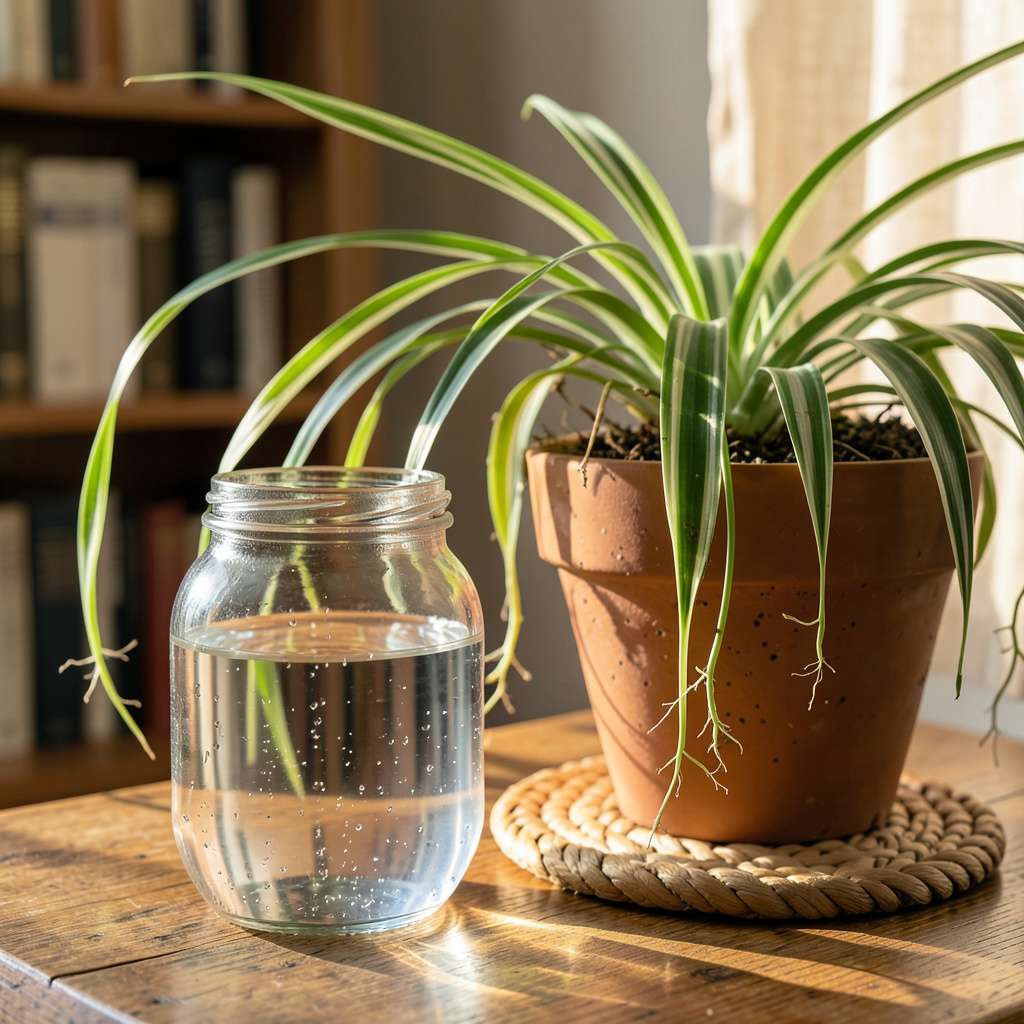
Spider plants thrive in water when placed in a container with clean, chlorine-free water covering only the roots. Change the water weekly, provide bright indirect light, and watch for new growth in 2-4 weeks.
This method works because spider plants are naturally adaptable to hydroponic conditions—their roots develop fine, hair-like structures that maximize water absorption. 🌱 I’ve found that using filtered or distilled water prevents mineral buildup that can stunt growth, while clear containers let you monitor root health easily. The key advantage here is watching the entire propagation process unfold, from root development to new shoots emerging.
What surprises many gardeners is how quickly these plants establish themselves in water compared to soil. The absence of soil-borne pests makes this an ideal approach for beginners or anyone dealing with limited space. Just remember that while spider plants are forgiving, they’ll show their appreciation for consistent care with faster growth and more vibrant foliage.
💡 In This Article
When spider plants transition from soil to water, their root systems undergo remarkable transformations. The plant develops water roots—longer, whiter, and more fibrous than soil roots—which specialize in absorbing dissolved oxygen and nutrients directly from the water.
These roots grow 2-3 times faster than in soil because they don’t need to search for moisture, allowing the plant to focus energy on foliage production. 🌱
The secret lies in their adventitious root system, which naturally forms from stem nodes when submerged. Unlike soil-grown plants that rely on microbial activity to break down nutrients, water-grown spider plants absorb minerals directly through their root membranes.
This explains why they thrive with just weekly water changes—fresh water provides sufficient dissolved oxygen (critical for root respiration) while preventing stagnation that could encourage bacterial growth.
What makes spider plants uniquely suited for this is their epiphytic heritage. In nature, they often grow on tree branches where their roots dangle in humid air, making them pre-adapted to absorb moisture from non-soil environments.
When placed in water, they maintain this adaptability by developing aerenchyma tissue—spongy root channels that transport oxygen to submerged parts, similar to how mangroves survive in swamps. ✨
The process becomes visible within days: existing roots will develop fine white root hairs within 3-5 days, while new shoots typically emerge from the plantlets in 2-3 weeks.
The water’s transparency lets you observe how roots grow toward the light source (positive phototropism) while simultaneously branching downward for stability—a dual growth pattern you’d never see in opaque soil.
Temperature plays a surprising role too. Spider plants in water grow optimally at 65-75°F, where their metabolic processes run most efficiently. Below 60°F, root growth slows dramatically as the plant conserves energy, while temperatures above 80°F can stress the plant and encourage algal growth in the water.
This temperature sensitivity explains why many gardeners see faster results when propagating indoors near east-facing windows. ⚡
One fascinating adaptation is how the plant regulates its water uptake. In soil, spider plants use osmotic pressure to draw moisture from the earth, but in water, they reverse this process—actively pumping out excess water through guttation (those tiny droplets you see on leaf tips in high humidity).
This prevents root rot while maintaining the perfect internal moisture balance for growth.
Comparing water-grown and soil-grown spider plants reveals striking differences:
The most rewarding part?
Watching the propagule stage where baby plantlets (spiderettes) develop their own root systems while still attached to the mother plant. In water, these can grow 1-2 inches of roots before you even need to separate them—something that would take months in soil. This visible progression makes water propagation especially satisfying for new plant parents. 💫
Remember that while spider plants are forgiving, they’ll show stress through brown leaf tips (fluoride sensitivity) or slow growth (nutrient deficiency). The water method actually makes these signals easier to spot early, since you can observe the entire root system’s health at a glance—no digging required!
Change the water every 7-10 days to prevent bacterial growth and maintain oxygen levels. If using activated charcoal, you can extend this to 10-14 days. Always replace with fresh, room-temperature water to avoid shocking the plant.
While they can live in water indefinitely, most gardeners transition them to soil after 2-3 months. Long-term water growth may lead to weaker stems and smaller leaves due to limited nutrient availability compared to soil.
Brown roots usually indicate bacterial growth from stagnant water or fluoride toxicity from tap water. Immediately change the water, trim affected roots with clean shears, and switch to filtered or distilled water.
Wait until the plantlets develop roots at least 1-2 inches long. Gently twist them from the mother plant or use clean scissors to cut the connecting stolon. Place in fresh water immediately to minimize stress.
They can survive without it, but adding 1-2 drops of liquid seaweed fertilizer every other week promotes faster growth. Avoid regular plant food—it’s too strong for hydroponic conditions and can burn delicate water roots.
