
Beautiful Plants For Your Interior
Beautiful Plants For Your Interior
There’s something magical about growing a mango tree indoors—watching those broad, glossy leaves unfurl in your living room, knowing you’re nurturing a piece of the tropics. I’ll be honest: my first attempt ended with a sad, leggy seedling that never quite thrived. But after adjusting light, humidity, and patience levels, I now have a 3-foot-tall […]
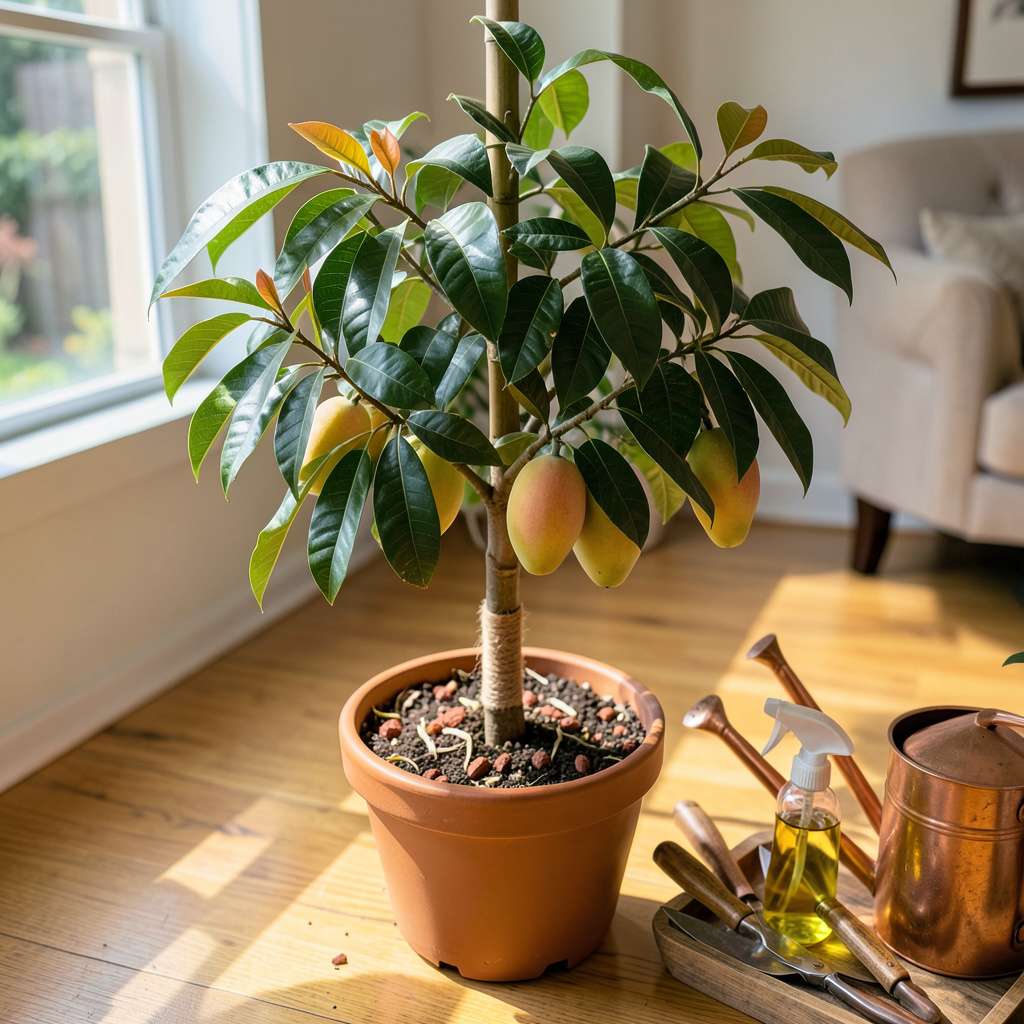
There’s something magical about growing a mango tree indoors—watching those broad, glossy leaves unfurl in your living room, knowing you’re nurturing a piece of the tropics. I’ll be honest: my first attempt ended with a sad, leggy seedling that never quite thrived. But after adjusting light, humidity, and patience levels, I now have a 3-foot-tall tree producing fragrant blooms each spring.
The key isn’t tropical climate—it’s replicating what mangoes love: bright indirect light, consistent warmth, and just enough water to keep roots happy without drowning them. Most people overcomplicate this. You need a sunny window or grow light, well-draining soil, and the willingness to wait (mango trees grow slowly but reward generously).
Within 2-3 years, you could have a tree with dark green foliage that perfumes your space when it blooms. The leaves alone make it worthwhile—they’re thick, leathery, and catch sunlight like stained glass. And yes, with proper care and pollination tricks, indoor mango trees can produce fruit, though that’s the advanced level we’ll work toward.
This project suits anyone with a sunny spot and patience for slow, steady growth. Whether you’re in an apartment or a house with limited outdoor space, the process of growing a mango tree indoors connects you to tropical gardening in the most unexpected way. Let’s start with the right seed and setup.
📚 In This Guide
Bringing a tropical fruit tree into your home is simpler than you think—just follow these proven steps.
Not all mango varieties thrive indoors. I recommend starting with a dwarf cultivar like ‘Cogshall’, ‘Carrie’, or ‘Julie’—these stay compact (under 6 feet tall) and produce fruit reliably in containers. Avoid common grocery store varieties; they grow too large for indoor spaces.
You have two starting options: purchase a grafted dwarf tree from a nursery (fastest route to fruit) or grow from seed (more rewarding but takes 5-8 years to bear fruit). If choosing seeds, select a fresh, ripe mango and remove the husk to extract the inner seed.
Mango trees need full sun—at least 6-8 hours daily. A south-facing window works, but I’ve found supplementing with a full-spectrum LED grow light (positioned 12-18 inches above the plant) ensures consistent growth year-round. Rotate the pot weekly so all sides receive equal light exposure.
Maintain temperatures between 70-85°F during the day and no lower than 50°F at night. These trees hate drafts, so keep them away from air conditioning vents or frequently opened doors. A small space heater on low can help maintain warmth during winter months.
For seed-grown trees, plant the seed in a 1-gallon container with well-draining potting mix, placing it 1 inch deep with the rounded side facing down. Keep the soil consistently moist but not soggy—you should see germination in 2-4 weeks. Seedlings need high humidity, so cover with plastic wrap until the first leaves appear.
For nursery trees, choose a container only 2-4 inches larger than the root ball—too much space leads to root rot. Use a mix of 60% potting soil and 40% perlite for drainage. Water deeply until it runs from the drainage holes, then wait until the top 2 inches of soil feel dry before watering again.
Feed your tree every 4-6 weeks during spring and summer with a balanced 10-10-10 fertilizer diluted to half strength. I switch to a low-nitrogen, high-phosphorus formula (like 5-10-10) when flowers appear to boost fruit production. Yellowing leaves often indicate overwatering or nutrient deficiency—adjust your care accordingly.
Prune in early spring to maintain shape and remove any dead or crossing branches. Use clean, sharp pruners and make cuts at a 45-degree angle just above a leaf node. This encourages bushier growth and better air circulation, which reduces disease risk. Hand-pollinate flowers with a small paintbrush to ensure fruit set indoors.
Mango trees need a 3-4 week dormant period in winter with reduced watering and no fertilizer. Move the tree to a cooler spot (60-65°F) and water just enough to prevent soil from drying completely. You’ll know it’s time to resume regular care when you see new leaf growth in early spring.
Repot every 2-3 years in early spring, increasing pot size by 2-3 inches each time. This prevents root binding while keeping the tree manageable. Watch for pests like spider mites or scale—treat immediately with neem oil spray if you spot webbing or sticky residue on leaves.
Growing a tropical fruit tree indoors comes with unique challenges, but these practical insights will help you avoid common pitfalls.
Light Optimization: The 6-8 hours of daily sunlight mentioned in Step 2 is non-negotiable for mango trees. I’ve found that even with a south-facing window, supplementing with a full-spectrum LED grow light positioned exactly 12-18 inches above the plant makes all the difference. Real talk: without this additional light, your tree will grow leggy and weak. Rotate the pot weekly as suggested—this prevents the tree from leaning toward the light source and promotes even growth.
Temperature Control: Maintaining that 70-85°F daytime range and never letting nighttime temperatures drop below 50°F is critical. Here’s what nobody tells you—mango trees are extremely sensitive to temperature fluctuations. A small space heater on low setting can be a game-changer during winter months, but keep it at least 3 feet away from the tree to prevent leaf burn. Avoid placing your tree near drafty windows or air conditioning vents, as sudden temperature changes can cause leaf drop.
Watering Wisdom: The instruction to wait until the top 2 inches of soil feel dry before watering again is spot-on. Confession: I ruined my first mango tree by overwatering. These trees hate soggy roots more than brief dry periods. When you do water, make sure it runs through the drainage holes—this flushes out excess salts from fertilizers. For seed-grown trees, that plastic wrap covering during the 2-4 week germination period creates the perfect humid microclimate, but remove it immediately when you see the first leaves to prevent fungal issues.
Fertilizer Strategy: The 4-6 week feeding schedule during growing season is ideal, but here’s the technique that changed everything for me: always dilute fertilizer to half strength. Mango trees are sensitive to salt buildup from fertilizers. When flowers appear, switching to that low-nitrogen, high-phosphorus formula (like 5-10-10) significantly boosts fruit production. Watch for yellowing leaves—this usually indicates overwatering before it suggests nutrient deficiency, so check your watering routine first.
Yes! Start by cleaning the seed and letting it dry for 1-2 days. Wrap it in a damp paper towel, place it in a sealed bag, and keep it warm (70-80°F). Germination takes 2-4 weeks. Once sprouted, transplant it into a pot with well-draining soil. Just note: store-bought seeds may not produce fruit identical to the parent mango.
Patience is key! A mango tree grown from seed can take 5-8 years to fruit indoors—sometimes longer. Grafted dwarf varieties (like ‘Cogshall’ or ‘Ice Cream’) may fruit in 3-5 years with proper care, light, and pollination assistance (try hand-pollinating with a soft brush!).
No sunny window? No problem! Use full-spectrum LED grow lights (12-16 hours/day) positioned 12-18 inches above the tree. Rotate the pot weekly for even growth. For budget options, combine a south-facing window with supplemental fluorescent grow bulbs to mimic tropical sunlight.
Yellow leaves often signal overwatering (let soil dry 1-2 inches deep between waterings) or nutrient deficiency (use a balanced fertilizer every 6-8 weeks). Brown tips? Likely low humidity—mist leaves daily or use a pebble tray. Check for pests (spider mites love dry air!) and wipe leaves with neem oil if needed.
Dwarf varieties (e.g., ‘Julie’ or ‘Carrie’) stay manageable at 4-8 feet tall with pruning. Standard seeds can grow 20+ feet—not ideal indoors! Control size by:
Growing a mango tree indoors is a rewarding way to bring a taste of the tropics into your home! 🌿 With the right variety, proper lighting, and consistent care, you can enjoy lush foliage—and even fruit—right from your living room. Patience and attention to humidity, soil, and pruning will set you up for success.
Ready to get started? Pick up a dwarf mango sapling or seeds today, and begin your journey to homegrown tropical goodness. Happy growing! 🌱
