
Beautiful Plants For Your Interior
Beautiful Plants For Your Interior
Sun-drenched Mediterranean hillsides in your living room? That’s exactly what an indoor olive tree delivers. I’ve been growing these silver-leaved beauties inside for years, and nothing brings that coastal European vibe to a space quite like their gnarled trunks and fragrant foliage. The best part? They’re more forgiving than most people realize once you understand […]
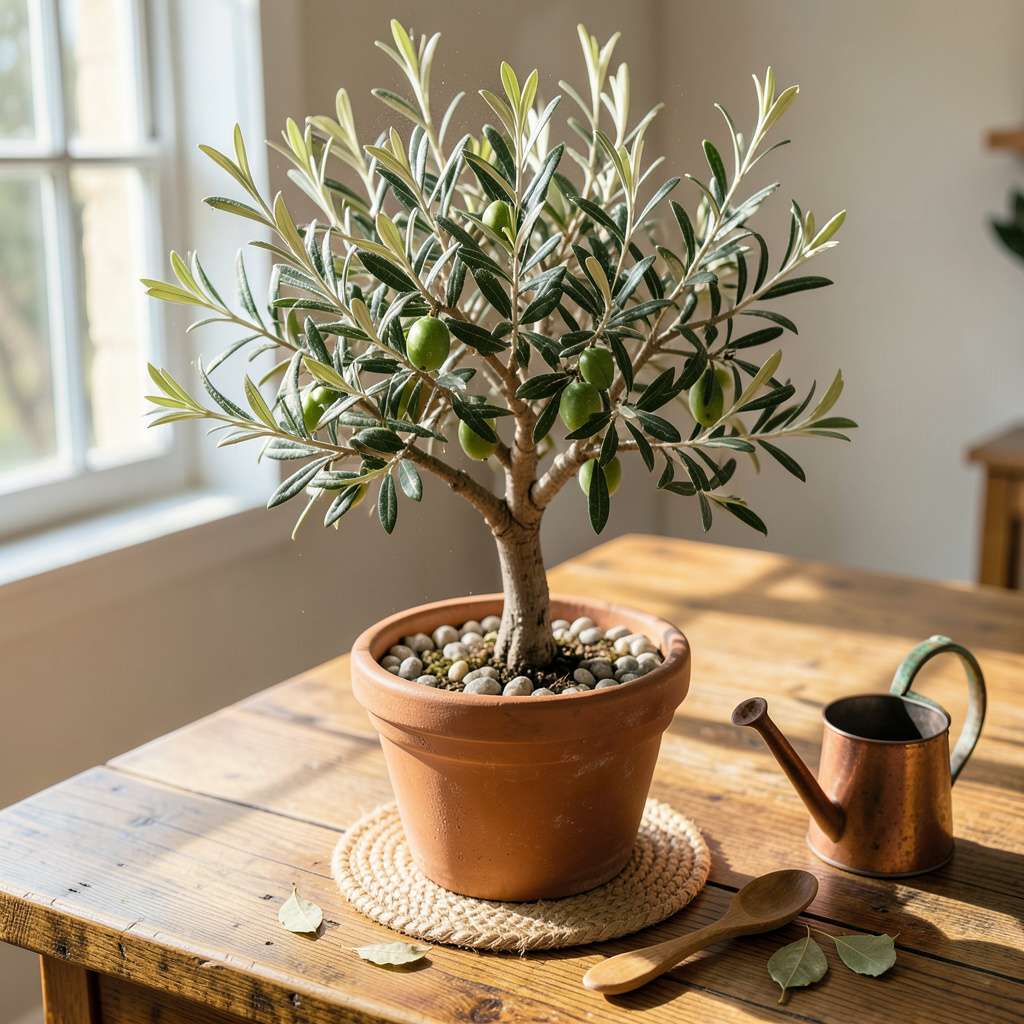
Sun-drenched Mediterranean hillsides in your living room? That’s exactly what an indoor olive tree delivers. I’ve been growing these silver-leaved beauties inside for years, and nothing brings that coastal European vibe to a space quite like their gnarled trunks and fragrant foliage. The best part? They’re more forgiving than most people realize once you understand their simple needs.
My first olive tree nearly died from overwatering—classic beginner mistake. Now I know they thrive on neglect: bright light, infrequent watering, and well-draining soil that mimics their native rocky terrain. A south-facing window or grow light gives them the 6-8 hours of sunlight they crave, while their drought tolerance makes them perfect for forgetful plant owners.
Within a year, you’ll have a tree with a sculptural trunk and glossy leaves that shimmer in the light. They grow slowly indoors (about 6 inches per year), which means less pruning and more time enjoying their natural beauty. The occasional white bloom even brings a subtle honey-like fragrance to your home.
From studio apartments to spacious sunrooms, these trees adapt beautifully to indoor life. They’re not just plants—they’re living decor that gets more character with each passing season. Here’s how to give them exactly what they need to thrive for decades.
📚 In This Guide
Bringing Mediterranean elegance to your home is simpler than you think—just follow these proven techniques.
Not all olive trees thrive indoors, so I recommend starting with a dwarf variety like Arbequina or Picholine. These compact cultivars grow slowly and adapt well to container life. Purchase a young tree (about 2-3 feet tall) from a reputable nursery to ensure disease-free stock.
Inspect the foliage carefully before buying—healthy leaves should be deep green with no yellowing or spots. Avoid trees with sticky residue on leaves (a sign of pests) or cracked bark. The root ball should feel firm, not mushy, when gently pressed through the pot.
Choose a 16-20 inch diameter container with multiple drainage holes—olive trees despise soggy roots. I use unglazed terra cotta because its porosity helps regulate soil moisture. Fill the pot with a well-draining mix: 60% potting soil, 30% perlite, and 10% coarse sand.
Position your tree near a south-facing window where it will receive 6+ hours of direct sunlight daily. If natural light is insufficient, supplement with a full-spectrum LED grow light positioned 12-18 inches above the canopy. Rotate the pot quarter-turn weekly to ensure even growth.
Olive trees prefer the “soak and dry” method: water thoroughly until it runs from the drainage holes, then wait until the top 2 inches of soil feel completely dry before watering again. This typically means watering every 10-14 days in winter and 7-10 days in summer.
Use room-temperature water and pour slowly at the base until the soil surface glistens. I check moisture by inserting my finger into the soil—if it comes out clean, it’s time to water. Never let the tree sit in a saucer of water, as this leads to root rot within 48 hours.
Keep your olive tree in temperatures between 60-75°F during the day and no lower than 50°F at night. These trees thrive in dry air, so avoid misting the leaves. Fertilize monthly during spring and summer with a balanced liquid fertilizer diluted to half strength.
Prune in early spring by removing any dead or crossing branches. Make cuts at a 45-degree angle just above a leaf node to encourage bushier growth. Watch for new growth—healthy olive trees produce 1-2 inches of new growth per month during the growing season.
After 2-3 years, your tree may produce small white flowers in spring. To encourage fruiting, hand-pollinate by gently brushing a soft paintbrush over the flowers daily. If fruit develops, thin clusters to one olive per every 6 inches of branch to prevent overburdening.
Harvest olives when they turn from green to purplish-black, typically in late fall. Don’t be discouraged if your first harvest is small—indoor trees often take 4-5 years to reach full production. The process itself becomes part of the Mediterranean charm you’re cultivating.
Cultivating a thriving olive tree indoors requires attention to details that mimic its native Mediterranean environment. Here’s what we’ve learned from years of nurturing these beautiful trees.
Light Optimization: The requirement for 6+ hours of direct sunlight daily cannot be overstated. I’ve found that even with a south-facing window, supplementing with a full-spectrum LED grow light positioned 12-18 inches above the canopy makes a dramatic difference in growth vigor. Remember to rotate your pot a quarter-turn weekly to prevent lopsided growth—a simple step that prevents years of uneven development.
Watering Discipline: The “soak and dry” method described in Step 3 is absolutely critical. After watering thoroughly, resist the urge to water again until the top 2 inches of soil feel completely dry. This typically means watering every 10-14 days in winter and 7-10 days in summer, but always let the soil be your guide rather than the calendar. The 48-hour window for root rot development when standing in water is shockingly fast—we’ve lost trees this way before learning our lesson.
Temperature Consistency: Maintaining the 60-75°F daytime range and never letting nighttime temperatures drop below 50°F is more challenging than it sounds. Drafty windows or air conditioning vents can create microclimates that stress your tree. I use a simple indoor thermometer near the tree to monitor conditions, especially during seasonal transitions when indoor temperatures fluctuate dramatically.
Pruning Technique: When pruning in early spring as described in Step 4, always make your cuts at a 45-degree angle just above a leaf node. This isn’t just about aesthetics—it prevents water accumulation on the cut surface that could lead to fungal infections. Watching for that 1-2 inches of new growth per month during growing season becomes your best indicator of overall tree health and proper care.
Here are the most common questions about growing olive trees indoors—answered!
Olive trees thrive indoors with bright light (6+ hours daily) but benefit from summer outdoor trips for sunlight and airflow. If keeping them inside permanently, supplement with grow lights and rotate the pot weekly for even growth.
Most indoor olive trees (like Arbequina or Picholine) take 3–5 years to fruit—if they do at all! Low light and pot size often delay fruiting. For faster results, buy a mature, grafted tree (2+ years old).
No sunny window? Use a 15W LED grow light (12–16 hours/day, 6–12 inches above the tree). South-facing windows are ideal, but east/west works with rotation. Avoid north-facing spots—your tree will get leggy and weak.
Yellow leaves = overwatering (let soil dry between waterings) or poor drainage (repot with gritty mix). Leaf drop? Check for drafts, low humidity, or sudden temperature swings. Prune dead leaves and adjust care!
Technically yes, but it’s slow and unreliable. Store-bought olives are often sterilized or from non-viable cultivars. For better success, buy a dwarf variety cutting or young tree from a nursery. Pits take months to germinate—patience required!
Growing an olive tree indoors brings a touch of the Mediterranean right to your living space—with patience and the right care, you’ll enjoy lush greenery and maybe even homegrown olives! 🌿 Remember, bright light, well-draining soil, and consistent moisture are your keys to success. Start small with a dwarf variety like Arbequina, and don’t forget to prune and fertilize to keep your tree thriving.
Ready to begin? Pick up a young olive tree from a trusted nursery or online seller, gather your supplies, and let your indoor orchard journey start today! For extra confidence, bookmark this guide and check in monthly to track your tree’s progress. Happy growing! 🌱
