
Beautiful Plants For Your Interior
Beautiful Plants For Your Interior
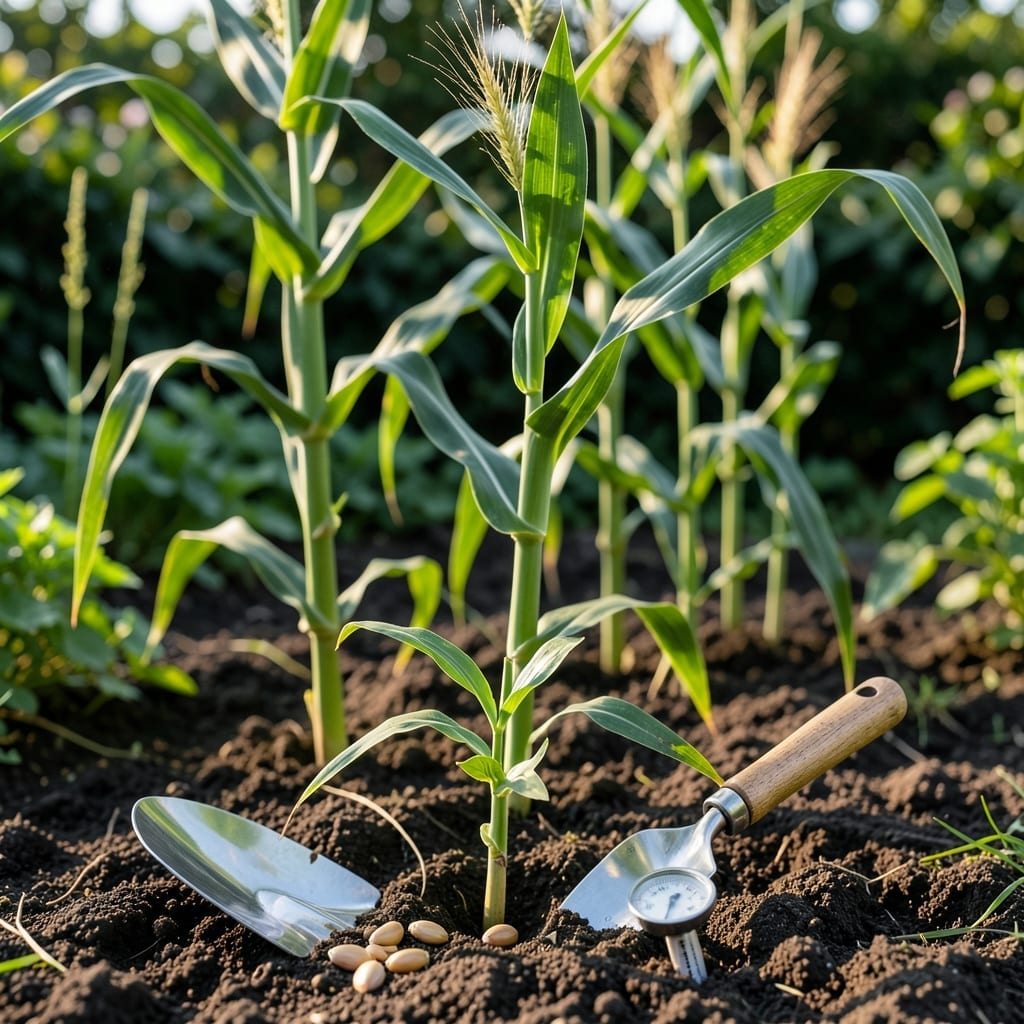
Planting Corn too early can sabotage your entire harvest before it even starts. The underground secret to success lies in waiting for the perfect moment.
I’ve learned the hard way that rushing this process leads to weak, uneven growth. The 🌽 Corn seeds need just the right conditions to thrive, and timing is everything.
Discover how to nail that critical window and set your crop up for a bountiful July – August harvest. Let’s dig into what really works.


Getting the ground temp for planting corn right is non-negotiable. I’ve seen entire crops struggle because seeds went into soil that was just a few degrees too cold.
Corn seeds need a minimum of 60-65°F to germinate, but they truly thrive when the soil hits 70-85°F. This isn’t guesswork—it’s science.
| Requirement | Specification |
|---|---|
| Minimum Soil Temp | 60-65°F |
| Ideal Soil Temp | 70-85°F |
| Germination Time | 4-12 days |
| Best Planting Months | April-May |
Measuring soil temperature is simple with a soil thermometer. I always check at 4-6 inches deep, where the seeds will be, first thing in the morning.
Why does this matter? Corn seeds in cold soil may rot or germinate unevenly, leading to weak plants. I’ve learned that patience here pays off with stronger, more uniform growth.
In cooler climates, I recommend using black plastic mulch to warm the soil faster. This can give you a head start without risking your crop to frost or cold shock.
For the most accurate readings, take measurements for 3-5 consecutive days. Consistency is key—you want the soil to stay warm, not just hit a brief spike in temperature.
If you’re eager to plant early, consider raised beds. They warm up faster than in-ground soil and offer better drainage, which corn loves.
Remember, air temperature isn’t the same as soil temperature. I’ve made the mistake of planting based on warm air, only to find the soil was still too cold.
Your reward for waiting? Faster germination, stronger seedlings, and a bountiful harvest come July-August. Trust me, it’s worth the wait. ☀️
Planting corn seeds in soil that’s too cold is a gamble I don’t recommend. The risks far outweigh any potential head start you might think you’re getting.
When soil dips below 60°F, corn seeds struggle to germinate. I’ve watched seeds rot in cold, wet soil, and the ones that do sprout often emerge unevenly, creating a patchy, weak stand of plants.
⚠️ Warning: Cold Soil Dangers
Planting corn in soil below 60°F leads to seed rot, slow germination, and stunted growth. Young plants may also show purple leaves from phosphorus deficiency due to poor nutrient uptake.
Uneven emergence is another major issue. Some seeds may sprout while others remain dormant, leading to competition for light and nutrients among plants of different sizes.
Cold-stressed corn often develops purple leaves or stunted roots. I’ve seen plants that never fully recover, even after the soil warms up. Their growth remains slow and weak.
In my experience, it’s better to wait an extra week for warmer soil than to risk starting over. The ideal window is when soil stays consistently above 65°F at planting depth.
If you must plant early, use row covers or black plastic mulch to help warm the soil. But remember, there’s no substitute for patience when it comes to ground temp for planting corn. 🌱