
Beautiful Plants For Your Interior
Beautiful Plants For Your Interior
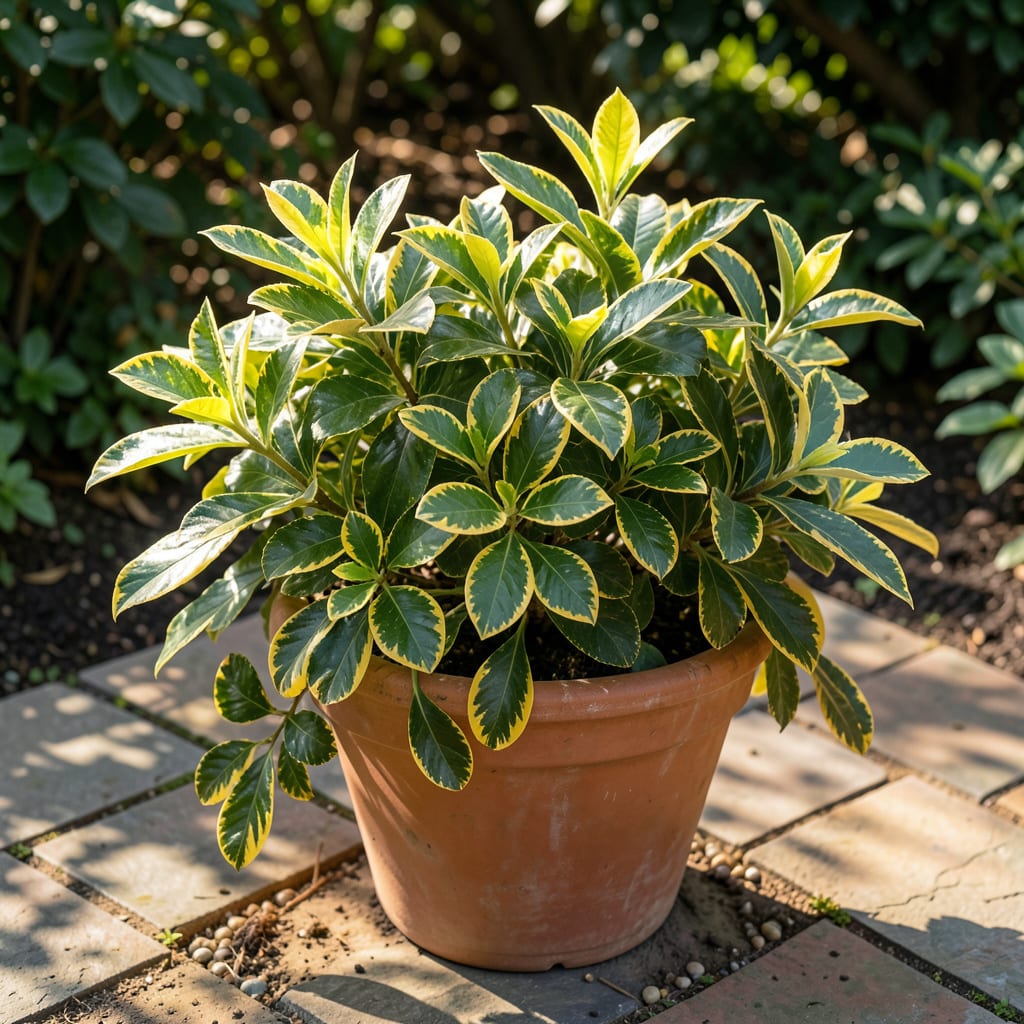
This foliage stops people in their tracks. I planted my first variegated bush five years ago, and it still gets more compliments than any flower in my garden.
The color contrast is shockingly vibrant—bright yellow edges against deep green centers. It thrives in partial shade, needs minimal pruning, and adds year-round interest without demanding constant attention.
📚 In This Guide
This method delivers vibrant, multi-colored foliage that transforms any landscape into a living work of art.
Choose a site with partial to full sun—at least 4-6 hours of direct sunlight daily ensures the variegation stays bold and defined. Too much shade dulls the yellow and green contrast, leaving you with muted, lackluster leaves.
Test your soil’s drainage by digging a 12-inch deep hole and filling it with water. If it drains within 1 hour, you’re good. If not, amend with compost or sand to prevent root rot, which variegated shrubs are particularly susceptible to.
Variegated bushes thrive in slightly acidic to neutral soil with a pH between 6.0 and 7.0. Use a soil test kit to check levels, then amend as needed with lime (to raise pH) or sulfur (to lower it).
Work in 2-3 inches of organic matter like well-rotted compost to improve fertility and structure. This step is non-negotiable—variegated plants often grow slower than their solid-green counterparts and need the extra nutrients to maintain vigor.
Dig a hole twice as wide as the root ball but no deeper. Place the shrub in the hole, ensuring the top of the root ball sits slightly above the surrounding soil to prevent settling. Backfill with native soil, tamping lightly to remove air pockets.
Water deeply after planting to settle the soil, then add a 2-inch layer of mulch around the base, keeping it 3 inches away from the stem to avoid rot. Mulch retains moisture and regulates soil temperature, both critical for stress-free establishment.
Water newly planted shrubs 2-3 times per week for the first month, then taper to 1-2 times weekly once established. Stick your finger 1 inch into the soil—if it feels dry, it’s time to water. Overwatering encourages fungal issues, while drought stress can revert variegation to solid green.
Prune in early spring before new growth starts. Remove any solid green shoots immediately—they’re more vigorous and will dominate, crowding out the variegated foliage. Use clean, sharp shears to make cuts at a 45-degree angle just above a leaf node.
Apply a balanced, slow-release fertilizer in early spring and again in mid-summer, following package instructions. Avoid high-nitrogen formulas, which can promote leafy growth at the expense of variegation. Yellowing leaves may signal a magnesium deficiency—treat with Epsom salt at a rate of 1 tablespoon per gallon of water, applied monthly.
Watch for spider mites and aphids, which are attracted to the tender new growth of variegated plants. A strong blast of water or insecticidal soap spray at the first sign of infestation keeps them in check without harming the plant.
Small details in planting and care make all the difference for vibrant variegation.
Sunlight Optimization: That 4-6 hours of direct sunlight in Step 1 isn’t just a suggestion—it’s critical. Morning sun with afternoon shade works best in hotter climates, while full sun produces the boldest color contrast in temperate zones. I’ve seen variegation fade dramatically when plants receive less than 4 hours of direct light daily.
Drainage Test Precision: The 1-hour drainage test from Step 1 reveals everything about your soil’s suitability. If water remains after an hour, don’t just add compost—consider raised beds or mounded planting areas. Variegated bushes have shallow root systems that suffocate in soggy conditions, and I learned this the hard way after losing three plants to root rot.
Planting Depth Matters: In Step 3, placing the root ball slightly above soil level prevents the dreaded “sinking” that can bury the stem and cause rot. I use a level across the hole to ensure perfect placement. The 2-inch mulch layer mentioned later should never touch the stem—keep that 3-inch gap religiously.
Pruning Discipline: Those solid green shoots mentioned in Step 4 aren’t just unsightly—they’re variegation thieves. Their vigorous growth literally steals energy from the colorful foliage you want. Make pruning a weekly habit during growing season, and always sterilize your shears between cuts to prevent disease spread.
Keep it in partial shade to full sun, water moderately, and ensure well-draining soil. Prune in early spring to maintain shape and promote vibrant foliage. Fertilize lightly in growing seasons for best results.
Plant in early spring or fall to allow roots to establish before extreme temperatures. Avoid summer planting in hot climates, as stress can affect variegation.
Consider Euonymus fortunei ‘Emerald Gaiety’ or Daphniphyllum macropodum for similar variegated foliage. Both offer striking green-yellow patterns and adapt well to garden settings.
Brown leaves often signal overwatering, poor drainage, or sunburn. Check soil moisture, improve drainage, and provide afternoon shade if needed. Trim damaged leaves to encourage new growth.
