
Beautiful Plants For Your Interior
Beautiful Plants For Your Interior
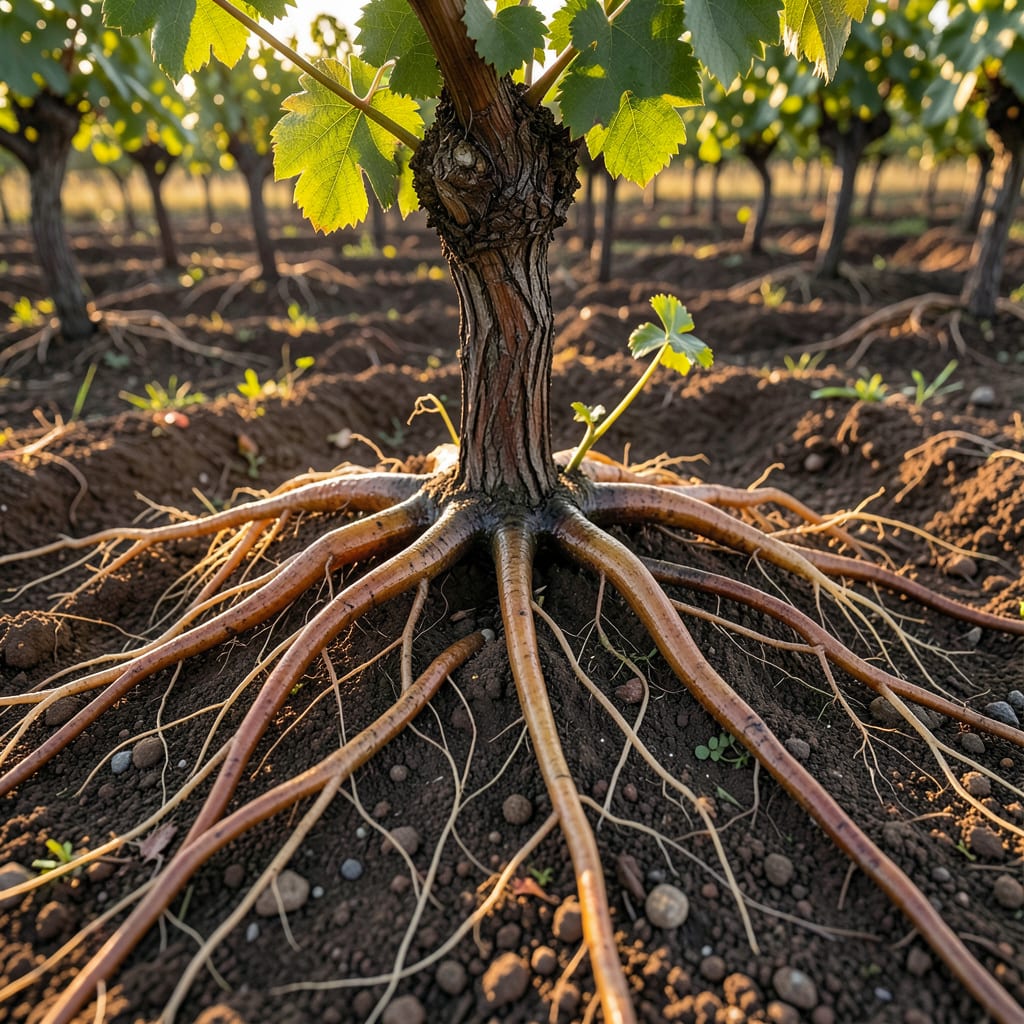
The first time I saw grape vine roots, I was shocked by their depth. These underground networks stretch 10-20 feet down, anchoring vines and pulling up water from surprising depths.
Healthy roots mean stronger growth and better fruit production. Get the soil conditions right, and your vines will establish quickly with minimal fuss. The key is giving them room to spread without competition.
📚 In This Guide
Here’s how I ensure deep, resilient root development for thriving grape vines in any soil.
Choose a location with full sun and well-draining soil—grape roots suffocate in compacted or waterlogged ground. I test drainage by digging a 1-foot deep hole, filling it with water, and checking if it empties within 1-2 hours. If not, amend with compost or sand.
Loosen the soil in a 3-foot diameter area to a depth of 2 feet. This encourages roots to spread widely and deeply from day one. Remove rocks, debris, or competing plants that could obstruct growth or steal nutrients.
Dig a hole 12-18 inches deep and place the vine so the root crown sits 2 inches above the soil line—this prevents rot as the vine settles. Spread the roots outward in the hole rather than letting them coil, which can stunt early development.
Backfill with native soil mixed with 20% compost to provide initial nutrients without overwhelming the roots. Water deeply after planting to eliminate air pockets, which can dry out or damage new root hairs. You’ll know it’s saturated when water pools briefly at the surface before absorbing.
For the first 2-3 weeks, water lightly every 2-3 days to keep the top 6 inches of soil consistently moist but not soggy. This shallow hydration encourages surface roots to grow downward in search of moisture.
After the first month, switch to deep watering—1-2 gallons per vine—once weekly. The goal is to push roots deeper into the soil profile. Watch for wilting in the late afternoon; that’s your cue the roots need a deeper drink.
Remove all but 2-3 vigorous canes in the first growing season. This directs the vine’s energy into root establishment rather than excessive top growth. I use clean pruners and make cuts at a 45-degree angle to prevent water pooling on the wound.
Apply a 3-4 inch layer of organic mulch, like wood chips or straw, around the base but keep it 6 inches away from the trunk. Mulch conserves moisture, moderates soil temperature, and suppresses weeds that compete with roots for resources.
Monitor for suckers—shoots growing from the base—and remove them immediately. These drain energy that should be fueling root expansion below ground.
Avoid high-nitrogen fertilizers in the first year, as they promote leafy growth at the expense of root development. Instead, use a balanced 10-10-10 fertilizer at half strength, applied 6 inches from the trunk to avoid burning tender roots.
In the second year, switch to a low-nitrogen, high-phosphorus formula to encourage root and fruit production. Apply in early spring, just as new growth begins. You’ll see deeper green leaves and more robust canes when the root system is well-established and feeding the vine efficiently.
Took me years to refine these techniques for establishing robust grape vine roots.
Site Preparation Tip: The 1-2 hours drainage test in Step 1 is non-negotiable—if water lingers longer, your vines will struggle no matter what else you do right. I once skipped this and lost an entire planting to root rot within weeks.
Planting Depth Insight: That 2 inches above soil line in Step 2 isn’t just tradition. As the vine settles, this prevents the root crown from sitting in moisture, which is the leading cause of early vine death in new plantings.
Watering Strategy: The first 2-3 weeks of frequent, shallow watering in Step 3 trains roots to grow downward. I see many gardeners overwater initially, which creates lazy surface roots that never establish properly.
Pruning Philosophy: Removing all but 2-3 vigorous canes in Step 4 feels counterintuitive when you’re eager for growth. But this energy redirection is what builds the deep, resilient root system that will support your vine for decades.
Grape vine roots can grow 5–20 feet deep, with most active roots in the top 3–6 feet of soil. Depth depends on soil type, water availability, and vine age. Sandy soils encourage deeper growth, while clay may limit depth.
Young vines take 2–3 years to fully establish their root systems. In the first year, focus on root growth over fruit production. Proper watering and pruning speed up the process.
Yes! Grape vines are adaptable but thrive in well-draining, loamy soil. Amend heavy clay or sandy soil with compost for better root development. Avoid waterlogged or overly compacted soil.
Yellowing leaves, stunted growth, or wilting may indicate root rot, drought stress, or nutrient deficiencies. Check soil moisture and drainage, and inspect roots for discoloration or decay.
Yes, the root system can spread 4–6 feet outward from the trunk, sometimes more. This helps stabilize the vine and access water/nutrients. Space plants accordingly to avoid competition.
