
Beautiful Plants For Your Interior
Beautiful Plants For Your Interior
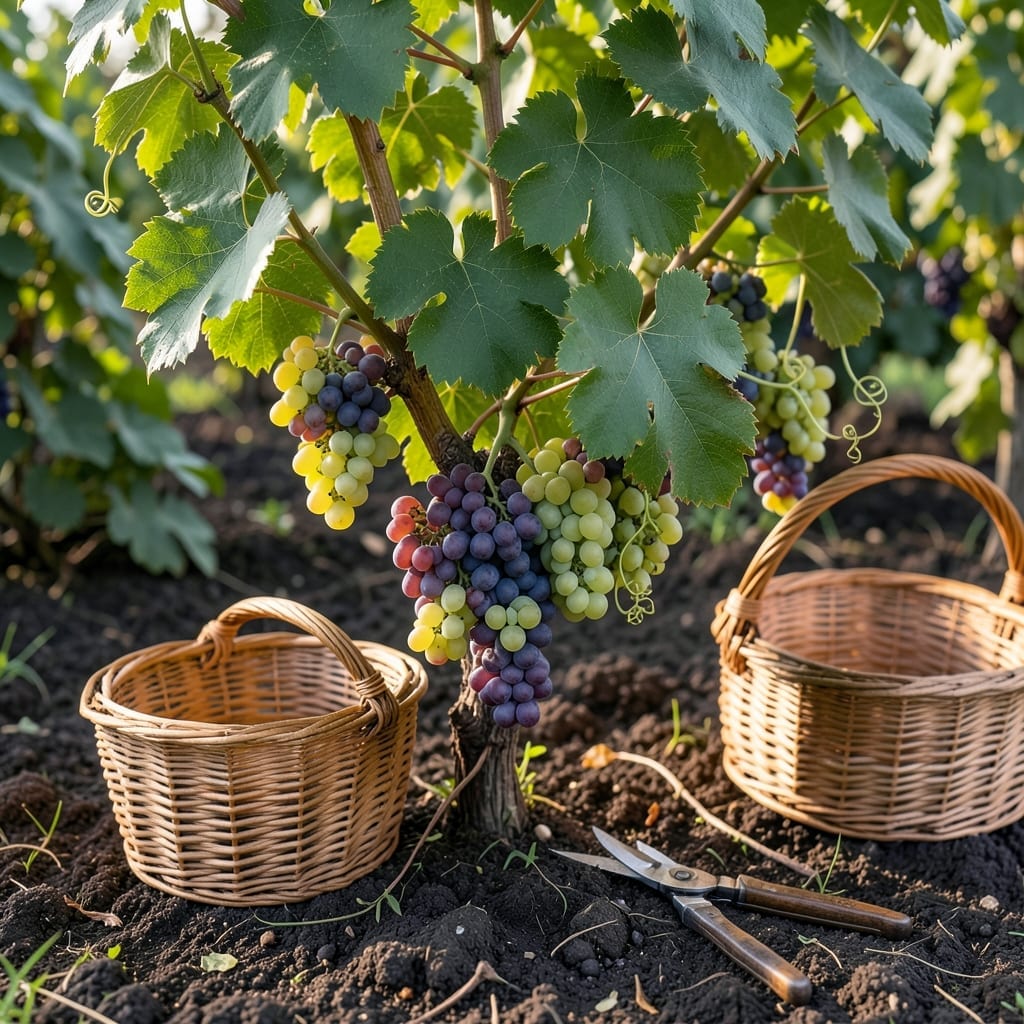
Nothing beats the satisfaction of harvesting perfectly ripe 🍇 grapes from your own vine. But timing that harvest can feel like a guessing game if you don’t know what to look for.
I’ve learned the hard way that picking too early or too late can ruin weeks of careful tending. The good news? There are clear signs that tell you your grapes are ready.
From color changes to taste tests, I’ll show you the most reliable methods to determine ripeness. These simple tricks work for any grape variety in zone 6.
Discover how to nail that harvest window every time and enjoy the sweetest, most flavorful grapes possible from your spring-planted vines.
Timing your grape harvest perfectly starts with knowing your variety. Early-season grapes like Interlaken can ripen in 90-100 days, while late varieties such as Concord may take 150-180 days from bloom. 🌱
I’ve found that mid-season varieties like Thompson Seedless typically need 120-140 days. Wine grapes often have longer ripening windows, with Cabernet Sauvignon requiring 140-160 days in ideal conditions. ☀️
| Variety | Ripening Time | Season |
|---|---|---|
| Interlaken | 90-100 days | Early |
| Thompson Seedless | 120-140 days | Mid |
| Concord | 150-180 days | Late |
| Cabernet Sauvignon | 140-160 days | Late |
Climate zones dramatically affect these timelines. In warmer regions like California, grapes often ripen 10-15 days faster than the same variety in cooler climates like Michigan. I always adjust my expectations based on local weather patterns. 🌡️
For table grapes, the color change is a reliable indicator. Red grapes transition from green to deep purple, while white varieties become translucent. I check daily as the harvest window approaches. ✂️
Wine grapes require more precise timing. Brix levels (sugar content) should reach 22-26% for most reds. I use a refractometer to measure this accurately, especially for varieties like Merlot or Chardonnay. 💧
Seed color offers another clue. In seedless varieties, the tiny rudimentary seeds turn brown when ripe. For seeded grapes, fully developed seeds indicate maturity. I find this works well for Muscadine varieties. 🌿
Don’t overlook cluster appearance. Ripe grapes have full, plump berries that separate easily from the stem. The stem itself often turns from green to woody brown. I look for these signs in my Niagara grapes. 🪴
Taste testing remains the simplest method. Ripe grapes should be sweet with balanced acidity. I sample from different clusters, as ripening can vary even on the same vine. The flavor should match the variety’s known profile. 🌻
Remember that vintage variations occur. A cool spring might delay bloom, pushing harvest later. Conversely, a hot summer can accelerate ripening. I keep detailed records to track these patterns year to year. 📋
Timing your grape harvest perfectly starts with knowing the exact signs of ripeness. I always test multiple clusters since ripening can vary across the vine, especially in zone 6 climates.
Some gardeners rely solely on color changes, but that’s just the first clue. For purple varieties, look for deep, even pigmentation. For green grapes, a slight translucency indicates maturity.
For the most accurate results, I use a refractometer to measure Brix levels. Table grapes typically reach 18-22% while wine grapes often need 22-26% for optimal flavor.
The aroma test is another reliable method. Ripe grapes emit a sweet, fruity scent near the cluster. If you don’t smell anything, they’re likely not ready yet.
Remember that morning harvests often yield the best flavor, as grapes retain more acidity overnight. I always pick after the dew has dried but before the heat of day sets in.
Finally, observe the cluster appearance. Ripe grapes will have full color and may start to soften at the stem. Don’t wait for them to fall off naturally – this often indicates overripeness.
🌿