
Beautiful Plants For Your Interior
Beautiful Plants For Your Interior
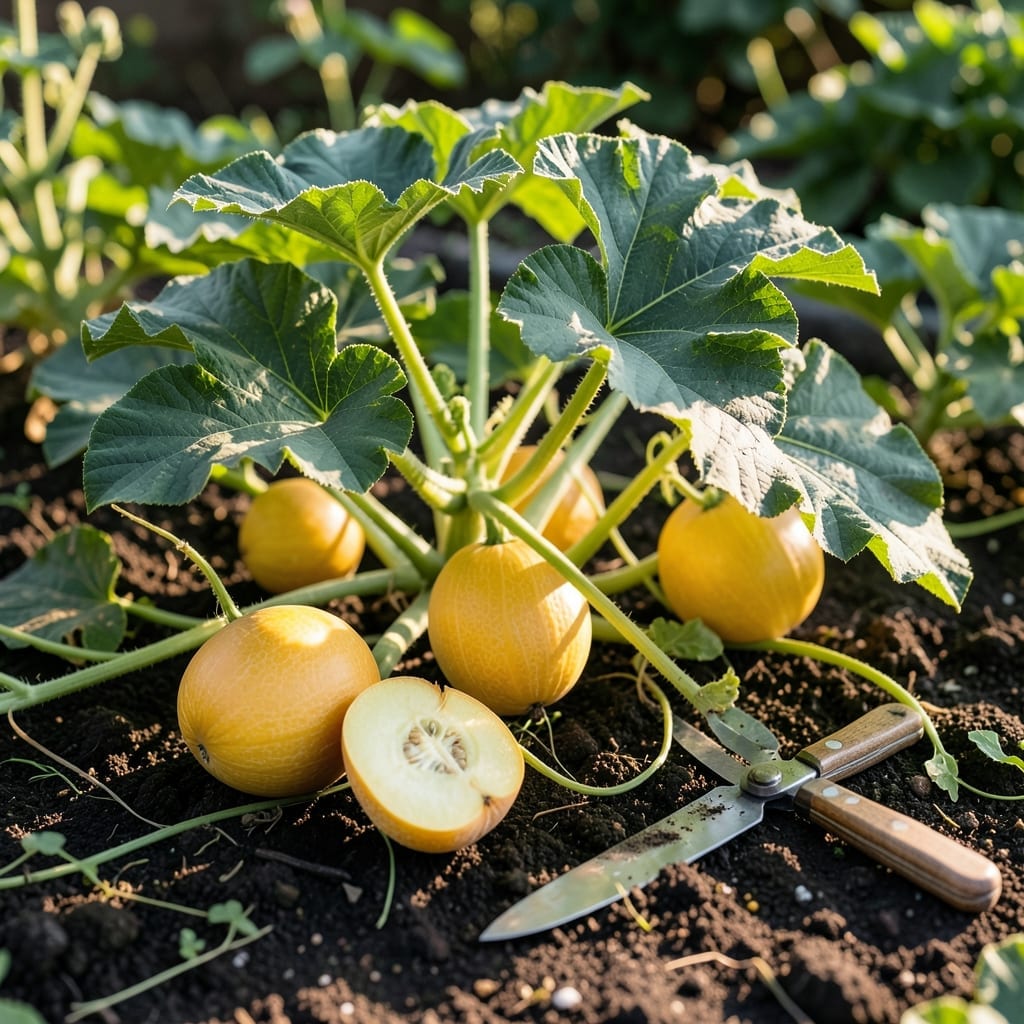
Picking a perfectly ripe Golden Honeydew Melon 🍈 can feel like solving a mystery. That golden rind hides the sweet, juicy treasure inside, and timing is everything for the best flavor.
I remember my first attempt at harvesting—way too early, with disappointing results. Learning the visual and tactile cues changed everything for me, and I’m excited to share them with you.
From the subtle color shift to the telltale stem slip, these signs reveal when your melon is at peak ripeness. No more guessing games or hit-or-miss selections.
Discover how to confidently identify that perfect moment when your 🍈 Golden Honeydew Melon is ready to enjoy, with every bite bursting with sweetness.


Spotting a perfectly ripe Golden Honeydew Melon starts with its color transformation. The rind shifts from green to a rich, uniform golden hue when ready. Look for this change as your first visual clue.
Next, examine the stem end. A ripe melon often has a slight indentation where the stem was attached. This is called the slip stage—a surefire sign of maturity.
| Ripeness Sign | What to Look For |
| Rind Color | Uniform golden yellow |
| Stem End | Slight indentation (slip stage) |
| Aroma | Sweet fragrance at blossom end |
| Texture | Firm with slight give |
| Sound | Hollow when tapped |
The blossom end (opposite the stem) offers another hint. Gently press this area—it should yield slightly under pressure, like a ripe avocado. Too hard means it’s not ready; too soft means it’s overripe.
Don’t overlook the aroma test. A ripe Golden Honeydew will emit a subtle, sweet fragrance at the blossom end. If you can’t smell anything, it’s likely not mature yet.
Give the melon a gentle tap with your knuckles. A ripe one will produce a deep, hollow sound. A high-pitched or dull sound indicates it needs more time on the vine.
Check the veins on the skin. As the melon matures, these raised lines become less pronounced. Smooth skin with faint veins is a good sign of ripeness.
Weight matters too. A ripe Golden Honeydew will feel heavier than it looks for its size, thanks to the high water content in its juicy flesh.
The webbing on the rind (those net-like patterns) can be a good indicator. More pronounced webbing often correlates with sweeter melons, though this isn’t a foolproof method.
Finally, consider the vine’s condition. If the vine is still green and healthy, the melon may need more time. A yellowing vine can indicate the melon is ready for harvest.
With these tips, you’ll never be fooled by a melon’s golden disguise again 🌿
Many gardeners fall into the trap of judging a Golden Honeydew Melon by size alone. Bigger doesn’t always mean riper—focus on the color and texture instead.
Ignoring the stem end is another common error. The slip stage (when the stem detaches easily) is one of the most reliable indicators of ripeness.
⚠️ Warning: Avoid melons with soft spots or bruises, as these signal overripeness or damage. A ripe Golden Honeydew should feel firm with only slight give at the blossom end.
Don’t rely solely on the aroma test if you’re in a cold environment. Melons may not emit their characteristic sweet scent in cooler temperatures, even when ripe.
Choosing melons with green or pale rinds is a mistake. The golden hue is a key visual cue—wait until the entire surface turns a rich, uniform color.
Some gardeners tap melons and expect a specific sound, but this method takes practice. A hollow sound indicates ripeness, while a dull thud means it’s underripe.
Lastly, don’t harvest based on the vine’s appearance alone. While a yellowing vine can suggest ripeness, it’s better to combine this with other signs like color and stem slip.
Master these tips, and you’ll pick perfect melons every time 🌿