
Beautiful Plants For Your Interior
Beautiful Plants For Your Interior
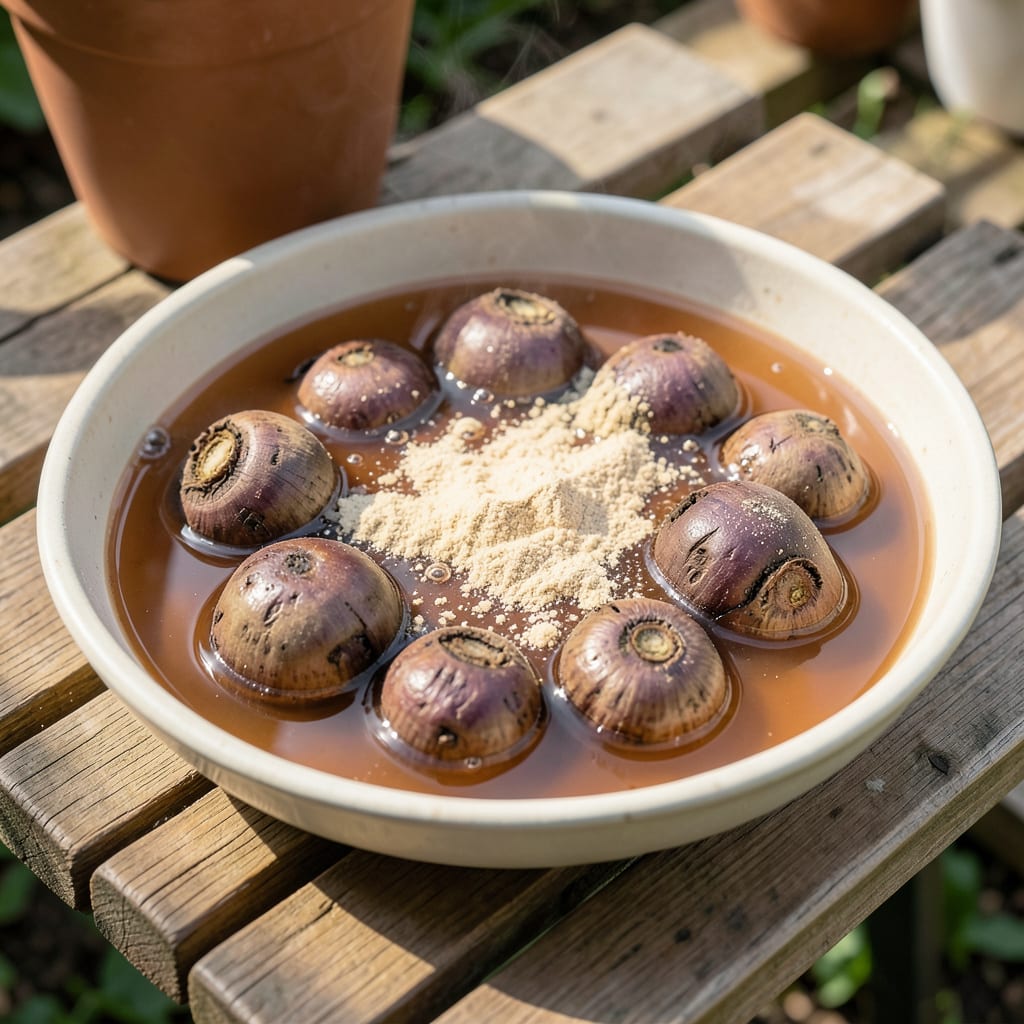
Dahlia tubers rot in storage more often than we’d like to admit. A simple preventative soak before tucking them away for winter changes everything—no more opening storage bins to find mushy, blackened clumps instead of plump, healthy tubers.
I learned this the hard way after losing an entire season’s worth of prized dinnerplate varieties. The culprit? Fungal spores lurking on the tuber surface, ready to explode into rot the moment conditions turn damp and cool.
This method adds a 5-minute step to your fall routine that pays off all winter. Whether you choose organic copper or conventional fungicides, the process is identical: soak, dry, store. That’s it.
Come spring, you’ll pull out firm, disease-free tubers with eyes already swelling. No guesswork, no losses—just the peace of mind that your dahlias are safe until planting time.
Dahlia tubers are susceptible to fungal infections, especially during storage, due to several environmental and biological factors. Understanding these causes helps you take targeted action to prevent decay.
Excess moisture in storage areas creates the perfect breeding ground for fungi like Fusarium and Botrytis. These pathogens thrive in damp conditions, breaking down tuber tissues and leading to soft rot or black rot. Even condensation from temperature fluctuations can introduce enough moisture to trigger infection.
Stagnant air traps humidity and prevents tubers from drying properly. Without ventilation, spores settle on the surface, germinate, and penetrate the tuber. This is why crowded storage containers or sealed plastic bags accelerate fungal growth.
Physical injuries—from digging, handling, or pests—create entry points for fungi. Even microscopic cracks allow pathogens like Phytophthora to invade. Damaged tubers release sugars and nutrients that further attract and fuel fungal activity.
Fungal spores often linger on unsterilized tools, storage crates, or soil particles clinging to tubers. If you reuse containers or tools without cleaning, you risk reintroducing pathogens year after year. Soil-borne fungi, such as Verticillium, can also infect tubers during growth and remain dormant until storage conditions favor activation.
When your dahlia tubers show signs of fungal trouble—like rot, mold, or discoloration—don’t panic. Here’s how to tackle the most common issues with practical fixes and prevention tips to keep your tubers healthy for next season.
Fix: Gently brush off visible mold with a soft brush, then soak tubers in a 1:10 bleach-to-water solution for 10 minutes. Rinse and dry thoroughly in a well-ventilated area. For stubborn cases, use a copper-based fungicide soak as directed on the label.
Prevent: Store tubers in a cool, dry place (40–50°F) with good airflow. Avoid plastic bags—opt for paper or mesh bags instead. 💡Pro tip: Dust tubers with sulfur powder before storage to deter mold.
Fix: Trim away affected areas with a sterilized knife (dip in rubbing alcohol between cuts). Soak the remaining healthy tuber in a thiophanate-methyl fungicide for 15–20 minutes, then air-dry for 24 hours before storage.
Prevent: Inspect tubers before storing and discard any with soft spots. Ensure your storage area has low humidity (below 60%) to inhibit rot. ✨Bonus: Add a small fan for air circulation if storing in a box.
Fix: Remove and destroy infected tubers immediately—they won’t recover. For mild cases, soak healthy tubers in a hydrogen peroxide solution (3%) for 5 minutes to kill spores. Repeat weekly if needed.
Prevent: Rotate planting locations yearly to avoid soil-borne fungi. 🎯Key move: Solarize garden soil in late summer by covering it with clear plastic for 4–6 weeks to kill pathogens.
Most fungicides require a 10-20 minute soak for tubers. Always follow the product’s label instructions precisely. After soaking, dry them thoroughly in a well-ventilated area for 24 hours before storage.
Yes! A 1:10 bleach-water solution or 3% hydrogen peroxide works well for organic treatment. Copper-based fungicides are also organic-approved and effective against many fungal spores.
Store treated tubers at 40-50°F with low humidity. This temperature range prevents fungal growth while keeping tubers dormant. Avoid freezing temperatures or locations above 60°F.
