
Beautiful Plants For Your Interior
Beautiful Plants For Your Interior
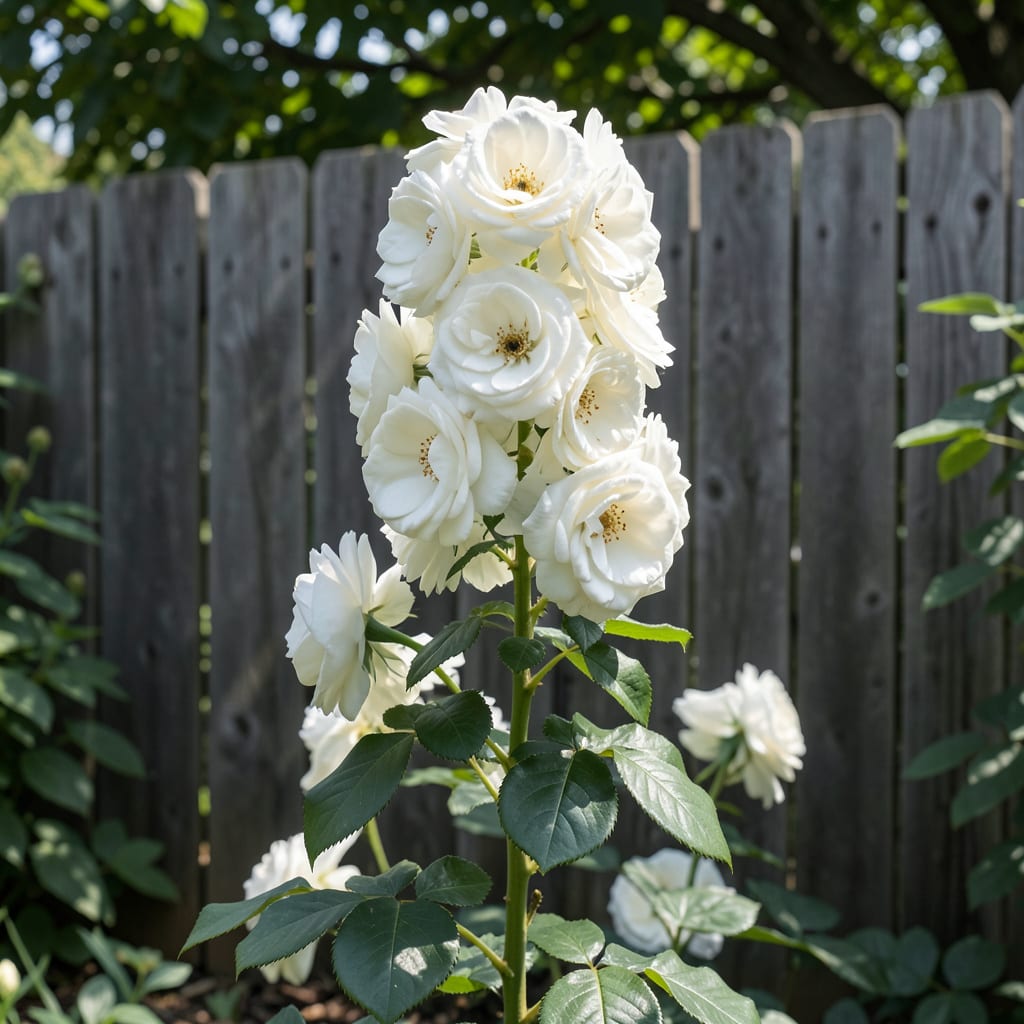
This upright beauty transforms any landscape into a living sculpture. I planted my first one three years ago and it’s now the focal point of my yard, reaching 12-16 feet tall with a narrow, columnar shape that fits perfectly in tight spaces.
It thrives in full sun to partial shade and asks for almost nothing in return—just well-drained soil and occasional watering. The pure white blooms appear in summer and keep coming until frost, attracting pollinators and turning heads.
📚 In This Guide
Here’s the method I use to establish a show-stopping white pillar Rose of Sharon with minimal fuss.
Choose a site with full sun to partial shade, though 6+ hours of direct sunlight yields the most prolific blooms. The white pillar variety thrives in well-draining soil with a pH between 6.0 and 7.5. Avoid low-lying areas where water pools after rain—root rot will kill the plant faster than you can say “drainage.”
I always test the soil first. If it clumps tightly when squeezed, amend it with compost or sand. The ideal texture should crumble easily in your hand while retaining slight moisture. This ensures roots can breathe and expand without drowning.
Dig a hole twice as wide and just as deep as the root ball. For a mature white pillar Rose of Sharon, that typically means a 2-3 foot wide and 18-24 inch deep hole. Loosen the soil at the sides and bottom to encourage outward root growth.
Real talk: the wider the hole, the better. Roots spread horizontally far more than they grow deep, and giving them room to stretch prevents girdling later. Mix a shovelful of compost into the removed soil—this provides a slow-release nutrient boost without overwhelming the plant.
Gently remove the plant from its container and inspect the roots. If they’re circling the pot, tease them apart with your fingers to prevent strangulation. Place the root ball in the hole so the top sits 1-2 inches above ground level—it’ll settle slightly after watering.
Backfill with the amended soil, tamping lightly as you go to eliminate air pockets. Water thoroughly once the hole is half-filled, then complete the backfilling. This two-step watering ensures the soil settles evenly around the roots.
After planting, give the shrub a deep soak with 10-15 gallons of water. The goal is to saturate the entire root zone. For the first 2-3 weeks, water every 2-3 days unless rain provides 1 inch of water weekly.
Apply a 3-4 inch layer of mulch (wood chips or shredded bark) around the base, keeping it 6 inches away from the trunk to prevent rot. Mulch retains moisture, suppresses weeds, and regulates soil temperature—critical for a plant that hates temperature swings.
The white pillar variety is bred for an upright habit, but it still benefits from occasional shaping. In early spring, before new growth appears, remove any dead, diseased, or crossing branches. Thin out about 20% of the oldest stems to encourage vigorous new growth.
This is the moment that matters: if you want a true vertical accent, select 3-5 strong central stems and prune lateral branches to 6-12 inches. Tie the main stems to a bamboo stake or trellis if needed, but most pillar types support themselves once established. You’ll see the vertical structure take shape within a single growing season.
A few insights to ensure your white pillar Rose of Sharon thrives from day one.
Sunlight Strategy: While this variety tolerates partial shade, aim for that 6+ hours of direct sunlight mentioned in Step 1 for the most spectacular blooms. I’ve noticed plants in full sun produce nearly double the flowers of those in shadier spots. If your location only gets morning sun, position it where it catches those early rays—they’re gentler and prevent leaf scorch.
Soil Testing Tip: The pH range of 6.0 to 7.5 in Step 1 isn’t just a suggestion. Invest in a simple soil test kit before planting. I learned this the hard way after losing two shrubs to overly acidic soil. If your test reveals a pH below 6.0, work in some lime; for pH above 7.5, sulfur will help bring it into range.
Watering Wisdom: That 10-15 gallons deep soak in Step 4 is non-negotiable for establishment. The most common mistake I see is shallow watering—it encourages surface roots that can’t withstand drought. Use a slow trickle from your hose for at least 30-45 minutes to ensure the water penetrates deeply. And remember, during those first 2-3 weeks, consistency is key: every 2-3 days without fail.
Pruning Precision: In Step 5, when thinning out 20% of the oldest stems, focus on the woodiest, most congested branches first. This isn’t just about aesthetics—it’s about airflow. Poor circulation leads to fungal issues. Also, when selecting your 3-5 strong central stems, choose those with the thickest diameter and most vertical growth. They’ll form the backbone of your pillar structure.
This upright shrub typically reaches 8–12 feet tall with a narrow, columnar shape (2–3 feet wide), perfect for vertical accents.
Expect stunning white blooms from mid to late summer, often continuing into early fall. It thrives in full sun to partial shade.
Yes! It’s drought-tolerant once established and requires minimal pruning. Just water occasionally and enjoy its resilience.
For tighter areas, try dwarf varieties like ‘Lil’ Kim’ or ‘Minerva’—both offer similar beauty in a compact form.
Common causes: too much shade, over-fertilizing (especially with nitrogen), or pruning at the wrong time. Prune right after blooming ends.
