
Beautiful Plants For Your Interior
Beautiful Plants For Your Interior
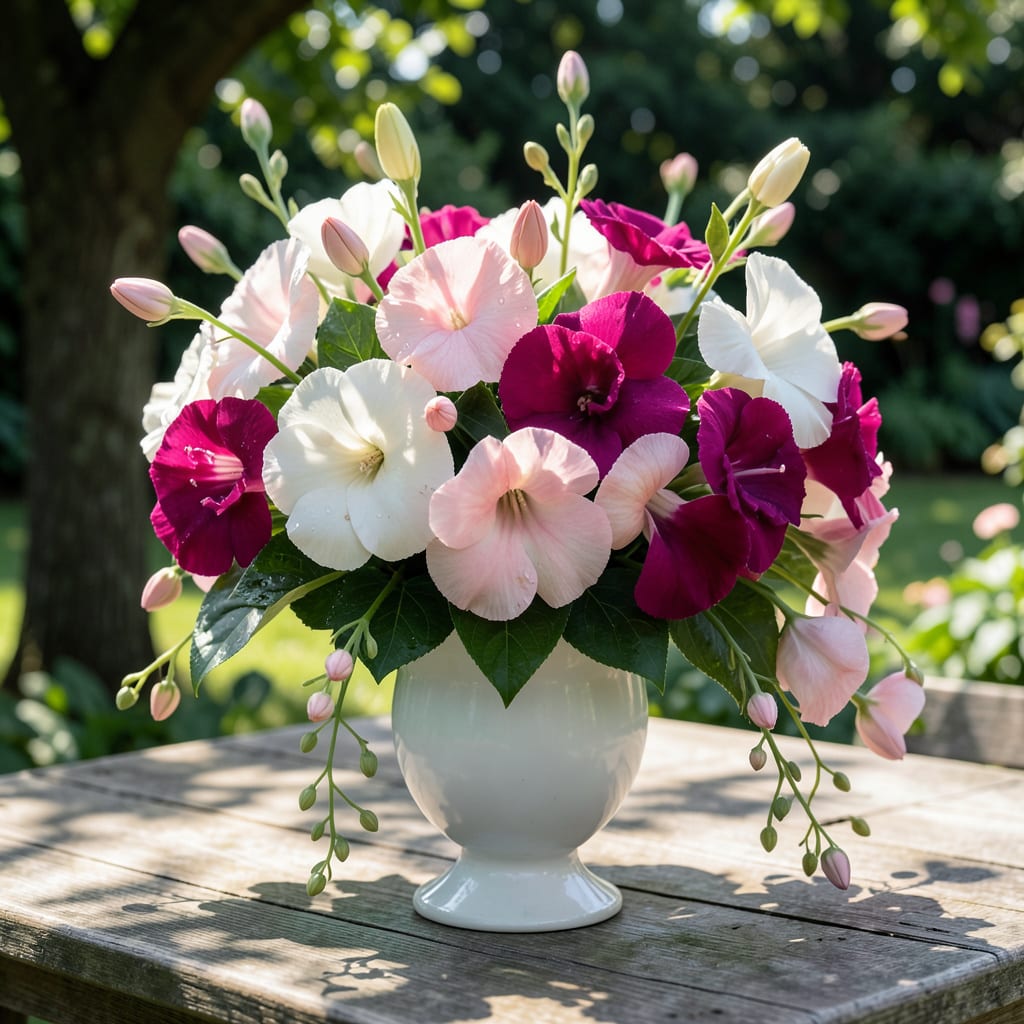
White and pink fuchsias stop me in my tracks every time. Those delicate, dangling blooms look like tiny ballerinas mid-pirouette.
They thrive in partial shade with consistent moisture but hate soggy roots. Plant them in well-draining soil, and you’ll get waves of vibrant color from spring to fall with minimal effort. The hummingbirds can’t resist either.
📚 In This Guide
Here’s the method I use to ensure vibrant, healthy bicolor blooms every time.
Fuchsias thrive in partial shade with morning sun and afternoon shade. I always look for a spot that gets 4-6 hours of indirect light daily. Too much direct sun scorch the delicate blooms, while too little light results in weak growth and fewer flowers.
Check the soil by digging a small hole. It should be well-draining and rich in organic matter. If your soil is heavy clay or sand, amend it with compost before planting to give your fuchsias the best start.
Loosen the soil to a depth of 12-18 inches and mix in a 2-3 inch layer of compost to improve fertility and drainage. Fuchsias prefer slightly acidic to neutral soil with a pH between 6.0 and 7.0.
If planting in containers, choose pots that are at least 12 inches in diameter with drainage holes. Fill them with a high-quality potting mix designed for container gardening. I line the bottom with a thin layer of gravel to ensure proper drainage and prevent root rot.
Gently remove the fuchsia from its nursery pot and loosen the roots if they are tightly bound. Dig a hole twice as wide and just as deep as the root ball. Place the plant in the hole, ensuring the top of the root ball is level with the surrounding soil.
Backfill with soil, pressing lightly to remove air pockets, and water thoroughly to settle the soil around the roots. If planting multiple fuchsias, space them 18-24 inches apart to allow for proper air circulation and growth.
Water your fuchsias deeply after planting, soaking the soil to a depth of 6-8 inches. Keep the soil consistently moist but not waterlogged—fuchsias don’t tolerate soggy roots. I water mine every 2-3 days during dry spells, adjusting based on rainfall and soil moisture.
Apply a 2-3 inch layer of organic mulch, like shredded bark or compost, around the base of the plant. Mulch helps retain moisture, suppress weeds, and regulate soil temperature. Keep the mulch a few inches away from the stem to prevent rot.
Feed your fuchsias with a balanced, water-soluble fertilizer every 2-4 weeks during the growing season to encourage vibrant blooms. I use a 10-10-10 or 20-20-20 formula diluted to half strength to avoid burning the roots.
Pinch back the tips of new growth every 4-6 weeks to promote bushier plants and more flowers. Remove spent blooms regularly to encourage continuous blooming. This keeps your fuchsias looking full and healthy throughout the season.
Here’s what I’ve learned from years of growing these stunning bicolor blooms.
Light Requirements: The 4-6 hours of indirect light daily mentioned in Step 1 is non-negotiable for vibrant blooms. I once tried a full-sun spot and lost half my plants within a week. Morning sun with afternoon shade creates the ideal balance—just enough light to fuel growth without scorching those delicate petals.
Soil Preparation: Don’t skip the 12-18 inch soil loosening in Step 2. Fuchsias develop extensive root systems, and compacted soil stunts their growth. Mixing in that 2-3 inch layer of compost gives them the rich, well-draining foundation they need to thrive.
Planting Depth: In Step 3, planting with the top of the root ball level with the soil surface prevents rot. I bury the stem too deep once and watched my fuchsia struggle for weeks. The plant can’t breathe properly when it’s planted too low.
Watering Wisdom: The 6-8 inch deep watering in Step 4 encourages deep root growth. Shallow watering leads to weak plants that wilt at the first sign of heat. And remember, that 2-3 day watering schedule is just a guideline—check soil moisture first, especially during rainy periods.
Keep them in partial shade, water regularly to maintain moist soil, and fertilize weekly during growing season. Prune spent blooms to encourage new growth.
Plant after the last frost in spring when temperatures stay above 50°F (10°C). They thrive in warmer months but need protection from extreme heat.
Yes! Use well-draining pots and a quality potting mix. Containers allow easy movement to ideal light conditions and overwintering indoors.
Wilting often signals underwatering or root rot. Check soil moisture—water if dry, or improve drainage if soggy. Avoid overhead watering to prevent fungal issues.
Try impatiens, begonia, or petunia for similar vibrant, bicolor blooms. These also prefer partial shade and add charm to gardens or hanging baskets.
