
Beautiful Plants For Your Interior
Beautiful Plants For Your Interior
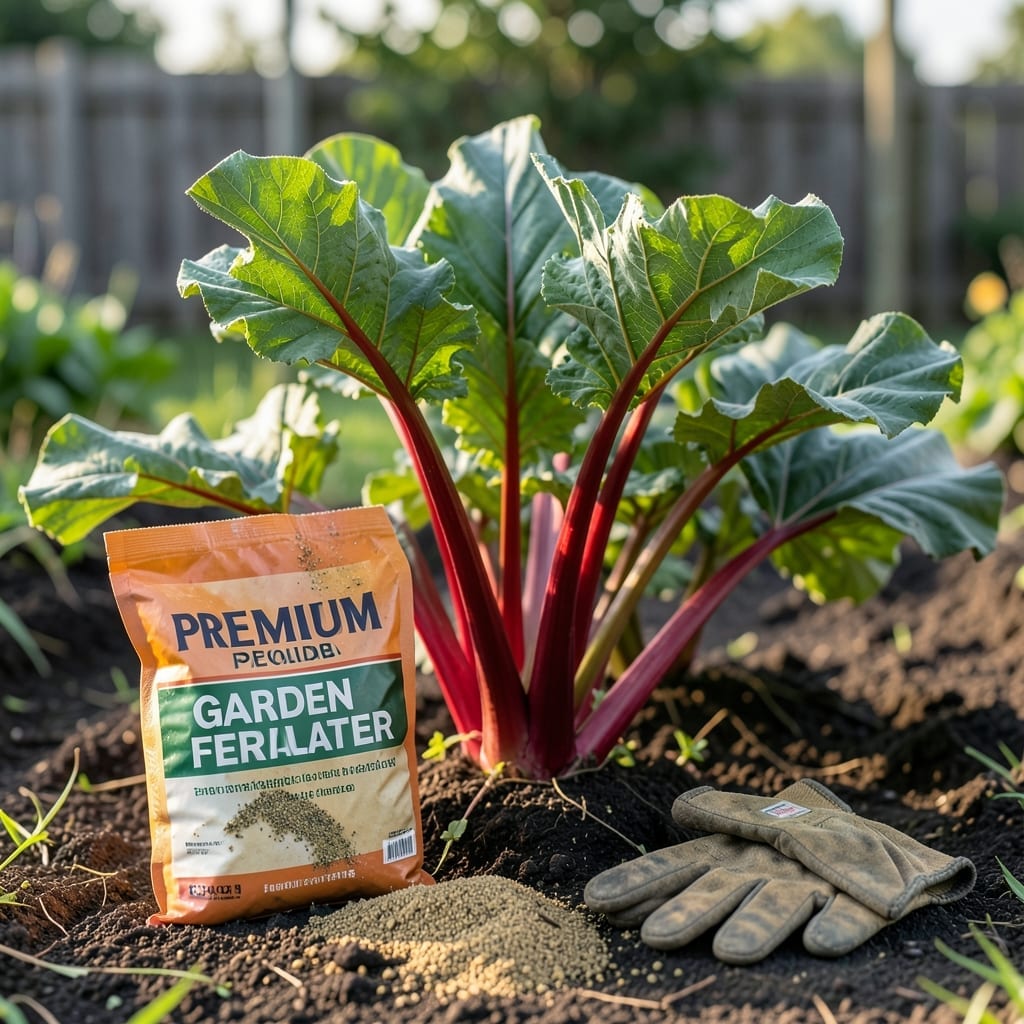
I’ve seen too many gardeners struggle with weak, spindly rhubarb stalks. The truth is, the right nutrients make all the difference for your 🌱 Rhubarb plants.
Without proper feeding, your harvests will disappoint. But with the correct approach, you can transform your patch into a powerhouse of thick, vibrant stalks.
Discover how to choose and apply fertilizers that give your rhubarb the boost it needs for bigger yields this season.
I’ve tested countless fertilizers on my rhubarb plants, and the results vary dramatically. The key is choosing a blend that supports strong stalk growth without overstimulating leafy development. Rhubarb thrives with a balanced approach to nutrients 🌱
Organic options like compost and well-aged manure are my top picks for long-term soil health. They improve soil structure while providing slow-release nutrients that rhubarb loves. Synthetic fertilizers can work too, but require more careful application.
| Type | Best For | NPK Ratio | Application Time |
|---|---|---|---|
| Compost | Soil health | Varies | Early spring |
| Well-aged manure | Nutrient boost | 1-1-1 | Spring/fall |
| 10-10-10 balanced | Quick growth | 10-10-10 | Growing season |
| Bone meal | Root development | 3-15-0 | Planting time |
For my rhubarb patch, I always start with a 2-inch layer of compost in early spring. This gives the plants a nutrient-rich foundation as they emerge from dormancy. The slow-release nature of compost prevents the burn risk that comes with synthetic fertilizers.
If you’re using synthetic fertilizer, opt for a balanced 10-10-10 formula. Apply it sparingly – about 1/2 cup per plant – every 4-6 weeks during the growing season. I’ve found this schedule promotes consistent stalk production without excessive leaf growth.
Well-aged manure is another excellent choice, but never use fresh manure. It can burn your plants and introduce weeds. I apply 1-2 inches around the base of each plant in early spring and again after harvest to replenish nutrients.
For those looking to boost root development, bone meal is my secret weapon. I work about 1/4 cup into the soil around each plant at planting time. This gives the roots a phosphorus-rich start that supports long-term growth.
Remember that rhubarb is a heavy feeder, but it’s sensitive to over-fertilization. I always err on the side of caution, applying less rather than more. The plants will tell you if they need more – look for pale stalks or stunted growth.
Finally, don’t forget about soil pH. Rhubarb prefers a slightly acidic soil between 6.0 and 6.8. I test my soil every 2-3 years and amend with lime or sulfur as needed to maintain the ideal range 🌿
By rotating between these fertilizer types and paying attention to your plants’ response, you’ll develop a custom feeding program that keeps your rhubarb thriving year after year. The key is consistency and observing your plants’ needs rather than sticking rigidly to a schedule.
I’ve learned that timing is everything when fertilizing rhubarb plants. The best approach is to feed heavily in early spring as new growth emerges, then maintain with lighter applications through summer 🌱
Every 4-6 weeks during the growing season works well for most gardens. I always apply in the early morning when the soil is moist, which helps prevent root burn and ensures nutrients penetrate deeply.
For application methods, I prefer top-dressing with organic fertilizers. I spread a 1-2 inch layer around the base of each plant, keeping it 3-4 inches away from the crown to prevent rot.
With synthetic fertilizers, I use a side-dressing technique. I create a small trench around the plant, apply the granules, then cover with soil and water thoroughly. This method minimizes direct contact with the plant.
I always water deeply after fertilizing to help distribute nutrients and prevent salt buildup in the soil. A good rule is to provide 1-2 inches of water immediately after application.
Remember that less is often more with rhubarb. I’ve found that over-fertilizing leads to weak stalks and excessive leaf growth. Stick to the recommended amounts and observe your plants’ response to adjust as needed 🌿