
Beautiful Plants For Your Interior
Beautiful Plants For Your Interior
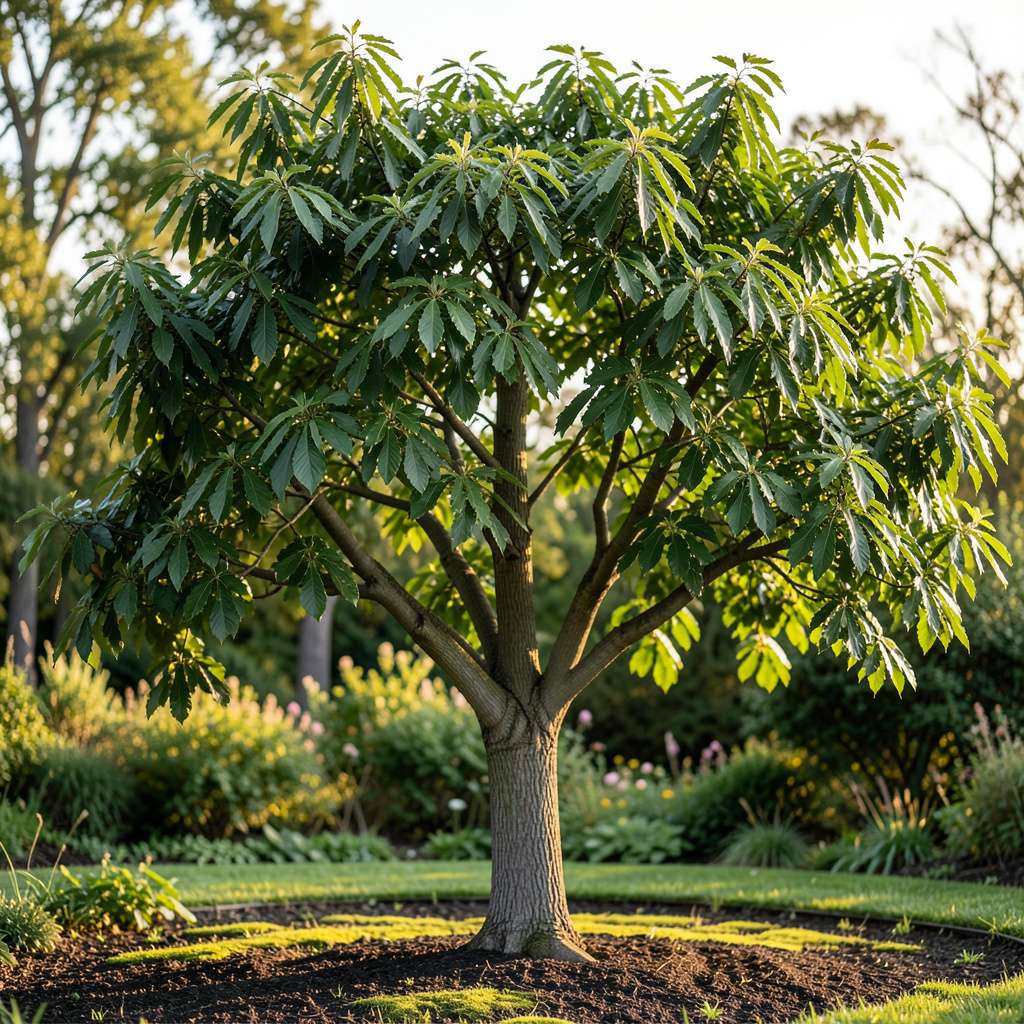
Elm trees are identified by their oval, asymmetrical leaves with saw-toothed edges, distinctive winged seeds (samaras), and vase-shaped growth habit. Bark is often deeply furrowed with a gray-brown color, and branches form a graceful, arching canopy.
What makes elms so recognizable isn’t just one feature—it’s how everything works together. 🌳 I’ve found their double-serrated leaves are particularly distinctive, with one side of the leaf base always noticeably smaller than the other. This asymmetry creates a unique silhouette against the sky. The samaras (those papery, winged seeds) appear in clusters before the leaves fully emerge in spring, which is a telltale sign if you’re identifying elms early in the season. The bark develops those deep grooves as the tree matures, often forming diamond-shaped patterns that catch the light beautifully.
💡 In This Article
What truly sets elms apart is their leaf venation pattern—a complex network where secondary veins branch off the main vein at nearly 90-degree angles, creating a ladder-like structure visible when held up to light. This pattern is so consistent across species that it’s become a botanical fingerprint.
American elms (Ulmus americana) showcase this most dramatically, with leaves reaching 4-6 inches long and a texture that feels like fine sandpaper between your fingers.
The samaras (those papery seeds) reveal another layer of identification science. Each species has a unique seed shape: Slippery elms produce nearly circular samaras with a tiny notch, while Cedar elms have more elongated wings measuring about 1/2 inch across.
These seeds emerge in spring before leaves fully develop, creating a distinctive “green haze” effect in the canopy. The timing of this emergence—typically 2-3 weeks before full leaf-out—is a reliable seasonal marker for identification.
Bark tells a story of age and species. Young elms start with smooth, grayish bark that develops shallow ridges by year 10. As they mature (particularly in American elms), the bark forms deep, interlocking furrows that can reach 1-2 inches deep—perfect for trapping moisture and supporting epiphytic mosses.
Cedar elms take this further with bark that flakes in thin, curly sheets, while Slippery elms (true to their name) develop a reddish-brown bark that feels slightly slippery when wet due to its high mucilage content.
The vase-shaped growth habit isn’t just aesthetic—it’s a structural adaptation. Elm branches grow at 45-60 degree angles from the trunk, creating that iconic arching canopy. This architecture serves two purposes: it allows sunlight to penetrate to lower branches (unlike the dense canopies of oaks) and makes the tree more resistant to wind damage.
In winter, this shape becomes even more pronounced as the bare branches create a delicate, almost lace-like pattern against the sky.
Seasonal changes offer additional clues. Spring brings the samaras and tiny, reddish flower clusters that most people overlook. Summer reveals the leaves’ double-serrated edges—each “tooth” has its own smaller teeth, creating a jagged margin you can feel by running your finger along the edge.
Fall color varies by species: American elms turn a dull yellow, while Cedar elms develop rich golden-brown tones. Even in winter, the alternating leaf scars (where leaves attached) form a distinctive zig-zag pattern along the twigs.
Here’s what most field guides don’t mention: the leaf base asymmetry is so consistent you can use it like a compass. If you fold an elm leaf along its central vein, the two halves will never mirror each other perfectly—one side will always extend 1/4 to 1/2 inch further down the stem.
This quirk is particularly helpful when distinguishing elms from look-alikes like zelkova trees, whose leaves are more symmetrical. The next time you’re examining a suspect elm, try this simple fold test—it’s one of those “aha!” moments that makes identification click. 🌟
Look for the vase-shaped silhouette and zig-zag leaf scars on twigs. The alternating branch pattern creates a distinctive outline against the sky, even without leaves. Winter is actually ideal for studying the bark’s deep furrows and the tree’s overall architecture.
Check the leaf base—elms have asymmetrical bases where one side extends further down the stem. Zelkovas have symmetrical leaves. Also, elm bark develops deeper furrows, while zelkova bark peels in thin sheets. The fold test (folding a leaf along its vein) reveals elm’s asymmetry instantly.
The double-serrated edges and dense vein network create that sandpaper-like texture. Each “tooth” has smaller teeth, making the margin jagged to touch. This unique structure helps with water runoff and gives elms their distinctive feel. Try running your finger along the edge—it’s unmistakable!
Spring is ideal when samaras appear before leaves fully emerge. Summer offers the best leaf examination, while winter reveals structural clues. Each season highlights different features—spring for seeds, summer for leaves, winter for bark and branching.
Pack a 10x magnifying glass for veins, a small ruler for leaf measurements, and a field notebook. A camera helps document seasonal changes. The magnifier is crucial for examining the ladder-like vein pattern that’s unique to elms.
