
Beautiful Plants For Your Interior
Beautiful Plants For Your Interior
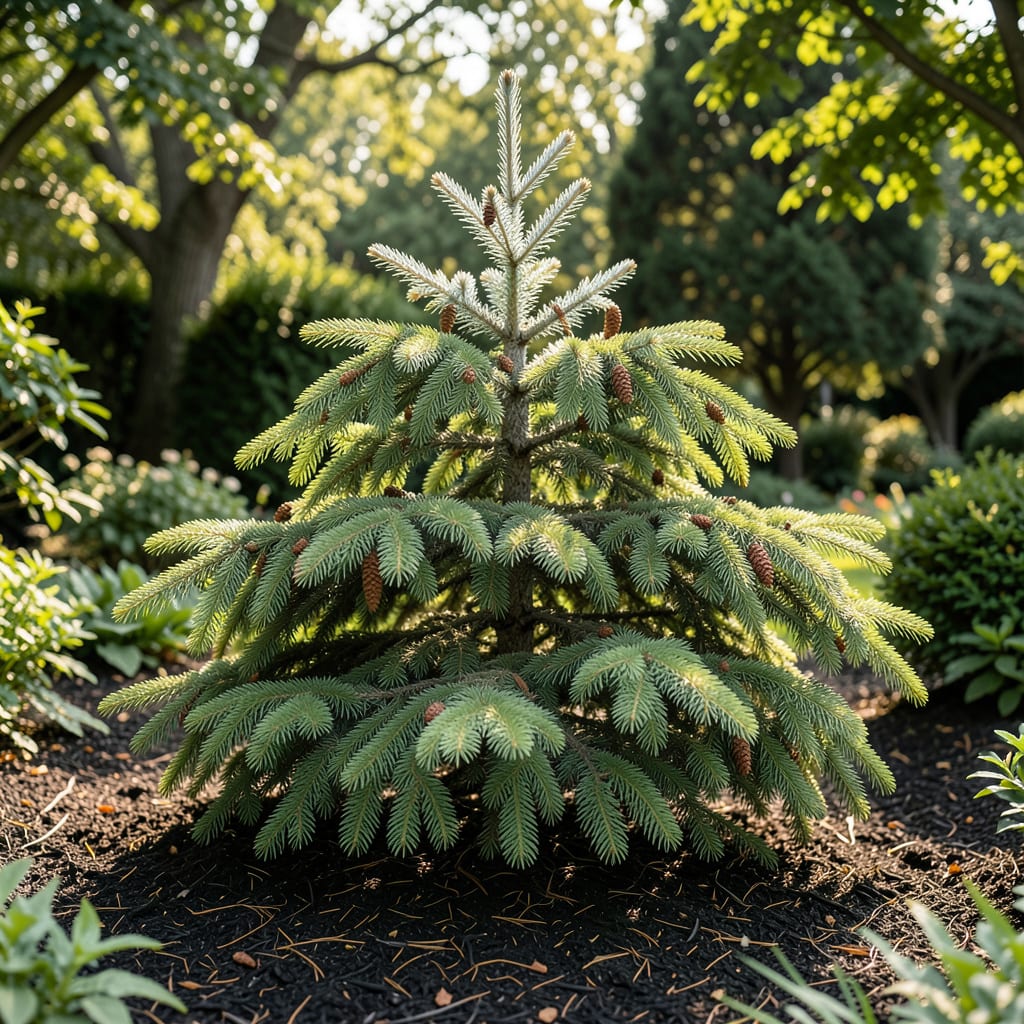
This tree stops visitors in their tracks. I planted my first dwarf weeping white spruce three years ago, and its graceful cascading branches still make people do a double-take.
It thrives in small spaces, needing just 4-6 feet of width at maturity. The silvery-blue needles and pendulous growth create year-round drama without overwhelming your landscape. Perfect for foundation plantings or as a focal point.
📚 In This Guide
Here’s the method I’ve refined to establish these elegant trees with minimal stress and maximum success.
Choose a site with full sun to partial shade, as this species thrives with at least 6 hours of direct sunlight daily. Avoid low-lying areas where cold air or water might pool, as these trees prefer well-drained soil and good air circulation.
The dwarf weeping white spruce looks its best when given space to showcase its graceful, cascading form. Position it as a focal point in the landscape, perhaps near a patio or along a garden path where its unique silhouette can be admired from multiple angles.
Test your soil’s drainage before planting—dig a hole 12 inches deep and fill it with water. If it doesn’t drain within 1-2 hours, amend the area with compost or sand to improve drainage. These trees prefer slightly acidic to neutral soil with a pH between 6.0 and 7.5.
Loosen the soil in a wide area, at least 3 times the diameter of the root ball, to encourage outward root growth. This step is crucial for long-term stability and health, as compacted soil restricts root development and can stunt the tree’s growth.
Dig a hole that is twice as wide as the root ball but no deeper. The tree should sit at the same depth it was in its container—look for the soil line on the trunk. Planting too deep can suffocate the roots and lead to poor growth or even death.
Gently remove the tree from its container and loosen any circling roots with your fingers. Place the tree in the hole, ensuring it stands straight, then backfill with the native soil. Tamp down lightly to remove air pockets, but avoid compacting the soil too firmly around the roots.
After planting, water the tree deeply, giving it 1-2 inches of water to settle the soil around the roots. This initial watering is critical to eliminate air gaps and ensure the roots make good contact with the soil.
Apply a 2-3 inch layer of organic mulch, such as wood chips or shredded bark, around the base of the tree, but keep it at least 6 inches away from the trunk to prevent rot. Mulch helps retain moisture, suppress weeds, and regulate soil temperature, all of which support healthy growth.
Water the tree regularly during its first growing season, providing 1 inch of water per week either through rainfall or irrigation. Check the soil moisture by inserting your finger 2-3 inches deep—if it feels dry, it’s time to water.
Watch for signs of stress, such as browning needles or wilting, which may indicate under or overwatering. The dwarf weeping white spruce is relatively low-maintenance once established, but consistent care in the first year ensures a strong foundation for its cascading beauty to flourish.
Small details make a big difference when establishing these elegant trees.
Sunlight Strategy: In Step 1, ensure your chosen location receives those full 6 hours of direct sunlight daily—their cascading form suffers without it. Partial shade works but don’t skimp below 6 hours, as this directly impacts growth density and that graceful weeping habit you’re after.
Drainage Test: For Step 2’s soil prep, that 12-inch deep hole test is non-negotiable. If water doesn’t drain within 1-2 hours, amending with compost or sand isn’t optional—compacted or waterlogged soil will kill your tree faster than any pest could.
Planting Depth: I learned this the hard way: in Step 3, planting even an inch too deep suffocates roots. The soil line on the trunk must stay visible above ground. Dig that hole twice as wide as the root ball but no deeper—this gives roots room to spread without drowning.
Mulch Placement: That 6-inch gap from the trunk in Step 4 isn’t just a suggestion. Piled mulch against the trunk creates perfect conditions for rot. Spread that 2-3 inch layer of organic mulch like a doughnut around the base, not a volcano.
This compact tree typically grows 4–6 feet tall with a similar spread, making it perfect for small gardens or containers. Its weeping branches can cascade gracefully, adding dramatic elegance without overpowering the space.
Plant in early spring or fall to allow roots to establish before extreme temperatures. Avoid summer planting, as heat stress can hinder growth. Ensure well-draining soil and partial to full sun for optimal health.
Consider ‘Bird’s Nest’ spruce or dwarf Alberta spruce for tighter spaces. Both offer dense, compact growth and evergreen beauty, though they lack the weeping form.
Brown tips often signal underwatering, poor drainage, or winter burn. Check soil moisture, improve drainage, and protect from harsh winds. Prune damaged tips in early spring to encourage new growth.
