
Beautiful Plants For Your Interior
Beautiful Plants For Your Interior
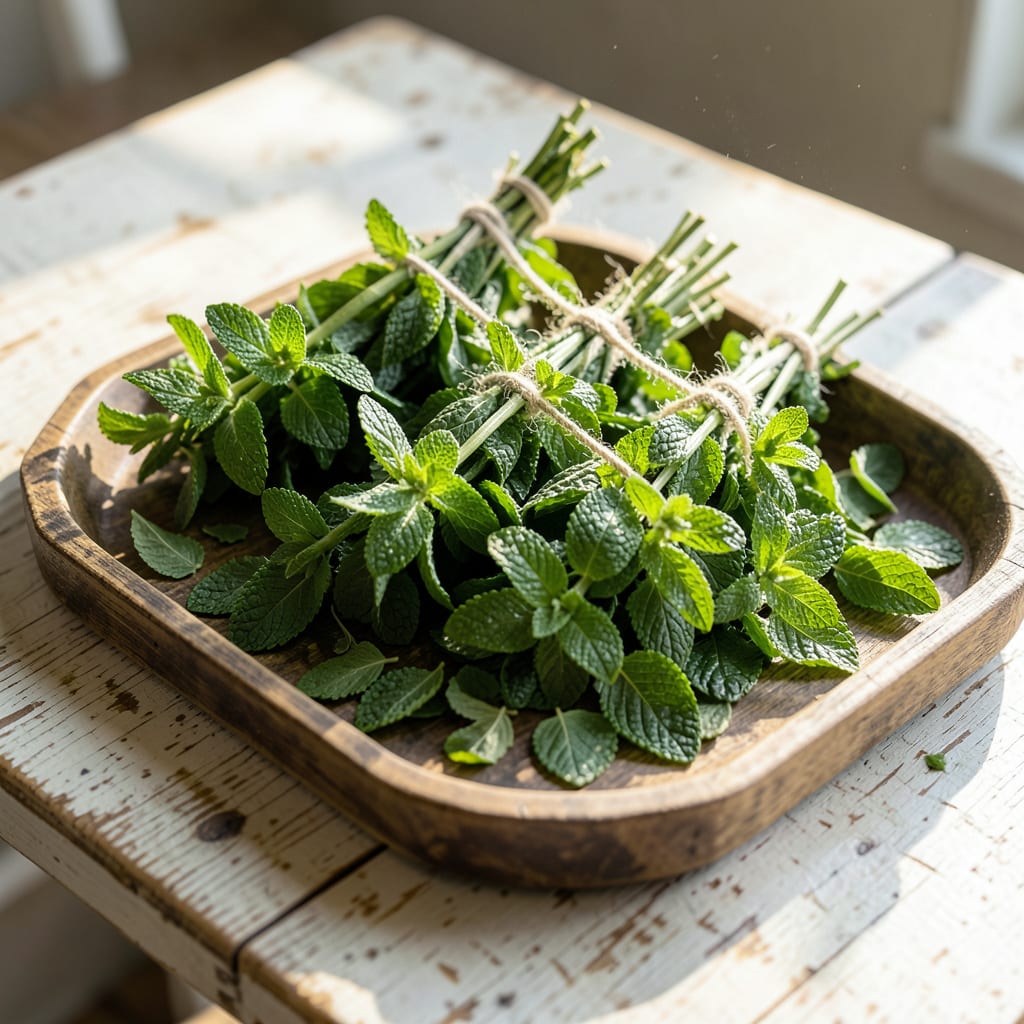
I used to waste half my mint harvest until I learned the right drying trick. The difference between fresh leaves and properly dried ones is night and day—your tea will taste brighter and last for months.
This method works with any homegrown mint variety, and you’ll need just a few basic supplies. The aroma stays surprisingly strong, and you can store the leaves in airtight containers for up to a year.
📚 In This Guide
Here’s how I preserve mint leaves for tea while keeping their bright flavor intact.
Pick mint stems in the morning after the dew has dried but before the sun gets too hot. Choose healthy, pest-free stems with plenty of leaves. I always harvest just before the plant flowers, when the leaves contain the most aromatic oils.
Gently rinse the stems under cool water to remove dirt and bugs, then pat them completely dry with a clean towel. Excess moisture will cause mold during drying, so make sure every leaf is dry to the touch. Trim off any damaged or yellowing leaves.
Strip the leaves from the stems by running your fingers down each stem from top to bottom. The leaves should come off easily. Discard the stems or compost them—they don’t have much flavor for tea.
Spread the leaves in a single layer on a clean surface. Check for any remaining bits of stem or debris. This is your chance to sort out the largest, most perfect leaves for the best tea quality.
Lay the leaves in a single layer on a dry, clean surface like a baking sheet or drying rack. Space them so they don’t touch each other—this prevents moisture buildup and ensures even drying. I use a mesh screen because it allows air circulation from all sides.
Place the leaves in a warm, dry location with good air circulation. A dark, well-ventilated room works best to preserve the color and flavor. Avoid direct sunlight, which can bleach the leaves and reduce their aromatic qualities.
Let the leaves dry for 1-2 weeks, depending on humidity levels. Stir or flip them gently every 2-3 days to ensure even drying. You’ll know they’re ready when they crumble easily between your fingers and the stems snap cleanly.
If you’re in a humid climate, consider using a food dehydrator set to 95-115°F. This speeds up the process to 2-4 hours while maintaining flavor. Just arrange the leaves in a single layer on the trays.
Once completely dry, crumble the leaves by hand or leave them whole if you prefer. Store them in an airtight container like a glass jar with a tight lid. Keep the container in a cool, dark place to maintain freshness.
Properly dried and stored mint leaves will keep their flavor for 6-12 months. I always label my jars with the date so I know when it’s time to harvest fresh leaves again. The aroma should remain strong and bright when you open the container.
Small details make the difference between fresh-tasting leaves and disappointing results.
Harvesting Timing: Step 1 works best when you pick in the morning after dew evaporates but before midday heat. I learned this the hard way after harvesting in afternoon sun and losing half the aromatic oils.
Drying Setup: For Step 3, that dark, well-ventilated room is non-negotiable. Direct sunlight bleaches the leaves, while poor air circulation extends the drying time well beyond the 1-2 weeks.
Humidity Solution: In Step 4, if you’re in a humid climate, that food dehydrator at 95-115°F truly saves the day. The 2-4 hours it takes preserves color and flavor better than any air-drying method I’ve tried.
Storage Secret: In Step 5, the cool, dark place isn’t just advice—it’s essential. I once stored dried mint in a sunny cabinet and the flavor faded within months instead of lasting the full 6-12 months.
Air-drying takes 1-2 weeks in a warm, dark place, while oven or dehydrator methods speed it up to 1-4 hours. Ensure leaves are crisp and crumble easily before storing.
Yes! Spread leaves on a paper towel and microwave in 30-second bursts on low power until dry. Check frequently to avoid burning. This takes 2-4 minutes total.
Keep them in an airtight container away from light and moisture. Glass jars or sealed bags work well. Proper storage preserves flavor for up to a year.
Browning can happen if leaves dry too slowly or are exposed to sunlight. Use faster drying methods (oven/dehydrator) and store in a dark place to retain green color.
Absolutely! Fresh mint works, but dried leaves offer stronger, more concentrated flavor. Use 1 tablespoon of fresh leaves per cup or 1 teaspoon of dried.
