
Beautiful Plants For Your Interior
Beautiful Plants For Your Interior
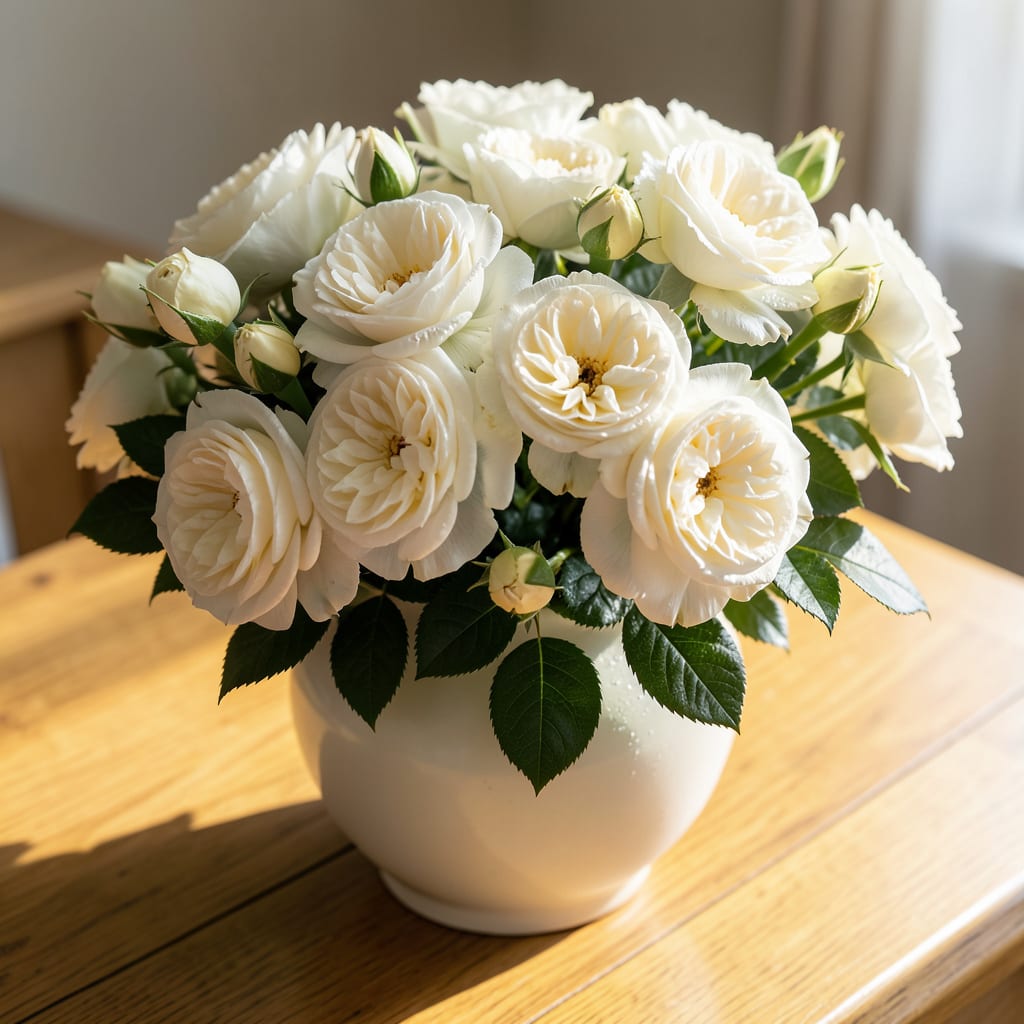
I planted my first white Double Knock Out rose three years ago, and it’s still blooming like it’s day one. These roses laugh at the diseases that wipe out fancier varieties.
With almost no effort, you get continuous white blooms from spring until frost. They handle heat, tolerate poor soil, and keep producing even when you forget to water. Foolproof beauty for any garden.
📚 In This Guide
Here’s the simple method I use to get vibrant white blooms that last from spring until frost.
Select a spot with full sun (at least 6-8 hours of direct sunlight daily). These roses thrive in bright, open areas but can tolerate a bit of afternoon shade in hotter climates. Avoid low-lying spots where water pools, as soggy roots are a quick way to kill them.
Test your soil’s drainage by digging a 12-inch-deep hole and filling it with water. If it drains within 2-3 hours, you’re good to go. If not, amend the area with compost or plant in a raised bed to improve drainage.
Dig a hole about twice as wide as the root ball but no deeper. Place the rose in the hole, ensuring the graft union (the bulge near the base) sits 1-2 inches above soil level. This protects it from rot and encourages strong growth.
Backfill with native soil, gently pressing it down to eliminate air pockets. Water deeply after planting—give it a good 1-2 gallons to settle the soil and hydrate the roots. A light mulch of 2-3 inches helps retain moisture but keep it away from the stem to prevent rot.
Knock Out roses are drought-tolerant once established, but they bloom best with consistent moisture. Water at the base 1-2 times per week, giving each plant 1-2 gallons per session. The goal is to keep the soil evenly moist but not waterlogged.
Check the soil by sticking your finger 1-2 inches deep. If it feels dry, it’s time to water. Morning is ideal—it lets foliage dry before evening, reducing disease risk. Avoid overhead watering to keep leaves dry and healthy.
Feed your roses lightly in early spring with a balanced fertilizer (like 10-10-10) and again after the first flush of blooms. I use 1 tablespoon per plant, scattered around the base and lightly worked into the soil. Always water after fertilizing to prevent root burn.
Deadhead spent blooms regularly to encourage more flowers. Simply snip off faded blooms just above a set of leaves or buds. This keeps the plant looking tidy and signals it to produce more blooms instead of seeds.
Prune in late winter or early spring, just as new growth begins. Remove any dead or diseased wood first, cutting back to healthy green tissue. Then, shape the plant by trimming back one-third of its height to promote bushier growth.
Use clean, sharp pruners and make cuts at a 45-degree angle just above an outward-facing bud. This directs new growth outward, improving air circulation and reducing disease risk. A quick wipe with rubbing alcohol between cuts keeps tools sanitized.
These simple adjustments make growing vibrant white blooms effortless.
Sunlight Strategy: The 6-8 hours of daily sun in Step 1 isn’t just a suggestion—it’s essential for those abundant white blooms. In scorching climates, a bit of afternoon shade prevents petal scorch, but don’t go below 6 hours or you’ll sacrifice flower production.
Drainage Test: That 12-inch-deep hole test in Step 1 is your insurance policy against root rot. If water lingers beyond 2-3 hours, raised beds or compost amendment are non-negotiable. I learned this the hard way after losing two plants to soggy soil.
Watering Wisdom: The 1-2 gallons per plant in Step 2 and Step 3 might seem like a lot, but it’s what establishes deep roots. Stick your finger 1-2 inches into the soil—if it’s dry, it’s time to water. Morning watering is crucial; wet foliage overnight invites disease.
Pruning Precision: In Step 5, trimming back one-third of the height and cutting at a 45-degree angle isn’t about aesthetics—it’s about air circulation. This simple technique prevents fungal issues that can ruin your season-long blooms.
Water deeply 2-3 times a week, ensuring the soil stays moist but not soggy. Adjust based on rainfall and heat—drought-tolerant once established, but consistent moisture encourages blooms.
These roses bloom continuously from spring until the first frost. Deadhead spent flowers to promote even more blooms throughout the season.
Yes! Use a large container (at least 15-20 gallons) with well-draining soil. Ensure full sun (6+ hours daily) and water more frequently, as pots dry out faster.
Common causes include insufficient sunlight, over-fertilizing (especially with high-nitrogen formulas), or pruning at the wrong time. Check for pests or disease, and adjust care as needed.
Yes! Try ‘Blushing Knock Out’ for soft pink blooms or ‘Pink Double Knock Out’ for a bolder color. Both offer the same low-maintenance, disease-resistant traits.
