
Beautiful Plants For Your Interior
Beautiful Plants For Your Interior
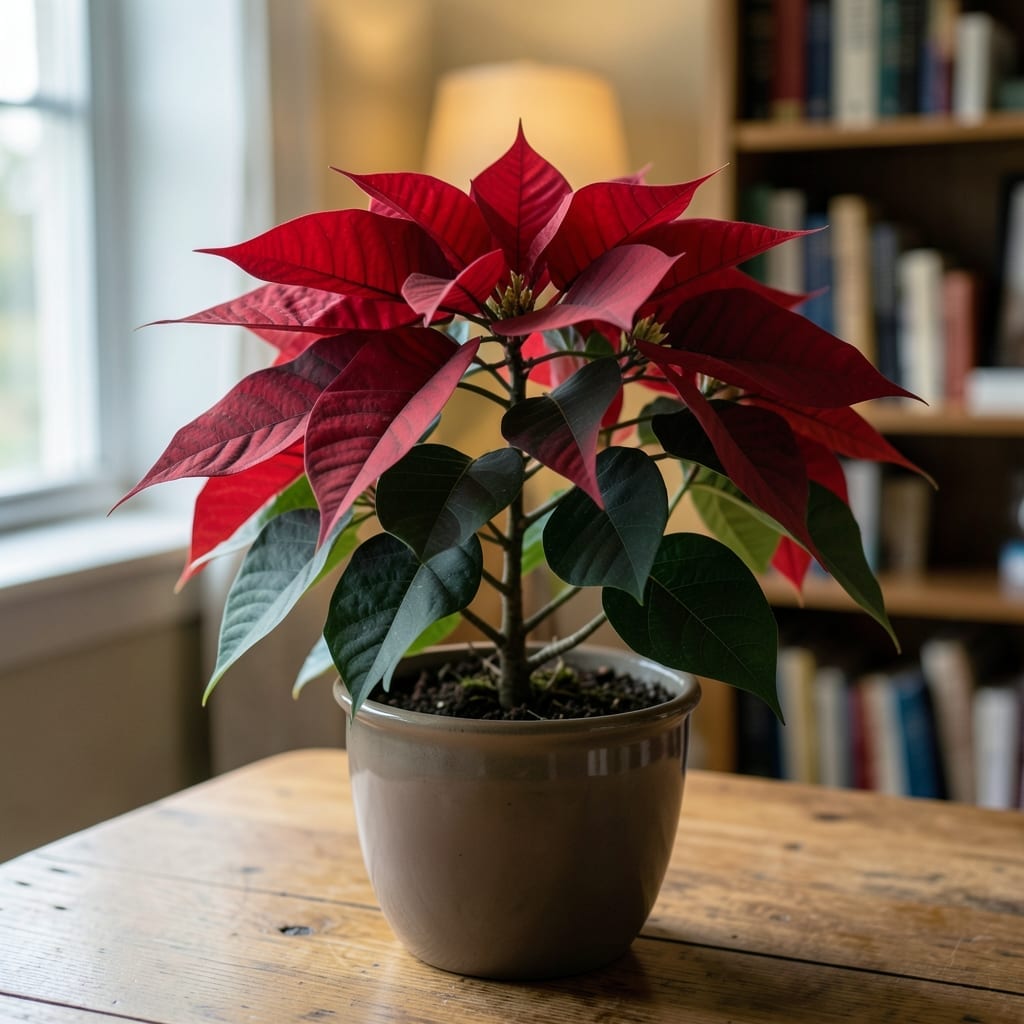
That iconic holiday glow of the 🌺 Poinsettia can dim faster than you’d expect without proper care. Many assume these festive plants thrive in any corner, but light plays a crucial role in their vibrancy.
I’ve seen countless Poinsettias struggle in dim spaces, their red bracts fading to a dull pink. The good news? With the right sunlight, you can keep yours looking stunning all season long.
Discover the simple yet vital light requirements that make all the difference for your Poinsettia’s health and beauty.

Poinsettias thrive in bright, indirect light to maintain their vibrant bracts. I always recommend at least 6 hours daily of quality light for optimal growth and color retention.
Direct harsh sun can scorch the leaves, while too little light leads to weak stems and faded colors. The sweet spot is a well-lit room with filtered sunlight, like near an east or west-facing window.☀️
| Requirement | Specification |
|---|---|
| Ideal Light | Bright, indirect |
| Daily Minimum | 6+ hours |
| Best Window | East/West facing |
| Avoid | Direct harsh sun |
For indoor poinsettias, a sunny windowsill is perfect, but rotate the plant weekly. This ensures even light distribution and prevents lopsided growth.
If growing outdoors in zones 9-11, place them in partial shade. Morning sun with afternoon shade works best to prevent leaf burn during hotter months.
During winter, supplemental grow lights can help if natural light is scarce. I’ve found LED grow lights on a 12-hour timer work wonders for maintaining color.
Remember, poinsettias are short-day plants. They need about 14 hours of darkness daily for 8-10 weeks to trigger blooming. This is crucial if you want them to rebloom next year.
For the healthiest plants, pair proper lighting with consistent watering. Let the top inch of soil dry between waterings to avoid root rot while keeping the plant hydrated.
If you notice yellowing leaves, it might be a sign of too much direct sun. Move your poinsettia to a spot with gentler light and watch for improvement.
With the right light balance, your poinsettias will reward you with vibrant bracts that last through the holiday season and beyond. It’s all about finding that perfect light equilibrium.🌿
Your poinsettia will tell you if it’s not happy with its light. I’ve noticed that yellowing leaves and leaf drop are the first red flags that it’s craving more brightness.
Weak stems and faded bracts are other clear indicators. These signs often appear when the plant isn’t receiving its minimum 6 hours of indirect light daily.
⚠️ Warning: Without sufficient light, your poinsettia may become leggy and lose its vibrant color. Move it closer to a bright window or add grow lights to prevent decline.
If you see new growth looking pale or sparse, it’s a sure sign your plant needs better light exposure. I always check my poinsettias weekly for these early warning signs.
Another common issue is uneven growth, where one side of the plant looks fuller. This happens when light comes from only one direction. I solve this by rotating my poinsettia every few days.
Leaf curling can also indicate light stress. If the edges start to curl, it might be getting too much direct sun or not enough light overall. Adjust its position accordingly.
Remember, poinsettias are tropical plants that love consistency. Sudden changes in light can shock them, so make adjustments gradually over a few days.
With these simple checks, you’ll keep your poinsettia thriving and colorful throughout the holiday season and beyond. It’s all about being attentive to its needs.🌿