
Beautiful Plants For Your Interior
Beautiful Plants For Your Interior
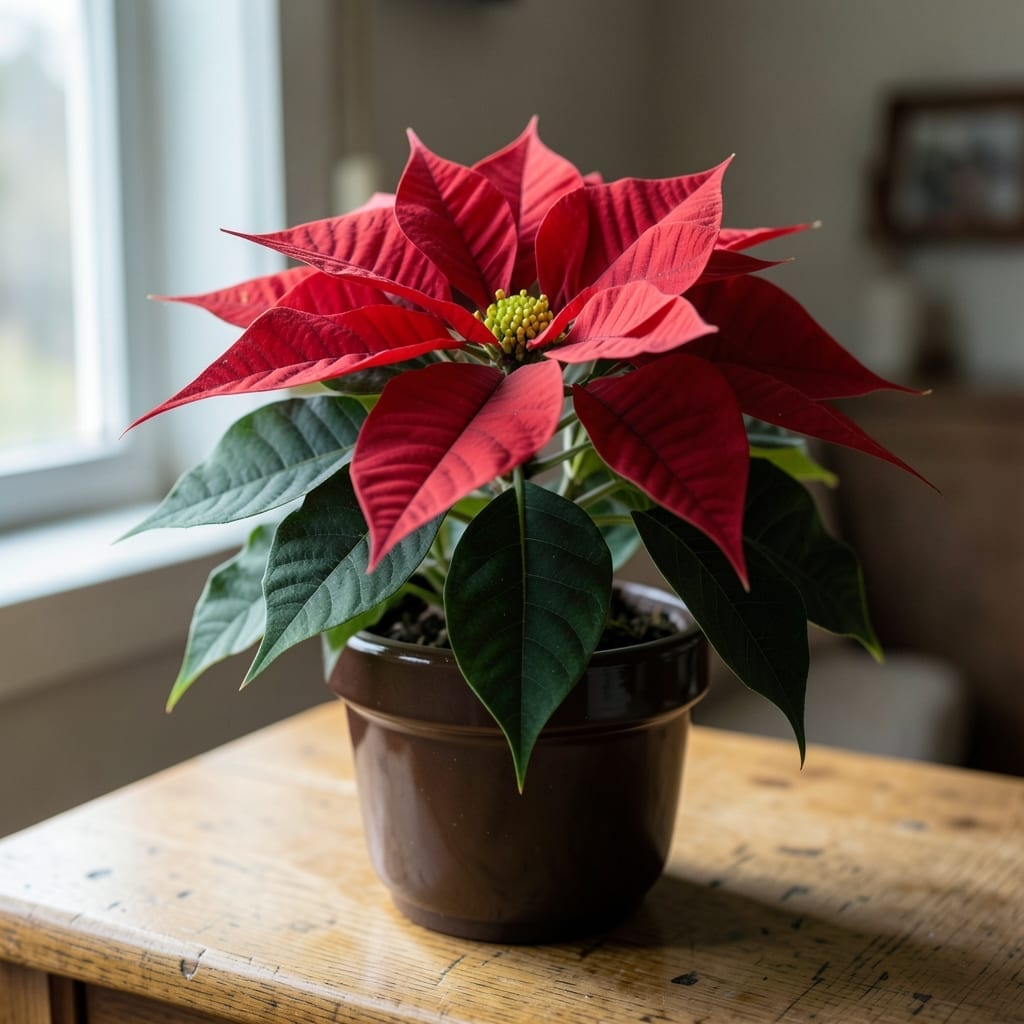
Poinsettias are holiday favorites, but their vibrant bracts can fade without the right care. Understanding their light requirements is key to keeping them thriving long after the season ends.
The 🌺 Poinsettia needs at least 6 hours of bright, indirect light daily to maintain its famous color. Too little light, and you’ll notice leggy stems and dull bracts.
Let me show you how to provide the perfect light conditions, whether you’re growing indoors or in zones 9-11. Your Poinsettia will thank you with stunning blooms all season long.

Poinsettias thrive with the right light balance. These vibrant plants need 6-8 hours of bright, indirect light daily to maintain their famous red, pink, or white bracts. Direct sunlight can scorch their leaves.
I’ve found that south-facing windows work best indoors, providing consistent light without harsh exposure. East or west windows are good alternatives if south isn’t available.
Poinsettia Light Requirements
| Requirement | Specification |
|---|---|
| Daily Light | 6-8 hours |
| Light Type | Bright indirect |
| Best Window | South-facing |
| Outdoor Zones | 9-11 |
For outdoor poinsettias in zones 9-11, place them in partial shade. Morning sun with afternoon shade prevents leaf burn while ensuring they get enough light.
During the fall and winter, when days are shorter, supplement natural light with grow lights for 12-14 hours daily. This mimics their native tropical light conditions.
If your poinsettia’s bracts start fading, it’s often a sign of insufficient light. Move it closer to a window or add a grow light to revive its color.
Remember, poinsettias are short-day plants. They need 12-14 hours of darkness at night to trigger blooming, so avoid artificial light exposure during these periods.
For indoor poinsettias, rotate the pot weekly. This ensures even light distribution and prevents the plant from growing lopsided toward the light source.
If you notice leggy growth or pale leaves, your poinsettia is likely stretching for more light. Increase exposure gradually to avoid shocking the plant.
In my experience, maintaining consistent light conditions is key. Sudden changes can stress the plant, so adjust light sources slowly over a few days.
With the right light care, your poinsettia can stay vibrant for months. It’s all about balance—enough light to thrive, but not so much that it harms those beautiful bracts
☀️Your poinsettia will tell you when it’s not getting enough light. Look for leggy stems that stretch toward the light source, a classic sign of light deprivation.
Pale or faded bracts are another red flag. Those vibrant reds, pinks, or whites lose their intensity without adequate light exposure.
⚠️ Warning: Light Deficiency Signs
❌ Leggy growth: Stems elongating abnormally
❌ Pale bracts: Loss of vibrant color
❌ Leaf drop: Leaves yellowing and falling
❌ Weak blooms: Fewer or smaller flowers
Leaf drop can also indicate poor light conditions. If leaves turn yellow and fall prematurely, your plant is likely struggling with insufficient light.
Another sign is slow growth or a lack of new shoots. Poinsettias need light for photosynthesis, and without it, their growth stalls.
I’ve noticed that uneven color on the bracts often means uneven light distribution. Rotate your plant weekly to ensure all sides receive equal light.
If you see these signs, move your poinsettia to a brighter spot immediately. A south-facing window or supplemental grow lights can quickly restore its health.
Remember, poinsettias are sensitive to sudden changes. Gradually increase light exposure over a few days to avoid shocking the plant.
☀️