
Beautiful Plants For Your Interior
Beautiful Plants For Your Interior
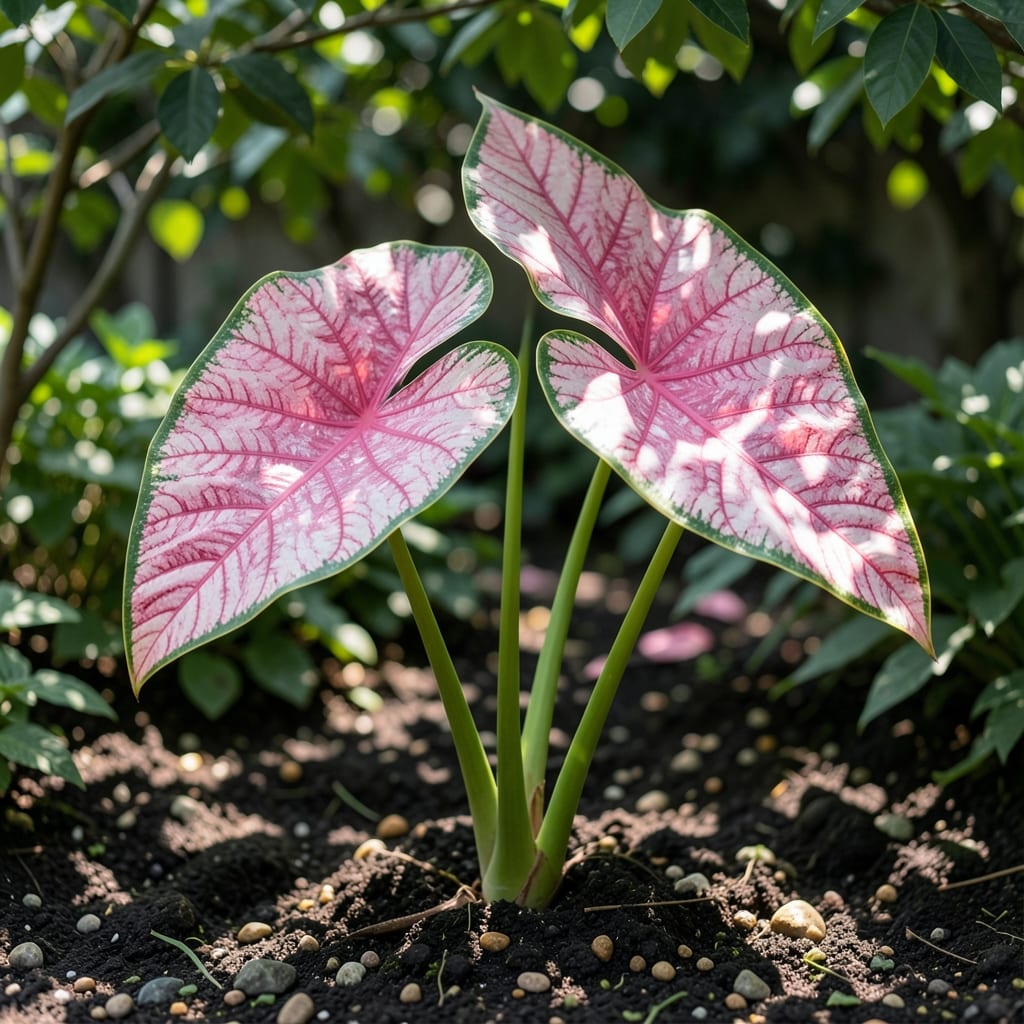
Caladiums can produce small, insignificant white or greenish flowers, but they are grown primarily for their colorful, heart-shaped foliage rather than blooms.
I’ve noticed these plants put most of their energy into producing vibrant, arrow-shaped leaves in shades of pink, red, and white. The flowers, when they do appear, are often hidden beneath the foliage and lack the visual impact of the leaves. In my garden journals, I’ve recorded that even mature caladiums may only bloom sporadically under ideal conditions. ✨
💡 In This Article
Caladiums belong to the Araceae family, where energy allocation heavily favors foliage. The plant’s tubers store resources primarily for leaf production, resulting in those iconic heart-shaped, multicolored leaves that can grow 12-30 inches tall. Flower production requires diverting these stored resources, which the plant does sparingly.
The blooms themselves are scientifically classified as spadices—tiny, finger-like structures wrapped in a modified leaf called a spathe. These appear in muted white, green, or pale pink shades that blend into the foliage. The flowers are typically just 2-4 inches tall, making them easily overlooked among the vibrant leaves. 🌿
This energy prioritization is an evolutionary adaptation. In their native tropical habitats, caladiums compete for light in dense forest understories. The plant’s survival strategy focuses on maximizing photosynthesis through broad, colorful leaves rather than investing in showy flowers that might attract pollinators. This explains why even mature, healthy caladiums may never bloom.
When flowers do appear, they’re often hidden beneath the large leaves. The spathe typically unfurls for only 1-2 days before wilting, giving gardeners a very narrow window to spot them. Additionally, these flowers produce no noticeable fragrance, removing another sensory cue that might draw attention.
For comparison, consider their cousin the peace lily, which produces prominent white spathes. Caladiums have evolved differently, trading floral display for more efficient foliage production. This makes them ideal for gardeners who prefer architectural leaves over temporary blooms. ✨
Caladium blooms are small spadices with tiny white, green, or pale pink flowers wrapped in a spathe. They typically grow just 2-4 inches tall and lack fragrance, making them easy to miss.
These plants prioritize foliage over blooms. Their energy goes into producing vibrant leaves rather than showy flowers. Even with ideal care, flowers may be rare or hidden beneath the leaves.
It’s optional. Removing them redirects energy to leaf growth, which is why most gardeners grow them. If you’re curious, you can leave them to observe the rare bloom.
Mature plants may produce flowers sporadically under perfect conditions. The blooms last only 1-2 days before wilting. Many caladiums never bloom at all.
Use a balanced fertilizer with slightly higher phosphorus every 4-6 weeks. Provide consistent moisture and high humidity. However, they’ll still prioritize foliage over flowers.