
Beautiful Plants For Your Interior
Beautiful Plants For Your Interior
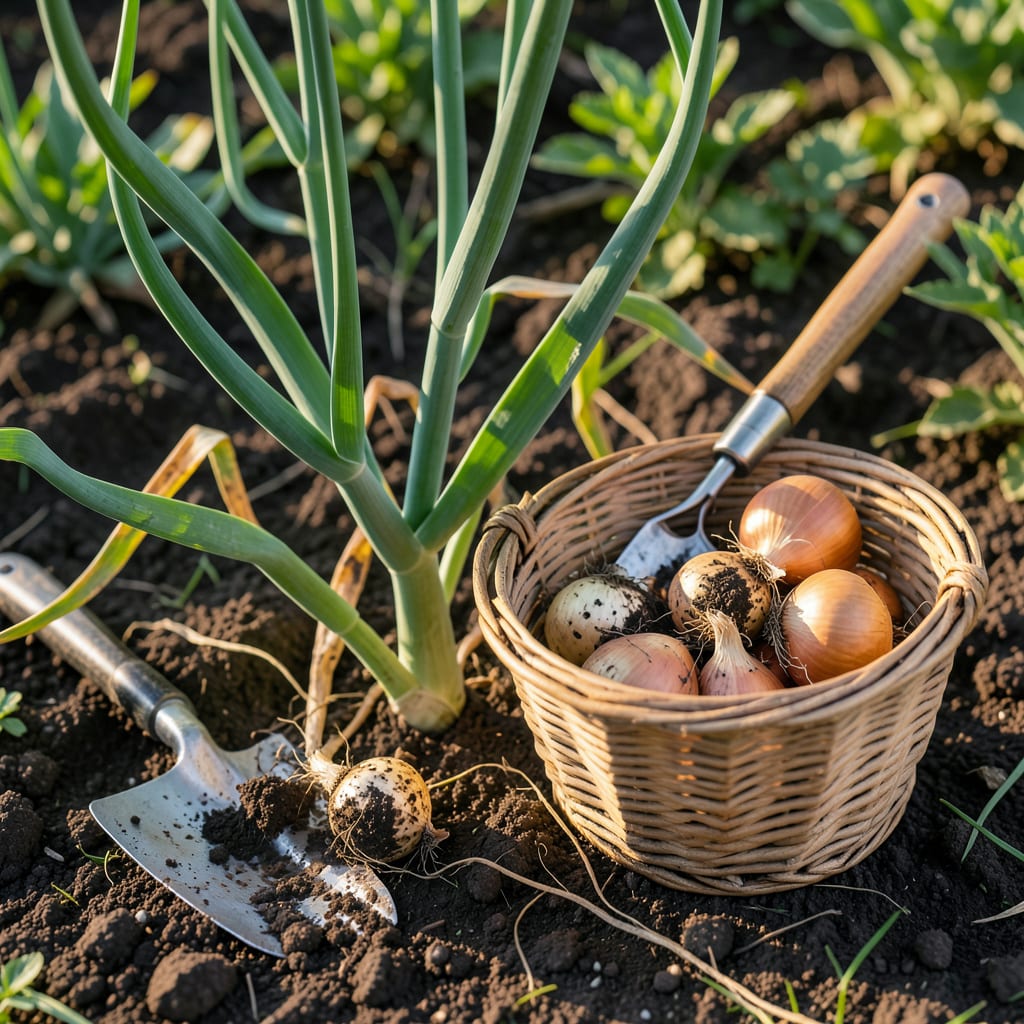
I remember staring at my onion patch last July, wondering if the 🧅 were ready. Timing is everything when it comes to harvesting, and waiting for the right signs can feel like an eternity.
Missing that perfect window means risking a crop that’s either underdeveloped or already spoiling. Let me show you the key visual cues that signal your onions are ready to come out of the ground.


I always watch for the first sign: the onion tops begin to yellow and fall over. This natural process signals the plant is diverting energy to bulb maturity. Don’t rush it – let at least 50-80% of the foliage yellow first.
Another clear indicator is the neck softening. When the stem just above the bulb feels spongy rather than firm, your onions are likely ready. This typically happens 2-3 weeks after the tops start yellowing.
| Harvest Sign | Description |
|---|---|
| Yellowing tops | Foliage turns golden brown and flops over |
| Soft necks | Stem above bulb becomes weak and bendable |
| Papery skin | Outer layers feel dry and rustle when touched |
| Mature size | Bulbs reach variety-specific diameter |
The outer skin texture is crucial. When it’s dry and papery, like crisp parchment, your onions are ready. This protective layer helps with storage. If it’s still moist, wait a few more days of dry weather.
For size reference, most storage onions reach 2-4 inches in diameter when mature. Sweet onions often grow larger. I always check a few bulbs by gently brushing away soil to assess their size without disturbing the roots.
Watch the weather forecast too. A stretch of dry days is ideal for harvesting. Wet conditions can make curing difficult and increase rot risk. I aim for at least 3-5 sunny days after pulling my onions.
Don’t overlook the days to maturity for your variety. Most onions take 90-120 days from planting. Counting these days from your planting date gives a good estimate of when to start watching for signs.
If you’re growing green onions, the rules differ. These are harvested young, typically when tops are 6-8 inches tall and bases are about 1/2 inch thick. They won’t form large bulbs like mature onions.
I’ve found that morning harvesting works best. The soil is cooler, making it easier to pull bulbs without damage. Plus, it gives your onions the whole day to begin drying in the sun before you move them to a curing area.
Finally, trust your instincts. If most of your onions show 3-4 readiness signs, it’s probably time. I once waited too long and lost part of my crop to rot – a lesson I won’t forget! 🌱
I’ve learned that onion harvest timing varies by type. Green onions are ready in 60-80 days, while storage onions need the full 90-120 days to mature properly. Climate plays a role too.
Sweet onions often mature faster in warmer zones, sometimes ready 2 weeks early. Cooler climates may extend the growing period by 10-15 days. Always adjust based on your local conditions.
| Onion Type | Days to Maturity | Harvest Sign |
|---|---|---|
| Green onions | 60-80 days | 6-8 inch tops |
| Sweet onions | 90-100 days | Necks soften early |
| Storage onions | 100-120 days | Full yellowing tops |
Soil conditions affect maturity too. Well-draining soil helps onions reach size faster, while heavy clay can slow growth. I always test my soil’s drainage before planting.
In hot climates, onions may mature 1-2 weeks earlier than the seed packet suggests. Watch for signs rather than just counting days. I start checking at 75% of the expected maturity time.
Cool springs can delay maturity. If your onions are behind schedule, be patient. They’ll catch up when temperatures rise. I once harvested 2 weeks late during a cool season with great results.
Remember that day length affects bulb formation. Long-day onions need 14-16 hours of sunlight to form bulbs, while short-day varieties bulb with 10-12 hours. Choose the right type for your latitude. 🌱
I’ve made my share of mistakes with onion harvesting, and the biggest one is pulling too early. When tops are still green and upright, the bulbs haven’t reached maturity. This results in smaller onions that won’t store well.
Another common error is harvesting during wet weather. Onions pulled from muddy soil are harder to cure and more prone to rot. I always wait for dry conditions to ensure proper drying.
⚠️ Avoid These Harvesting Pitfalls
Pulling onions before tops yellow leads to underdeveloped bulbs that won’t store well.
Harvesting in wet conditions increases rot risk and complicates the curing process.
Leaving onions in the ground too long after maturity can cause splitting or bolting.
Leaving onions in the ground too long is just as bad. Once mature, they can split or bolt, ruining your harvest. I check daily once the first signs appear to catch them at the perfect moment.
Improper curing is another mistake I see often. Onions need 1-2 weeks in a warm, dry, ventilated space to cure properly. Skipping this step reduces storage life significantly.
Finally, don’t cut the tops before curing. The energy from the drying foliage helps form the protective outer layers. I lay my onions out with tops intact until completely dry. 🌱
Harvesting too early results in underdeveloped bulbs that won’t store well. The onions will be smaller and more prone to spoilage. Wait until at least 50-80% of foliage turns yellow.
Once tops flop over, wait 1-2 weeks for necks to soften and skins to dry. This ensures full maturity and better storage potential. Check daily in dry weather.
Avoid harvesting in wet conditions. Muddy soil makes curing difficult and increases rot risk. Wait for 3-5 dry days for best results.
Morning is ideal when soil is cooler and easier to work. It gives onions the whole day to begin drying in the sun before curing.
