
Beautiful Plants For Your Interior
Beautiful Plants For Your Interior
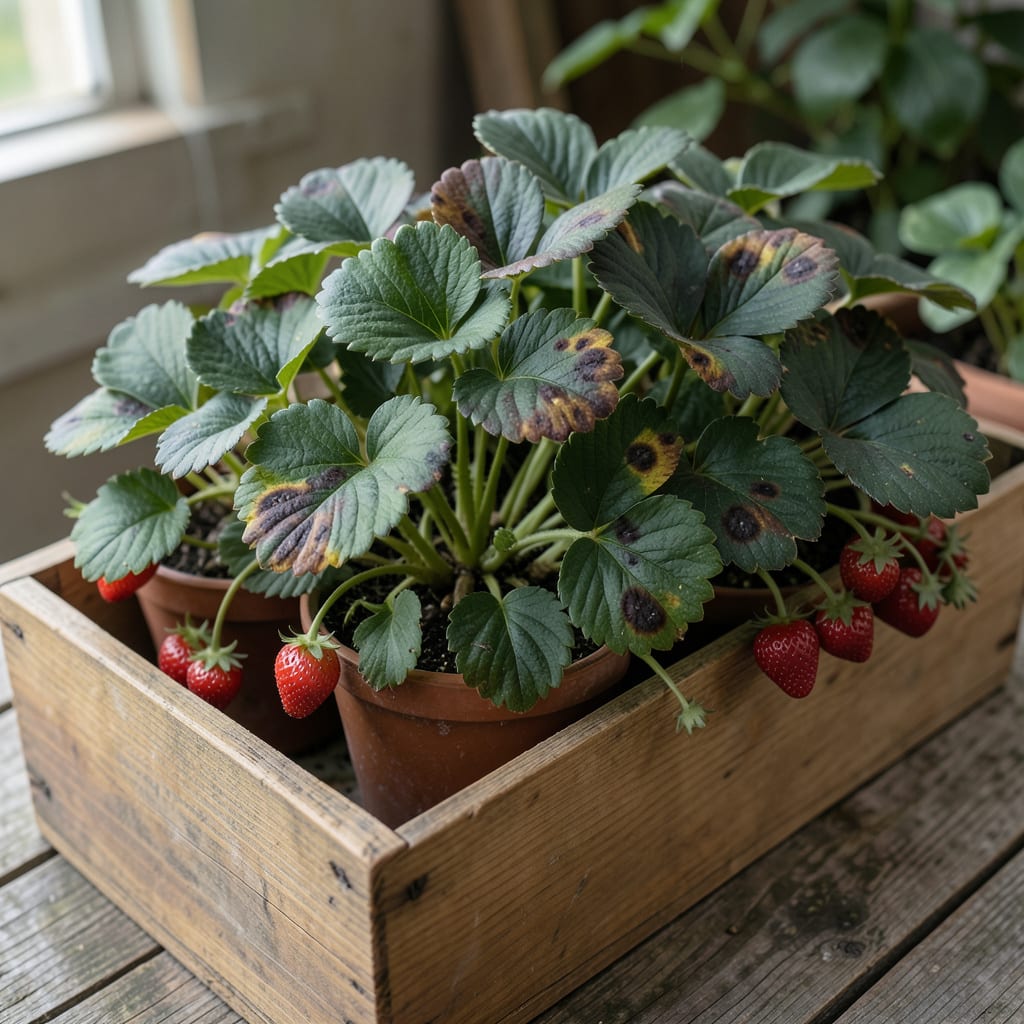
Those dark spots on your strawberry leaves aren’t just unsightly—they’re a warning sign. I’ve seen leaf spot and other fungal issues wipe out entire patches when left unchecked, but the good news is you can turn this around.
Most cases come down to three culprits: fungus, water stress, or poor air flow. The spots often start small and brown, then spread with yellow halos. Catching it early makes all the difference between healthy plants and a lost harvest.
Organic fixes like copper fungicides, baking soda sprays, and better spacing work surprisingly well. I’ve salvaged beds with nothing more than consistent morning watering and removing infected leaves immediately.
Prevention is simpler than treatment. Proper spacing, drip irrigation, and mulching create conditions where these problems never take hold in the first place.
Dark spots on strawberry leaves are a common sign of underlying issues, often tied to environmental stress, pathogens, or cultural practices. Below are the most frequent causes, explained with actionable insights.
Fungi like Mycosphaerella fragariae (leaf spot) or Diplocarpon earlianum (leaf blight) thrive in wet, humid conditions. They produce dark, circular lesions with purple or gray centers, often surrounded by yellow halos. Spores spread via water splash, so overhead irrigation and poor air circulation worsen outbreaks. Action: Remove infected leaves, improve airflow, and apply copper-based fungicides preventively.
Xanthomonas fragariae causes angular leaf spot, creating small, water-soaked dark spots that merge into irregular patches. Bacteria enter through wounds or stomata, flourishing in warm, wet weather. Action: Use disease-free plants, avoid overhead watering, and prune with sterilized tools to limit spread.
Sap-sucking pests like spider mites or aphids leave behind dark stippling or necrotic spots as they feed. Their piercing mouthparts damage cells, and their honeydew promotes sooty mold growth, which appears as black patches. Action: Introduce beneficial insects (e.g., ladybugs) or use neem oil to control infestations.
Extreme heat, frost, or nutrient deficiencies (e.g., potassium or magnesium) can cause dark, scorched spots on leaves. For example, potassium deficiency leads to purplish-brown lesions on older leaves. Action: Test soil, adjust fertilization, and provide shade cloth or row covers during temperature extremes.
Root asphyxiation from waterlogged soil restricts nutrient uptake, leading to dark, wilted leaf spots. Strawberries are shallow-rooted and need consistent moisture without soggy conditions. Action: Use raised beds or amend soil with compost to improve drainage.
Tackling dark spots on strawberry leaves starts with identifying the cause and applying the right fix. Below are practical solutions for the most common issues, along with prevention tips to keep your plants thriving.
Fix: Remove and destroy infected leaves immediately to prevent spreading. Apply a copper-based fungicide or a homemade mix of 1 tsp baking soda + 1 quart water + a few drops of dish soap. Spray every 7–10 days until the issue clears.
Prevention: 💡 Improve airflow by spacing plants 12–18 inches apart. Water at the base (not overhead) and avoid wet foliage. Mulch with straw to reduce soil splashing onto leaves.
Fix: Blast pests off with a strong stream of water. For stubborn infestations, use neem oil or insecticidal soap, applying in the early morning or late evening. Repeat every 5–7 days as needed.
Prevention: ✨ Encourage beneficial insects like ladybugs by planting companion flowers (e.g., marigolds or alyssum). Inspect leaves regularly for early signs of pests.
Fix: Amend the soil with compost or a balanced organic fertilizer (e.g., 10-10-10). For potassium, add wood ash or greensand. For magnesium, use Epsom salt (1 tbsp per gallon of water) as a foliar spray.
Prevention: 🎯 Test soil annually and adjust amendments based on results. Maintain consistent watering to help roots absorb nutrients efficiently.
Fix: Stop watering temporarily and let the soil dry out. If the plant is in a pot, ensure the container has drainage holes. For garden beds, mix in perlite or sand to improve drainage.
Prevention: 🌡️ Water only when the top inch of soil is dry. Use drip irrigation to deliver moisture directly to the roots.
Inspect leaves weekly, especially after rain or watering. Early detection prevents spread and makes treatment easier. Look under leaves too, where issues often start.
Yes, but wash fruit thoroughly. Fungal spores or pest residue on leaves don’t usually contaminate berries. Remove any fruit with visible damage.
A baking soda spray (1 tsp per quart of water) works within days for mild fungal issues. For pests, neem oil shows results after 2-3 applications.
No, as long as you leave at least 50% of healthy foliage. Focus on the most damaged leaves first to reduce stress.
