
Beautiful Plants For Your Interior
Beautiful Plants For Your Interior
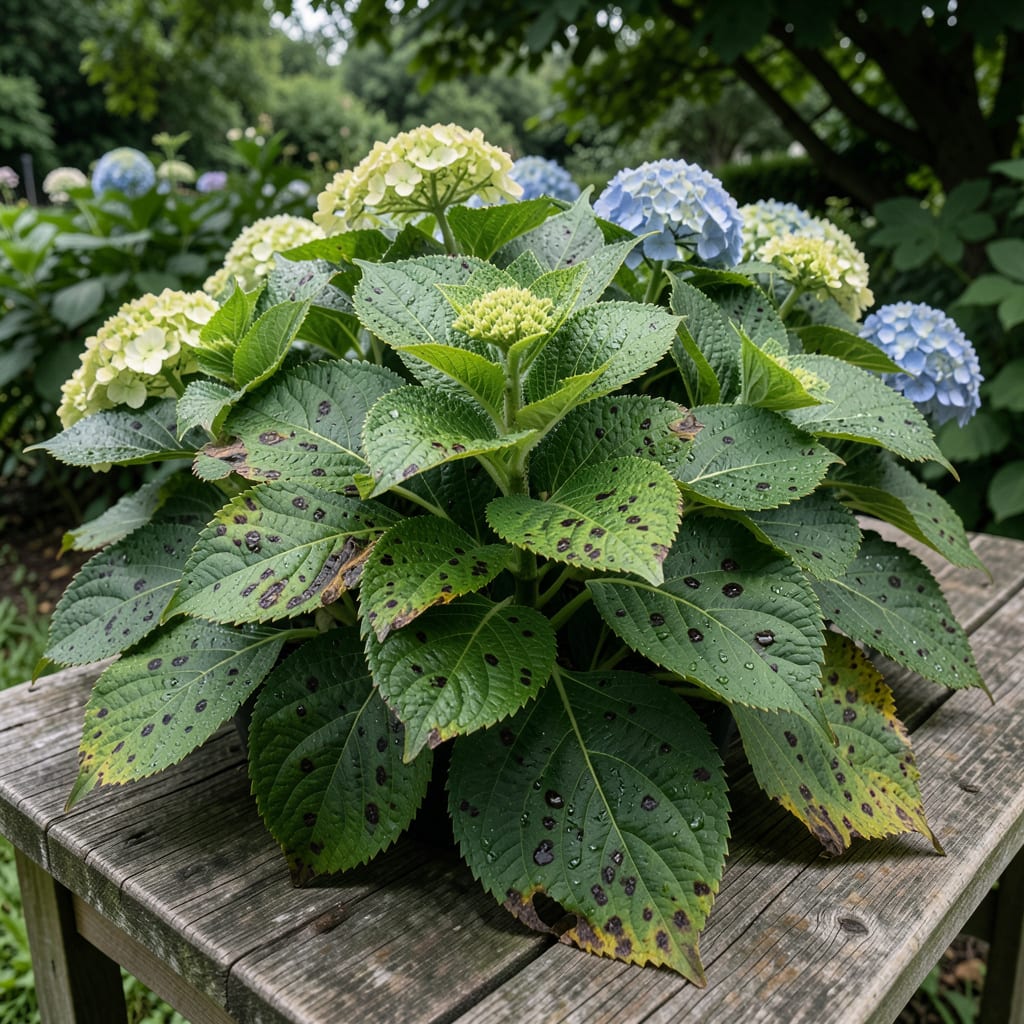
Those dark spots on your hydrangea leaves aren’t just unsightly—they’re a distress signal. I’ve seen healthy plants turn patchy overnight, and the culprit is usually lurking in plain sight.
Fungal infections love hydrangeas, especially in damp conditions. Overhead watering, poor air circulation, or last season’s fallen leaves can all invite trouble. The good news? Most cases are fixable with the right approach.
You’ll need to act fast to stop the spread. Simple adjustments like pruning affected leaves, improving airflow, and applying a targeted treatment can restore your plant’s vibrant green health.
Prevention starts with better habits. Keep leaves dry, space plants properly, and clean up debris. Your hydrangeas will thank you with bigger blooms next season.
Dark spots on hydrangea leaves are rarely random—they’re usually your plant’s way of signaling a specific stressor. The most common triggers are fungal infections, bacterial pathogens, or environmental missteps like overwatering or nutrient imbalances. Below, we break down the science behind each cause so you can diagnose and act fast. 🌿
Fungi like Cercospora and Anthracnose thrive in warm, humid conditions, spreading spores that create circular, brown-to-purple spots with halos. These pathogens penetrate leaf tissues when moisture lingers on foliage, breaking down cell walls. Left unchecked, they can defoliate your hydrangea and weaken its vigor.
Bacteria such as Xanthomonas or Pseudomonas enter through wounds or stomata (leaf pores), causing water-soaked spots that turn dark and angular. Unlike fungal spots, these often have a yellow halo and may ooze in wet weather. Overhead watering and poor air circulation accelerate bacterial spread.
Overwatering suffocates roots, reducing their ability to absorb nutrients and leading to edema—blister-like spots that burst and darken. Meanwhile, calcium or potassium deficiencies can cause marginal leaf scorching, mimicking disease. Always check soil drainage and test pH (hydrangeas prefer 5.5–6.5) to rule out cultural causes.
Tackling dark spots on your hydrangea leaves starts with identifying the cause. Below are targeted fixes for the most common issues, along with prevention tips to keep your plants thriving.
Fix: Remove infected leaves immediately to prevent spreading. Apply a copper-based fungicide or a baking soda solution (1 tbsp baking soda + 1 tsp dish soap + 1 gallon of water) every 7–10 days until the spots disappear. For severe cases, use a neem oil spray (2 tbsp neem oil + 1 gallon of water + 1 tsp dish soap) weekly.
Prevention: Improve air circulation by spacing plants 3–4 feet apart. Water at the base (not overhead) early in the day so foliage dries quickly. 💡 Pro tip: Mulch with organic material to reduce soil-borne spores.
Fix: Let the soil dry slightly between waterings. If the plant is in a pot, ensure it has drainage holes. For in-ground hydrangeas, amend heavy clay soil with compost or sand to improve drainage.
Prevention: Use a moisture meter to check soil dampness before watering. Stick your finger 1–2 inches into the soil—if it’s dry, it’s time to water. 🌡️ Pro tip: Hydrangeas prefer consistent moisture, not soggy roots!
Fix: Spray leaves with insecticidal soap or a horticultural oil to eliminate aphids, mites, or scale. For slugs and snails, set up beer traps or use iron phosphate baits.
Prevention: Inspect leaves regularly (especially undersides) for pests. Encourage natural predators like ladybugs by planting companion flowers like marigolds. ✨ Pro tip: Avoid over-fertilizing—it attracts sap-sucking pests!
Fix: Test your soil’s pH (hydrangeas thrive in 5.2–6.2 for blue flowers, 6.2–7.0 for pink). Adjust with aluminum sulfate (to lower pH) or lime (to raise pH). Apply a balanced fertilizer (10-10-10) or one high in magnesium if leaves show yellowing between veins.
Prevention: Feed hydrangeas in early spring and mid-summer with a slow-release fertilizer. 🎯 Pro tip: Yellow spots with green veins? It’s likely iron deficiency—use chelated iron supplements.
Yes, overwatering leads to root suffocation and edema, creating blister-like spots that darken. Ensure soil drains well and water only when the top 1-2 inches are dry.
A copper-based fungicide or neem oil spray works well. Apply every 7-10 days until spots fade. Always remove infected leaves first to stop spreading.
Improve airflow by spacing plants 3-4 feet apart. Water at the base early in the day, and clean up fallen leaves to reduce spores.
Not always. They can also stem from bacteria, pests, or nutrient deficiencies. Check for yellow halos (bacterial) or pests under leaves.
