
Beautiful Plants For Your Interior
Beautiful Plants For Your Interior
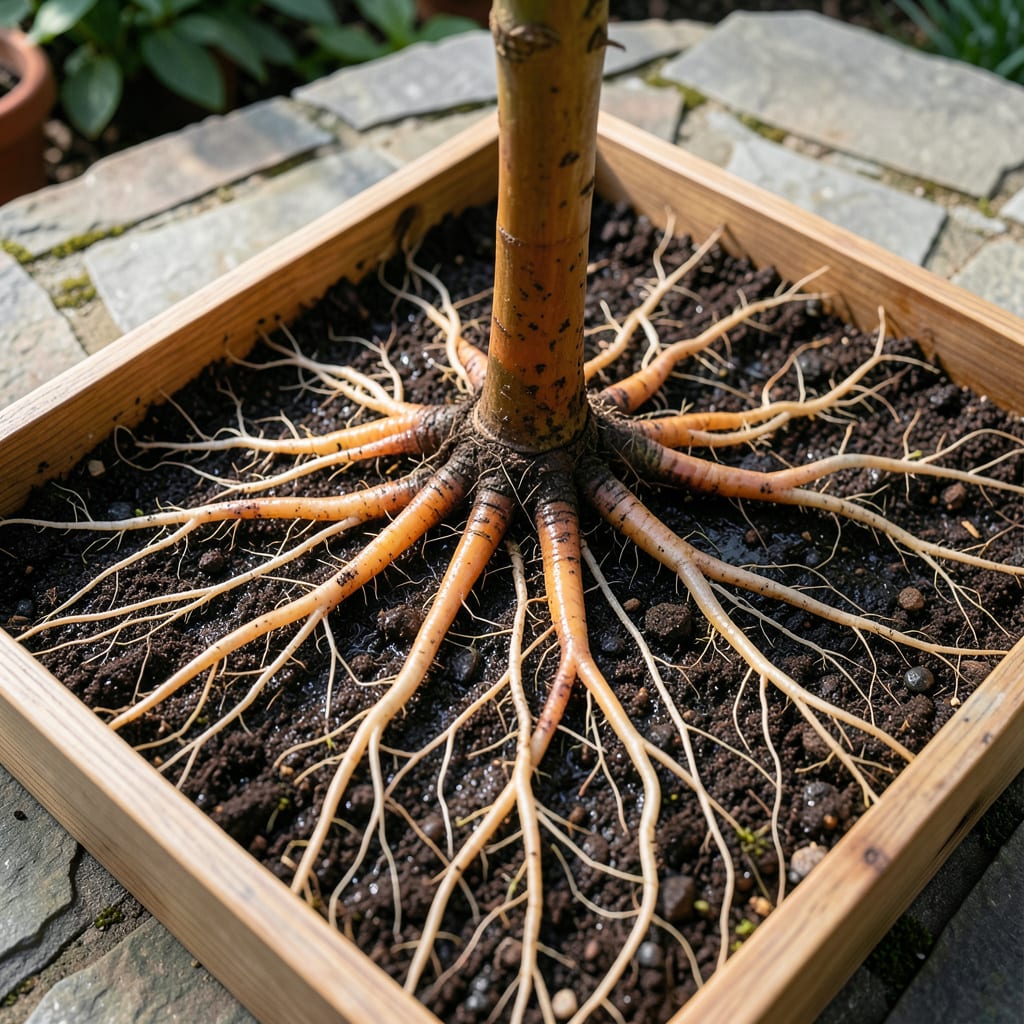
I planted my first Italian cypress on a windy hillside. That root system—deep, fibrous, and surprisingly tough—anchored it through storms that flattened other trees.
These roots stretch 20-30 feet down and spread 10-15 feet wide, pulling moisture from deep soil. Perfect for dry climates, but they hate soggy ground. Plant in well-draining soil and water deeply but infrequently.
📚 In This Guide
Understanding root development helps you support this tree’s natural resilience and longevity.
The Cupressus sempervirens begins with a dominant taproot that drives deep into the soil during its first 2-3 years. I’ve observed this root can extend 3-6 feet down in well-drained, loose substrates, anchoring the tree against wind and drought. This is the tree’s survival mechanism in its native Mediterranean habitat.
You’ll notice the taproot grows straight and fast, prioritizing depth over lateral spread. This is why young trees need deep planting holes—at least 2 feet deep—to accommodate this initial growth phase without restriction. Compacted or shallow soils will stunt this development, leading to a weaker tree.
After the taproot establishes, the tree shifts focus to lateral roots, which radiate outward from the base. These roots spread 1.5-2 times the width of the tree’s canopy at maturity, forming a dense, fibrous network. I’ve seen mature specimens with lateral roots extending 20-30 feet in all directions.
This lateral system is shallow—typically within the top 12-18 inches of soil—which makes the tree sensitive to surface-level disturbances. Avoid heavy foot traffic or construction near the base, as this can sever critical roots and compromise stability.
The root system adapts remarkably to its environment. In dry, rocky soils, the taproot elongates further in search of moisture, while in richer, loamy soils, lateral roots proliferate more aggressively. I’ve found that consistent deep watering during the first 2 years encourages both taproot penetration and lateral spread.
Avoid overwatering, though—this tree despises soggy conditions. The lateral roots are prone to rot if the soil remains waterlogged for more than 48 hours. Well-draining soil is non-negotiable for long-term health.
Once established, the root system becomes self-sufficient, but early care sets the foundation. I mulch young trees with 2-3 inches of organic material to retain moisture and regulate soil temperature, which encourages steady root growth. Keep mulch 6 inches away from the trunk to prevent rot.
In windy areas, staking may be necessary for the first 1-2 years until the taproot fully anchors the tree. Remove stakes once the tree stands firm on its own—leaving them too long can weaken the trunk and root development.
These insights will help you nurture a resilient root system from the start.
Planting Depth: In Step 1, ensure your planting hole is at least 2 feet deep to accommodate the rapid taproot growth during the first 2-3 years. Shallow planting restricts this critical development and can lead to a weaker tree that struggles to anchor itself against wind and drought.
Soil Considerations: For Step 3, remember that well-draining soil is essential. The lateral roots, which spread 1.5-2 times the canopy width, are particularly prone to rot if soil remains waterlogged for more than 48 hours. This is non-negotiable for long-term health.
Early Care Focus: During the first 2 years, prioritize consistent deep watering to encourage both taproot penetration and lateral spread. This mimics the tree’s natural Mediterranean habitat and sets the foundation for a self-sufficient root system.
Mulching Technique: In Step 4, when applying mulch, maintain that 6-inch gap from the trunk. I’ve seen too many cases where mulch piled against the base leads to rot, which can compromise the entire root system’s stability.
The Italian cypress develops a deep taproot (3–6 feet) with lateral roots spreading widely. In well-drained soil, roots can extend beyond the drip line for stability and water access.
Yes! This hardy tree thrives in rocky, shallow, or nutrient-poor soils typical of Mediterranean climates. Just ensure good drainage to prevent root rot.
Water deeply 1–2 times per week for the first year to establish roots. Afterward, its drought tolerance kicks in—reduce to occasional watering during dry spells.
Yellowing foliage, wilting, or stunted growth may signal root rot (from overwatering) or compacted soil. Check drainage and avoid soggy conditions.
Consider Juniperus virginiana (Eastern Red Cedar) or Thuja occidentalis (Arborvitae) for comparable deep-rooted, drought-resistant evergreens.
