
Beautiful Plants For Your Interior
Beautiful Plants For Your Interior
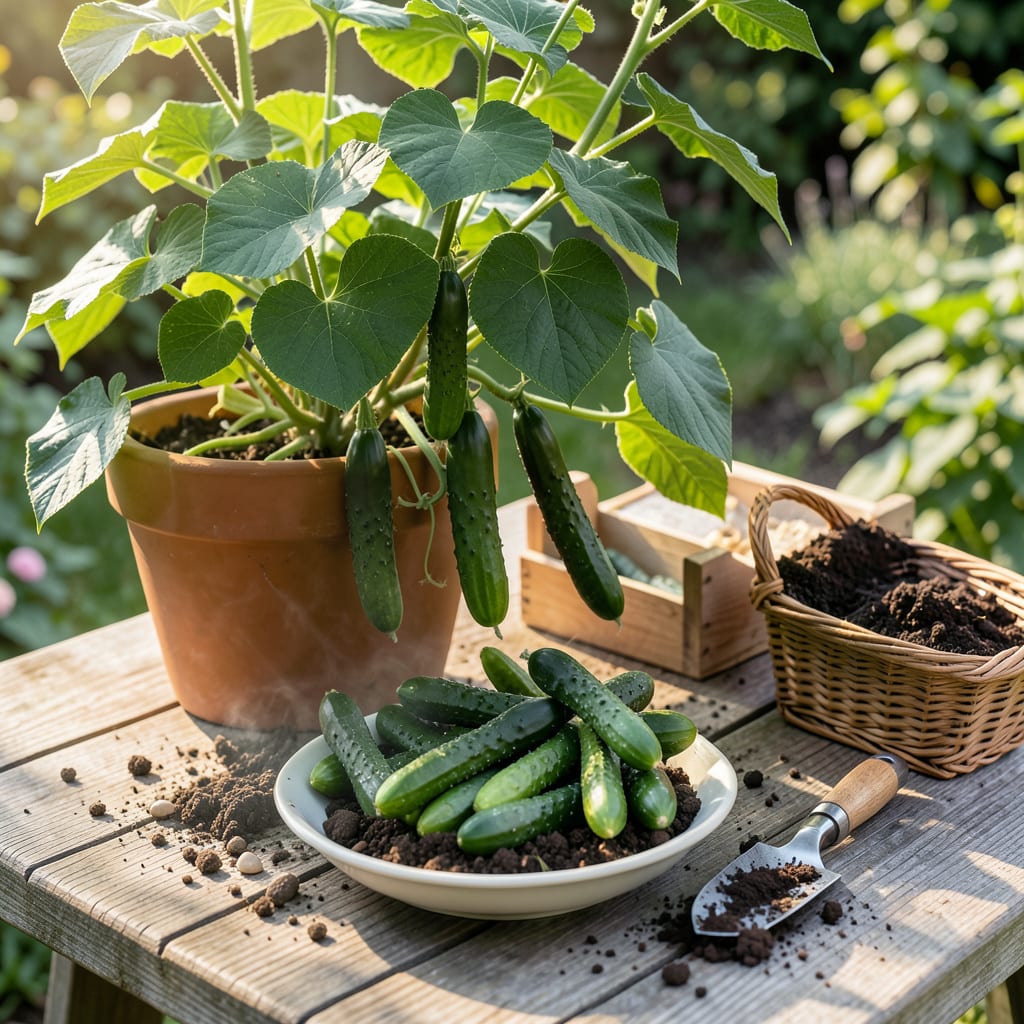
Nothing beats the taste of a crisp cucumber fresh from the vine. I’ve learned that timing and soil warmth are everything—plant too early and the seeds rot, too late and you miss the prime growing window.
With the right care, you’ll have vines climbing trellises and producing fruit within 6-8 weeks. Consistent watering and a little attention to pests keep them productive all season long.
📚 In This Guide
Here’s the method I use every season to grow crisp, productive vines with minimal fuss.
Choose a location with full sun exposure, as cucumbers require at least 6-8 hours of direct sunlight daily. The soil should be well-draining with a pH between 6.0-6.8. I always work in plenty of aged compost to improve fertility and structure—this encourages strong root development early on.
Test drainage by digging a 12-inch deep hole and filling it with water. If it drains within 1 hour, you’re good to go. If water pools, amend with additional organic matter or consider raised beds. Avoid low spots where cold air or water might collect, as cucumbers despise wet feet.
Sow seeds 1 inch deep and 3-4 inches apart in rows spaced 5-6 feet apart, or plant transplants 12-18 inches apart. I prefer direct sowing because cucumbers dislike root disturbance, but transplants work if your season is short. For vining types, set up a trellis at planting time to avoid disturbing roots later.
If starting indoors, use biodegradable pots so roots aren’t disturbed during transplanting. Harden off seedlings for 7-10 days before moving them outside. Plant when soil temperature reaches 70°F—cucumbers sulk in cold soil and may rot before germinating.
Cucumbers need consistent moisture, so water deeply at the base 1-2 times per week, providing about 1-2 inches of water total. I use a soaker hose to keep leaves dry, which prevents foliar diseases like powdery mildew. The soil should feel moist 1 inch down at all times—drought stress makes fruits bitter.
Feed plants with a balanced fertilizer when vines begin to run, then switch to a low-nitrogen, high-potassium formula once flowers appear. I side-dress with compost every 3-4 weeks for steady nutrition. Yellowing leaves often signal nitrogen deficiency, while poor fruiting usually means insufficient potassium.
For trellised plants, gently twine vines around the support as they grow. This improves air circulation, reduces disease risk, and makes harvesting easier. I prune off the first few side shoots to direct energy into the main vine, then let laterals develop normally. Remove any leaves showing signs of disease immediately.
Harvest cucumbers when they reach the size specified for your variety—usually 6-8 inches for slicing types. Pick every 2-3 days to encourage more production. The fruits should be firm and bright green, and the stem should snap easily when bent. Overripe cucumbers become seedy and bitter, and leaving them on the vine signals the plant to stop producing.
Here’s what I’ve learned through trial and error to ensure your cucumber plants thrive.
Sunlight Essentials: The 6-8 hours of daily direct sunlight isn’t just a suggestion—it’s critical for sweet, crisp cucumbers. If your garden gets partial shade, prioritize morning sun, as it’s less intense and helps dry dew from leaves, reducing disease risk.
Soil Prep Insight: Don’t skip the drainage test from Step 1. If water doesn’t drain within that 1 hour, your plants will suffer. Raised beds are a great solution for clay-heavy soil, and mixing in compost improves both drainage and fertility.
Planting Precision: Planting seeds 1 inch deep and 3-4 inches apart might seem arbitrary, but it prevents overcrowding and ensures each plant gets enough nutrients. For transplants, the 12-18 inches spacing allows vines to spread without competing.
Temperature Watch: Soil temperature must reach 70°F before planting—this isn’t negotiable. Cold soil stunts growth, and seeds may rot. Use a soil thermometer to be sure, and if you’re starting indoors, the 7-10 days of hardening off seedlings is non-negotiable for transplant success.
Plant cucumbers in late spring or early summer when soil temperatures reach at least 60°F (15°C). They thrive in warm weather, so avoid frost-prone periods. For a head start, begin seeds indoors 3-4 weeks before the last frost date.
Cucumbers need consistent moisture—about 1-2 inches of water per week. Keep the soil evenly damp but not waterlogged. Use drip irrigation to avoid wetting the leaves, which can lead to disease. Water deeply in the morning for best results.
Yellow leaves often signal overwatering, nutrient deficiencies (like nitrogen), or pests. Check soil moisture and fertilize with a balanced feed if needed. Inspect leaves for pests like aphids and treat organically if found.
Yes! Choose compact varieties like ‘Bush Champion’ or ‘Spacemaster’. Use a container at least 12 inches deep with good drainage. Provide a trellis for vertical growth to save space and improve air circulation.
Bitterness often results from stress like inconsistent watering or high temperatures. Keep plants well-hydrated, provide shade during heatwaves, and harvest cucumbers young. Selecting naturally sweet varieties can also help.
