
Beautiful Plants For Your Interior
Beautiful Plants For Your Interior
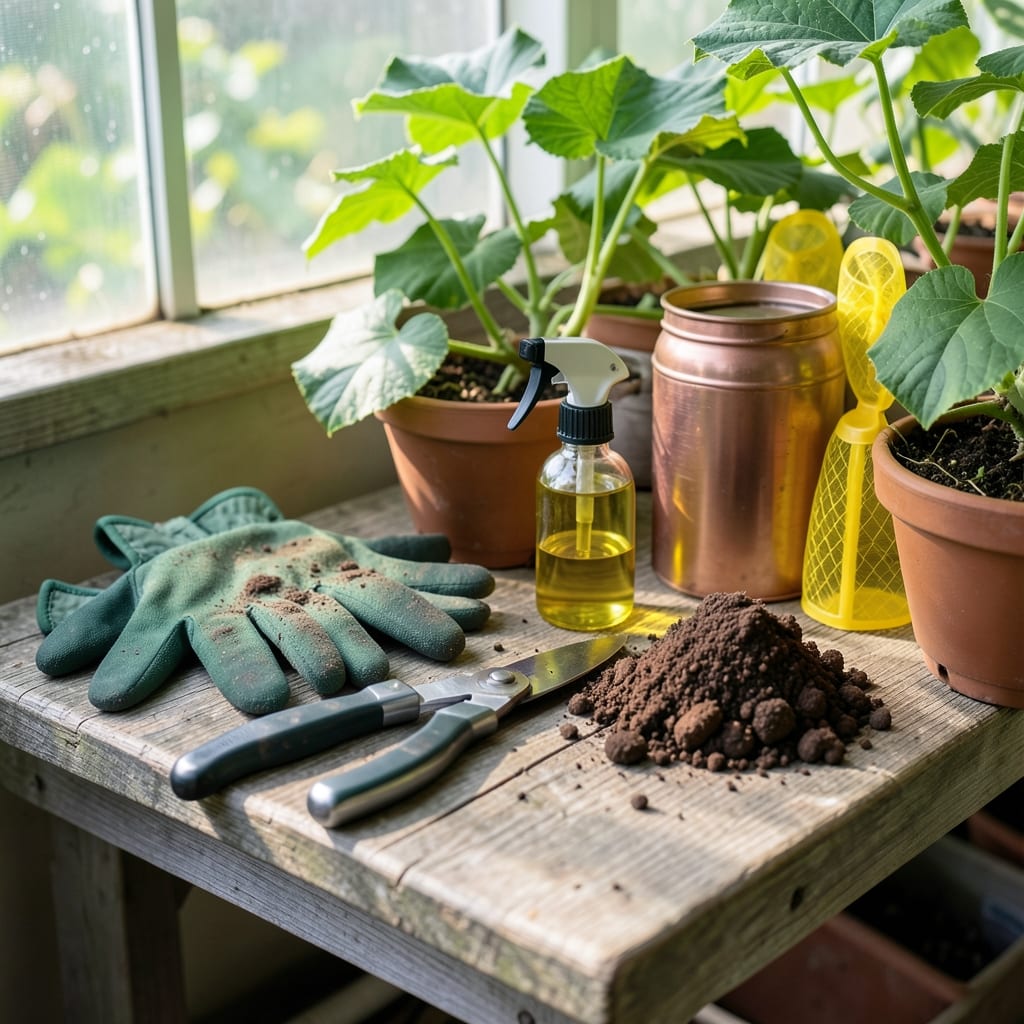
Spotted, yellowed, or powdery cucumber leaves mean trouble. I’ve lost entire crops to these issues before learning to catch them early.
This guide helps you identify the exact problem and fix it fast. You’ll get healthy plants that produce strong vines and abundant fruit all season.
Nothing exotic—just garden basics to keep leaves green and productive.
| Ingredient | Amount | Notes |
|---|---|---|
| Neem Oil Spray 💧 | 1 piece | Cold-pressed for best results |
| Copper Fungicide 🧪 | 1 piece | Liquid concentrate preferred |
| Pruning Shears ✂️ | 1 piece | Sharp sterilized blades |
| Garden Gloves 🪴 | 1 piece | Breathable waterproof material |
| Yellow Sticky Traps 📋 | 5 pieces | For early pest detection |
| Compost 🌾 | ½ gallons | Well-aged organic matter |
| Mulch 🪵 | 1 gallons | Straw or wood chips |
| Watering Can 💧 | 1 piece | With adjustable nozzle |
| pH Meter 🌡️ | 1 piece | For soil testing |
[recipeingredientscaler]
Neem oil and copper fungicide are your first line of defense (the good stuff, not the cheap knockoffs). I grab mine from local garden centers where staff can advise on application rates. Bonide and Garden Safe are reliable brands. Always check expiration dates—old products lose potency.
Skip the fungicide? A baking soda spray (1 tsp per quart of water) works for mild powdery mildew. No pruning shears? Clean kitchen scissors do the job (trust me on sterilizing first). Pine straw mulch resists compaction better than wood chips.
Store chemicals in a cool, dry place away from kids. Neem oil lasts 1-2 years unopened. I keep a spray schedule log so I’m not over-applying. Leftover compost stays viable for years if kept dry.
Here’s my reliable method to restore your plants to vibrant health.
Put on your garden gloves and inspect each leaf carefully. Look for yellowing, brown spots, or white powdery coatings—these are classic signs of disease. I use my pruning shears to snip off any damaged leaves, making clean cuts just above the stem junction to avoid tearing the plant.
Remove all fallen leaves and debris around the base. This prevents spores from lingering in the soil. I always sterilize my shears with rubbing alcohol between cuts to stop the spread. Real talk: skipping this step means the problem will just bounce back.
Mix the neem oil spray according to package instructions and apply it evenly to all leaf surfaces, including the undersides where pests and spores hide. Neem oil disrupts fungal growth and deters pests like aphids, which often carry disease. I spray in the early morning or late evening to avoid leaf burn from the sun.
For stubborn fungal issues, I follow up with the copper fungicide a day later. Copper creates a protective barrier on leaves. Apply it when the forecast shows no rain for 24 hours so it has time to adhere. Don’t apply in temperatures above 85°F—it can damage foliage.
Test your soil pH with the pH meter—cucumbers thrive at 6.0-6.8. If it’s off, work in the 0.5 gallons of compost to balance it. Compost also boosts soil health, which strengthens the plant’s natural defenses.
Spread the 1 gallon of mulch around the base to retain moisture and prevent soil-borne spores from splashing onto leaves during watering. Use the watering can to deliver water directly to the soil, not the leaves. Wet foliage is a breeding ground for disease.
Hang the 5 pieces of yellow sticky traps near your plants to catch flying pests like whiteflies and fungus gnats early. These insects spread disease and weaken plants. I place them just above plant height for maximum effectiveness.
Check the traps every 2-3 days and replace them when they’re covered in pests. This is the moment that matters: catching infestations before they spiral. Combine this with weekly leaf inspections to stay ahead of any new issues.
If you want to add a kick to your cucumber dishes while combating leaf diseases, try incorporating 1-2 tsp of cayenne pepper into your recipes. This not only enhances the heat but also provides a natural fungicide effect, which can help protect your plants. Cayenne’s bold flavor balances well with cucumber’s coolness, creating a dynamic taste profile.
For a sweeter touch, mix in 1 tbsp of honey or agave syrup. This complements the mild flavor of cucumbers and can mask any bitterness caused by stressed plants. Sweetness also helps counteract the earthy notes of disease-resistant cucumber varieties, making them more palatable.
A splash of 1 tbsp lemon juice or apple cider vinegar adds a bright, tangy zing. This works especially well in dressings or cucumber-based drinks. The acidity can also help deter some fungal spores, contributing to healthier foliage over time.
For a deep, smoky flavor, use ½ tsp of smoked paprika or a pinch of chipotle powder. This pairs wonderfully with grilled or roasted cucumber dishes, adding complexity while subtly supporting plant health through its antimicrobial properties.
Enhance the savory depth with 1 tsp of soy sauce or miso paste. Umami-rich ingredients amplify the natural flavors of cucumbers, making them more satisfying. This is also a great way to use cucumbers that may have minor leaf damage, as the robust seasoning can distract from any off-notes.
