
Beautiful Plants For Your Interior
Beautiful Plants For Your Interior
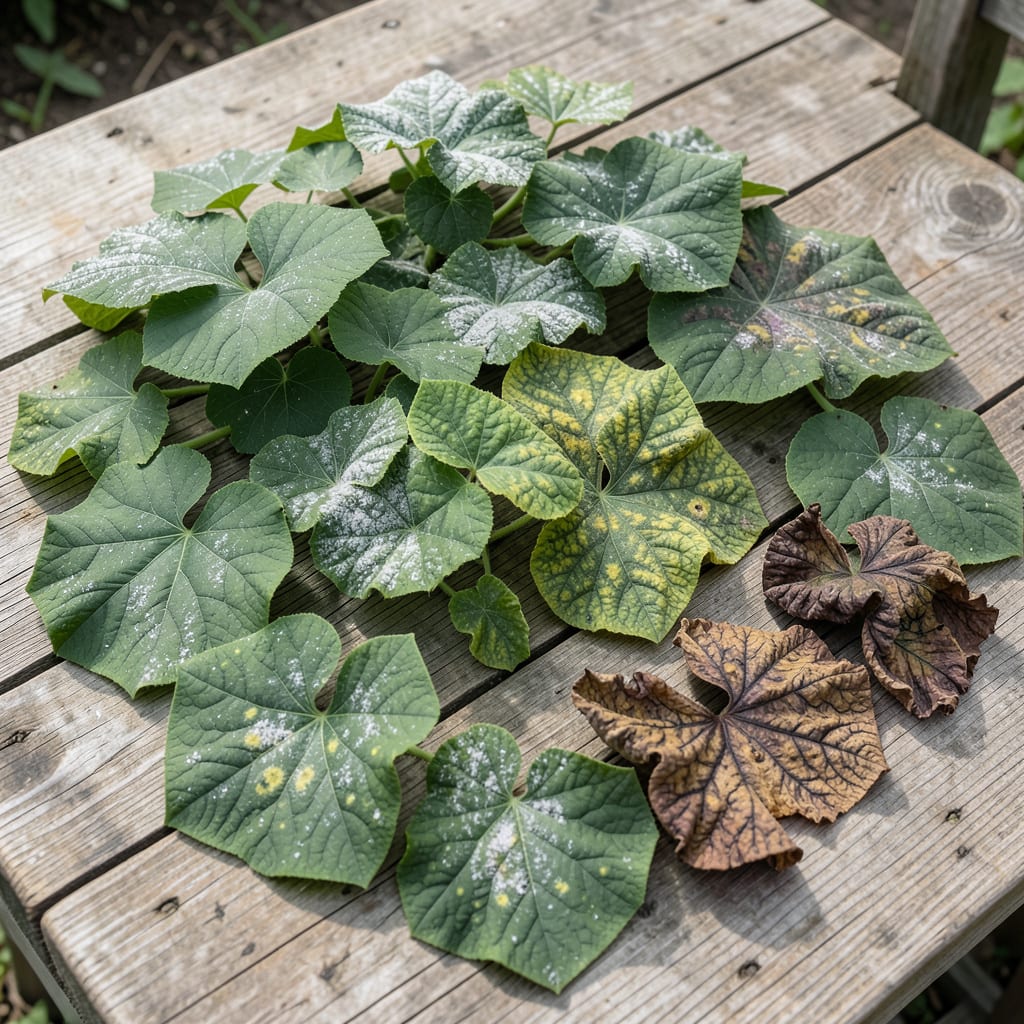
Spotted yellow leaves or white powder on your cucumber plants? I’ve been there—watching healthy vines turn sickly overnight. It’s frustrating, but identifying the problem early makes all the difference.
This visual guide helps you match symptoms to the right disease, from powdery mildew’s dusty coating to downy mildew’s yellow patches. Clear images show exactly what to look for on stems, leaves, and fruit.
You’ll learn what causes each issue—whether it’s fungal spores, bacteria, or poor growing conditions—and how to stop it in its tracks. Early action saves your harvest and prevents next year’s problems.
Works for backyard gardeners, container growers, and anyone tired of losing cucumbers to mystery ailments. Let’s solve this together.
Understanding the root causes of cucumber plant diseases helps you prevent and manage them effectively. Below are the primary factors that lead to these issues, explained with scientific precision.
Fungal diseases like Powdery Mildew (Podosphaera xanthii) and Downy Mildew (Pseudoperonospora cubensis) thrive in high humidity and poor air circulation. Spores spread via wind or water, infecting leaves when moisture lingers for 6+ hours. Overhead watering exacerbates this by creating a damp environment ideal for spore germination.
Bacteria such as Pseudomonas syringae (angular leaf spot) and Erwinia tracheiphila (bacterial wilt) enter plants through wounds or natural openings. Contaminated tools, insects (e.g., cucumber beetles), or splashing water spread these pathogens. Warm, wet conditions (75–85°F) accelerate bacterial growth, leading to wilting, spots, or oozing cankers.
Insects like aphids, cucumber beetles, and whiteflies transmit viral diseases (e.g., Cucumber Mosaic Virus). These pests pierce plant cells to feed, injecting viruses directly into the vascular system. Weakened plants from pest damage are also more susceptible to secondary infections.
Extreme temperatures (below 50°F or above 90°F), nutrient deficiencies (e.g., calcium or potassium), or inconsistent watering stress cucumbers, reducing their natural defenses. Stressed plants produce fewer protective compounds, making them vulnerable to opportunistic pathogens.
Soilborne fungi (Fusarium, Phytophthora) and nematodes persist in contaminated soil, attacking roots. Poor drainage or overwatering creates anaerobic conditions, while compacted soil limits root health, inviting infection. Crop rotation and resistant varieties are key to breaking these cycles.
Tackling cucumber plant diseases starts with quick action and smart prevention. Below are targeted fixes for common issues, paired with tips to keep your plants thriving.
Remove infected leaves immediately and space plants farther apart to boost circulation. Apply a baking soda solution (1 tsp baking soda + 1 quart water + a drop of dish soap) weekly. Prevention tip: Water at the base in the morning to avoid wet foliage overnight.
Use a copper-based fungicide or neem oil at the first sign of yellow spots. Prune dense growth to let sunlight penetrate. Prevention tip: Rotate crops yearly and avoid overhead watering.
Cover young plants with floating row covers to block beetles. Handpick adults or use kaolin clay as a barrier. Prevention tip: Plant radishes nearby—they trap beetles away from cucumbers.
Pull and destroy infected plants—do not compost them. Switch to wilt-resistant varieties like ‘Marketmore 76’. Prevention tip: Solarize soil before planting to kill lingering fungi.
Act fast: uproot and burn wilted plants to stop the spread. Disinfect tools with rubbing alcohol. Prevention tip: Control cucumber beetles, which spread the bacteria.
Pro tip 💡: Healthy soil is your best defense! Add compost and avoid over-fertilizing, which attracts pests.
Disease spots often have defined edges or spread in patterns, while deficiencies appear as uniform yellowing between veins. Check undersides for spores or webbing as a clear sign of fungal issues.
Remove infected leaves immediately and apply a baking soda spray (1 tsp per quart of water). Improve airflow by pruning dense areas and avoid overhead watering.
Pull it immediately to prevent spread to healthy plants. Bacterial wilt has no cure, and infected plants will only decline further. Disinfect tools after removal.
Yes! Try ‘Marketmore 76’ or ‘Straight Eight’ for wilt resistance. ‘Diva’ resists powdery mildew and cucumber mosaic virus. Always check seed packets for disease resistance codes.
