
Beautiful Plants For Your Interior
Beautiful Plants For Your Interior
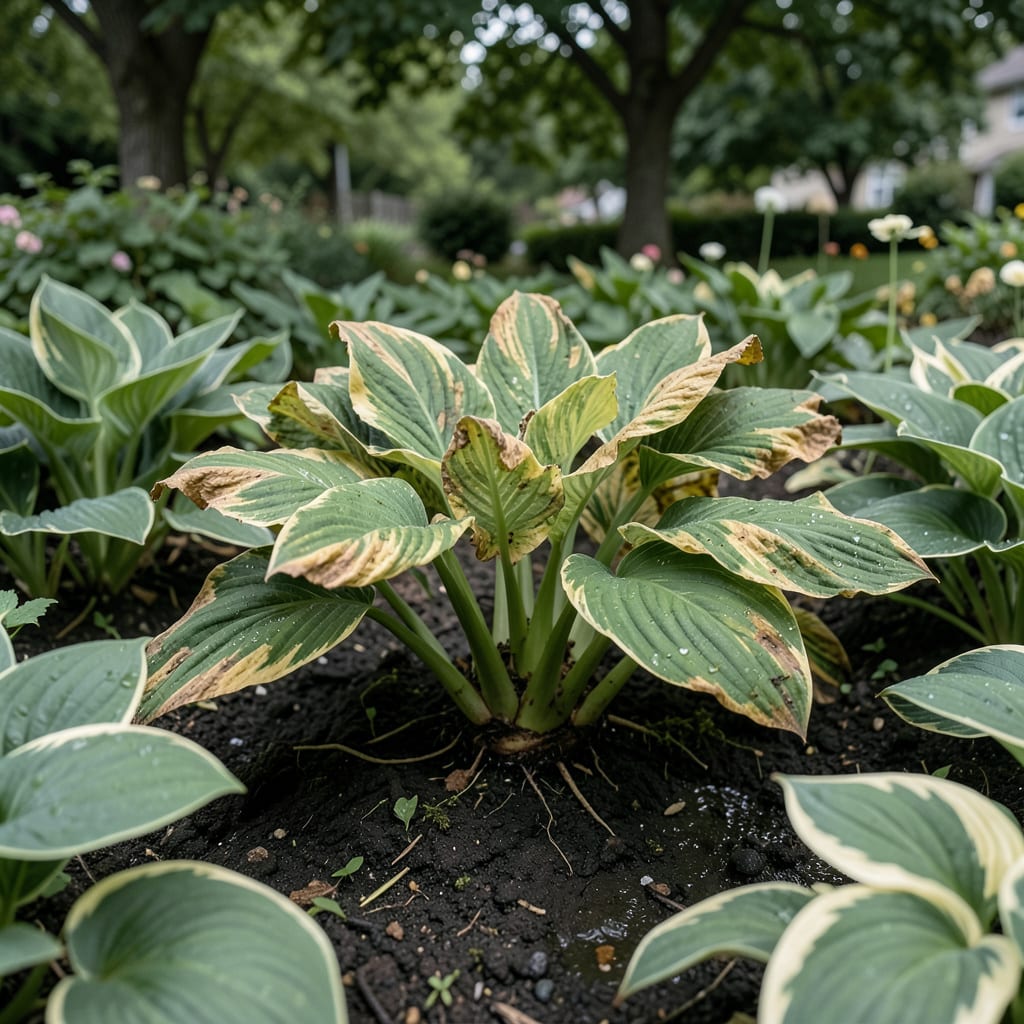
I lost three mature hostas to crown rot before I learned the early warning signs. Soft, mushy stems at the base and yellowing leaves that spread inward aren’t just stress—they’re a red alert for this silent killer.
The problem starts with too much moisture sitting right where the crown meets the soil. Poor drainage, heavy clay, or overwatering create perfect conditions. I’ve seen it wipe out entire clumps in two weeks during wet springs.
Catching it early means saving your plants. The fix involves improving airflow, adjusting watering, and using organic treatments that target the fungus without harming your garden’s ecosystem.
Works for all hosta varieties, though the blue and giant types seem most vulnerable. Here’s how to spot it and stop it before it spreads.
Crown rot in hostas is primarily caused by fungal pathogens, but several environmental and cultural factors create the perfect conditions for infection. Understanding these triggers helps you prevent the disease before it takes hold.
The most common culprits are Phytophthora and Pythium species, which thrive in wet, poorly drained soil. These water molds attack the crown—the central growing point of the hosta—leading to soft, discolored, and eventually rotting tissue. Overwatering or heavy clay soils exacerbate the problem by keeping the crown excessively moist.
Hostas planted in low-lying areas or containers without drainage holes are highly susceptible. Standing water suffocates the roots and invites fungal spores to colonize. Amend heavy soils with organic matter like compost to improve drainage and reduce risk.
When hostas are spaced too closely, airflow is restricted, and humidity builds up around the crown. This creates a microclimate ideal for fungal growth. Space plants 18–24 inches apart to allow for proper air circulation and faster drying after rain or irrigation.
Warm, humid conditions (70–85°F) accelerate fungal activity. While you can’t control the weather, watering in the early morning gives foliage time to dry before evening, reducing the window for infection.
Crown rot can be frustrating, but with the right approach, you can nurse your hostas back to health. Here’s how to tackle the most common causes and prevent future outbreaks.
If soggy soil is the culprit, amending the planting area is key. Mix in organic matter like compost or well-rotted manure to boost drainage. For heavy clay soils, add coarse sand or perlite. Raised beds or mounds can also help water drain away from the crown. Prevention tip: Always test drainage before planting—dig a hole, fill it with water, and ensure it drains within a few hours.
Hostas prefer consistent moisture, not waterlogged roots. Water deeply but only when the top inch of soil feels dry. Use a soaker hose or drip irrigation to keep foliage dry, reducing fungal spread. Morning watering allows excess moisture to evaporate. Prevention tip: Mulch with bark or straw to retain moisture evenly and prevent soil splash onto leaves.
If crown rot has already set in, remove infected plants immediately to stop the spread. Dig up the hosta, including the surrounding soil, and dispose of it in the trash (not compost). Sterilize your tools with a 10% bleach solution or rubbing alcohol between cuts. Prevention tip: Space hostas 18–24 inches apart for better air circulation, which discourages fungal growth.
For early-stage infections, apply copper-based fungicides or neem oil as a preventive spray. Follow label instructions carefully, and treat in the early morning or late evening to avoid leaf burn. Prevention tip: Rotate treatments to prevent fungal resistance, and avoid overhead watering to keep foliage dry.
With these targeted fixes and a little TLC, your hostas can bounce back stronger than ever! 🌱✨
Look for soft, mushy stems at the base that turn brown or black. Leaves yellow and wilt, starting from the center outward. Unlike leaf blight, crown rot affects the plant’s core.
If caught early, yes! Remove infected tissue, improve drainage, and treat with copper fungicide. For severe cases, it’s best to remove the plant to protect others.
Use well-draining soil with 50% compost and 50% perlite. Avoid heavy clay and low spots where water pools. Raised beds work well.
Water deeply when the top 1 inch of soil feels dry. Morning watering is ideal. Always use a soaker hose to keep leaves dry.
