
Beautiful Plants For Your Interior
Beautiful Plants For Your Interior
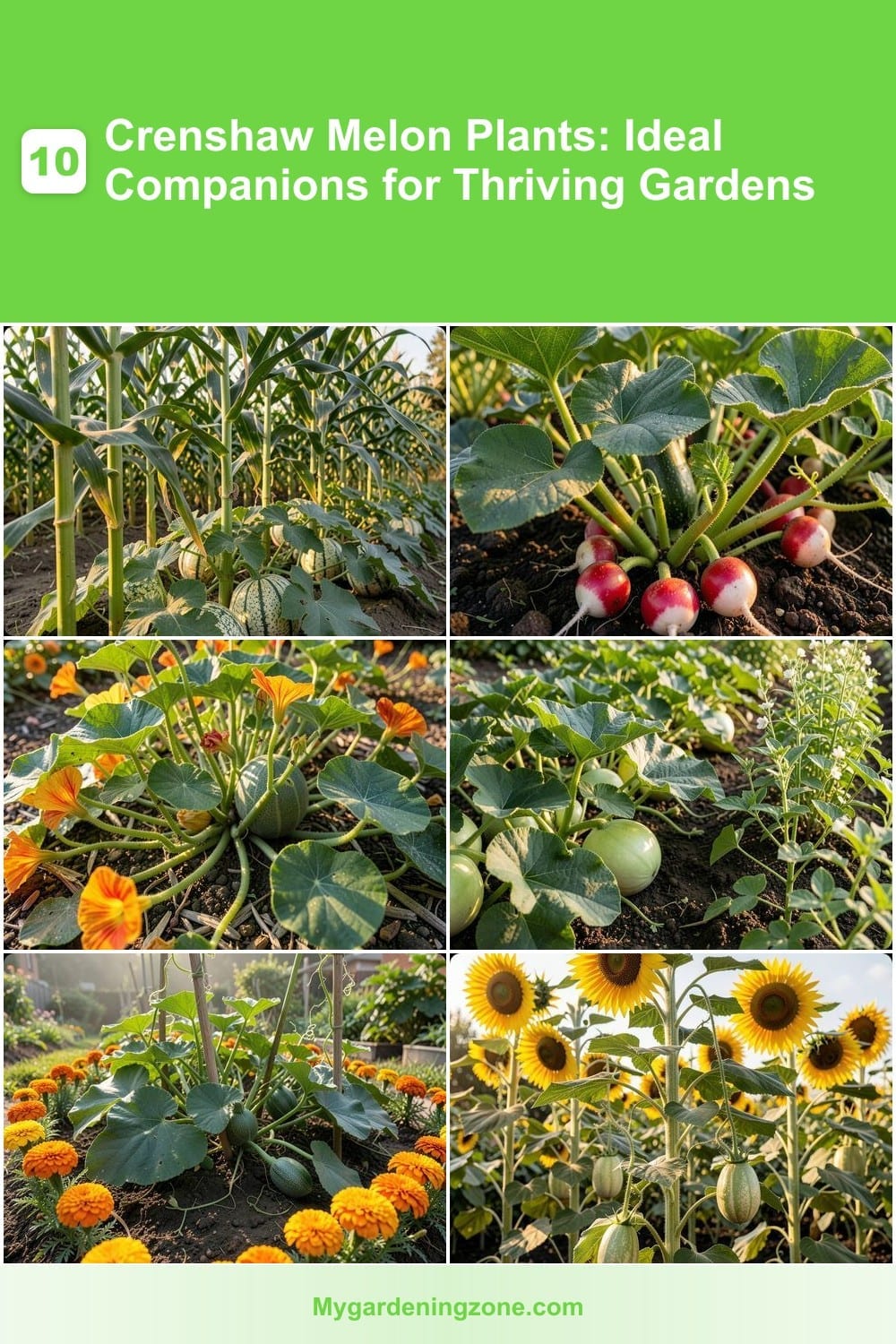
Crenshaw melons thrive with the right garden companions. These ten plants enhance growth, deter pests, and improve flavor, creating a harmonious and productive garden ecosystem for your melon patch.
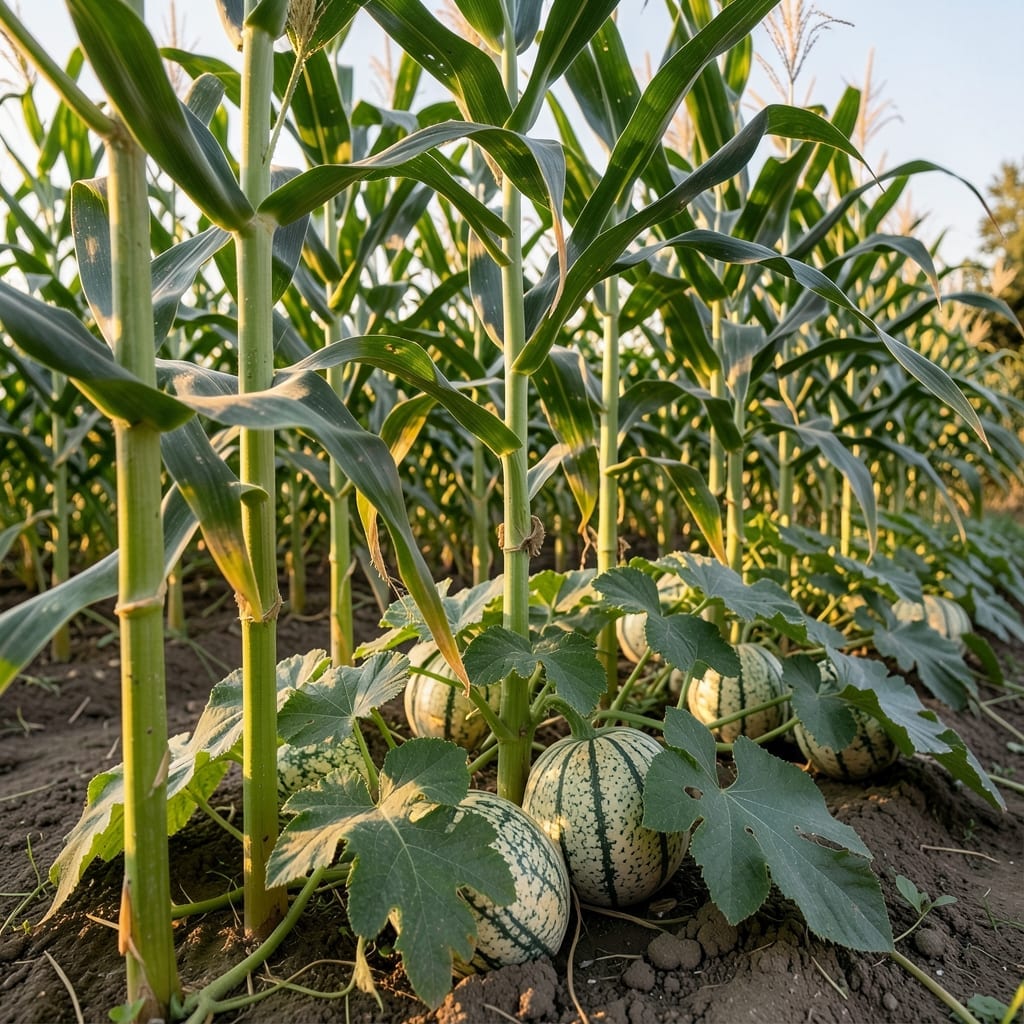
Hot summer afternoons can stress Crenshaw melon plants, but tall sweet corn offers the perfect solution. These towering stalks cast dappled shade that cools the soil and locks in precious moisture.
Plant corn on the western side of your melon patch so it shades the vines during the hottest part of the day. The corn’s deep roots won’t compete with your melons’ shallow ones, and the microclimate it creates reduces watering needs by up to 30%.
This pairing works especially well for gardeners in USDA zones 7-10 where afternoon heat is intense. 🌱
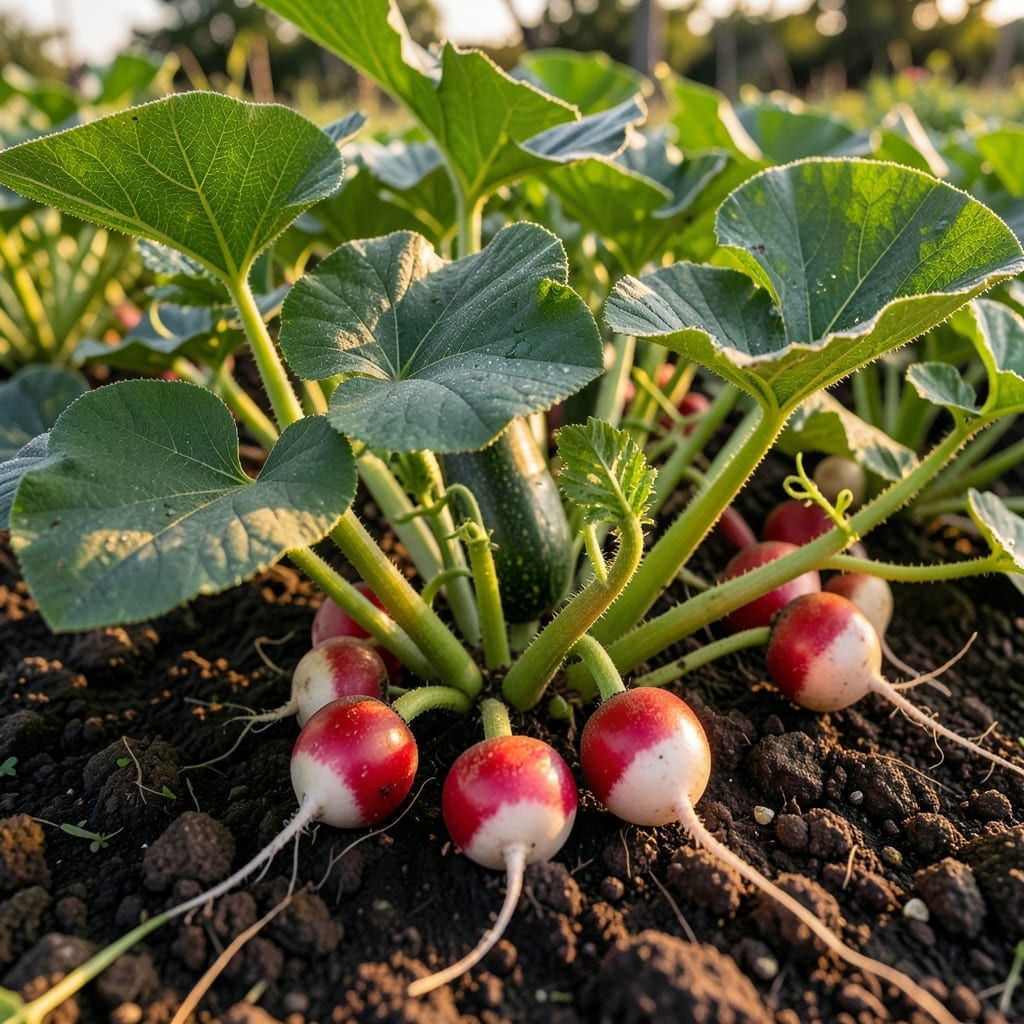
Tired of cucumber beetles wreaking havoc on your Crenshaw melon plants? Radishes are your secret weapon. These fast-growing roots naturally repel pests that commonly plague melons, creating a protective barrier around your vines.
Radishes also improve soil structure with their deep taproots, breaking up compacted earth and enhancing drainage for shallow-rooted melons. Plant them as a border or intersperse between melon hills for maximum effect.
This pairing is ideal for organic gardeners seeking natural pest control without chemicals. 🌱
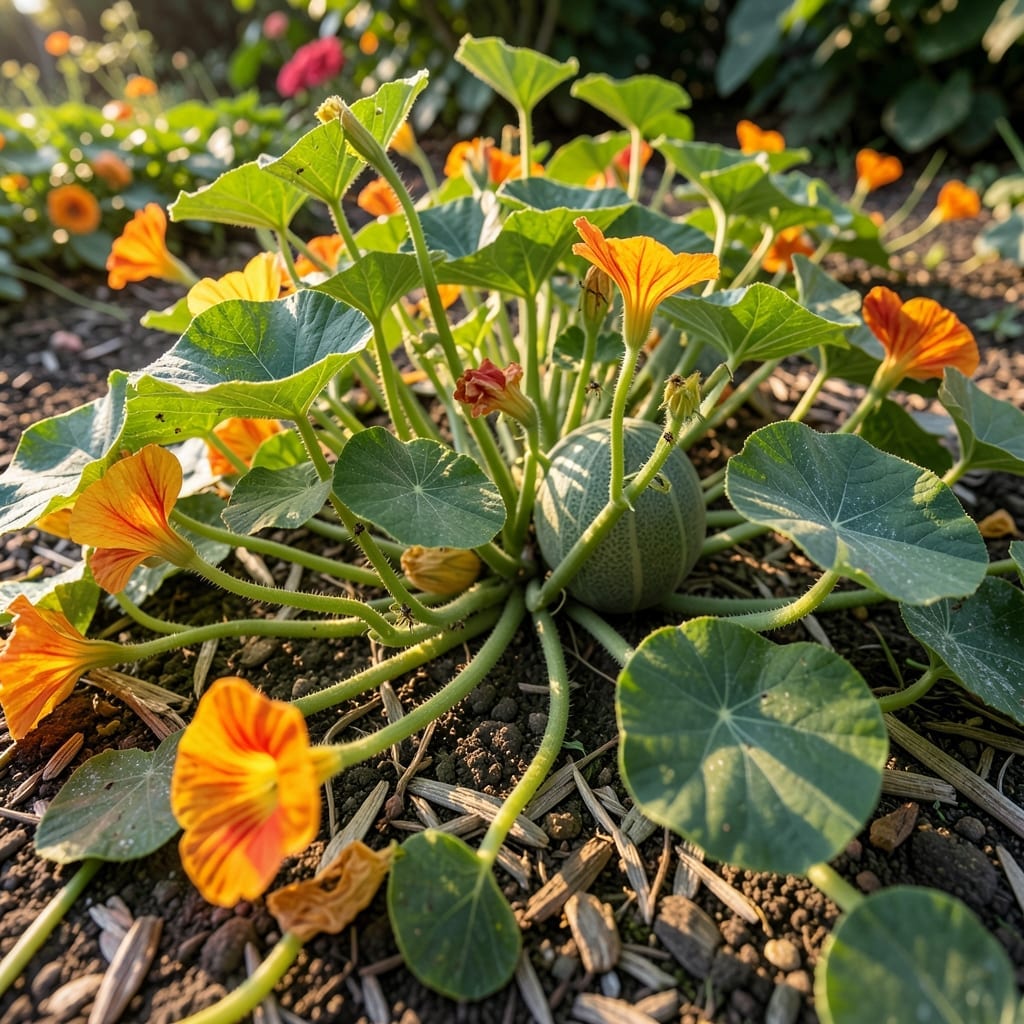
Aphids love Crenshaw melon plants, but they love nasturtiums even more. These cheerful, edible flowers act as a decoy, luring pests away from your valuable melon vines with their bright blooms and peppery leaves.
Plant nasturtiums in a ring around your melon patch or intersperse them between hills. As aphids flock to the nasturtiums, your melons stay protected without any chemical intervention. The flowers also add a pop of orange, yellow, or red to your garden.
This method is perfect for organic gardeners who prefer natural pest management. 🌱
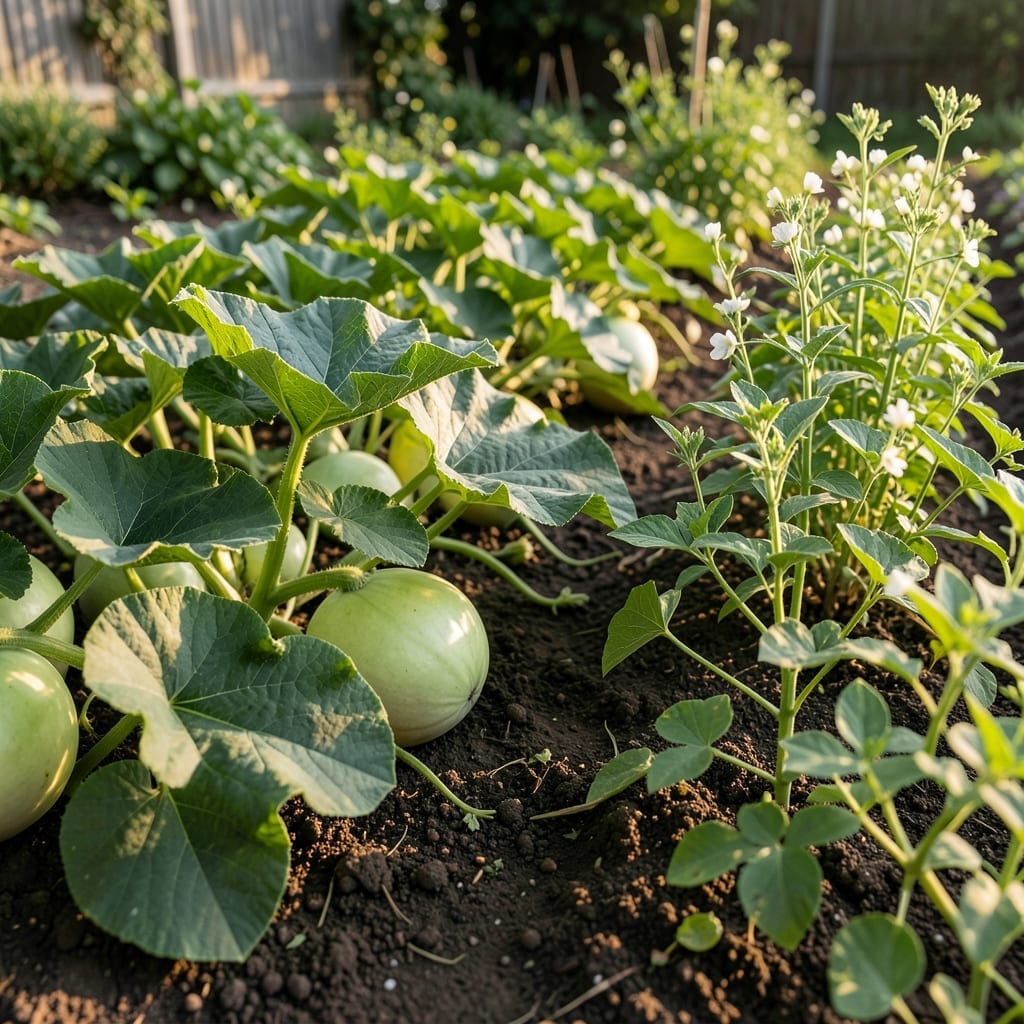
Want to give your Crenshaw melon plants a natural growth boost? Bush beans are the perfect companion, acting as living fertilizers right in your garden bed.
These nitrogen-fixing legumes form a symbiotic relationship with soil bacteria, pulling nitrogen from the air and converting it into a form your melons can use. Plant them 12-18 inches from your melon hills for maximum benefit without competition.
This pairing is ideal for gardeners looking to improve soil health naturally while growing two edible crops in the same space. 🌱
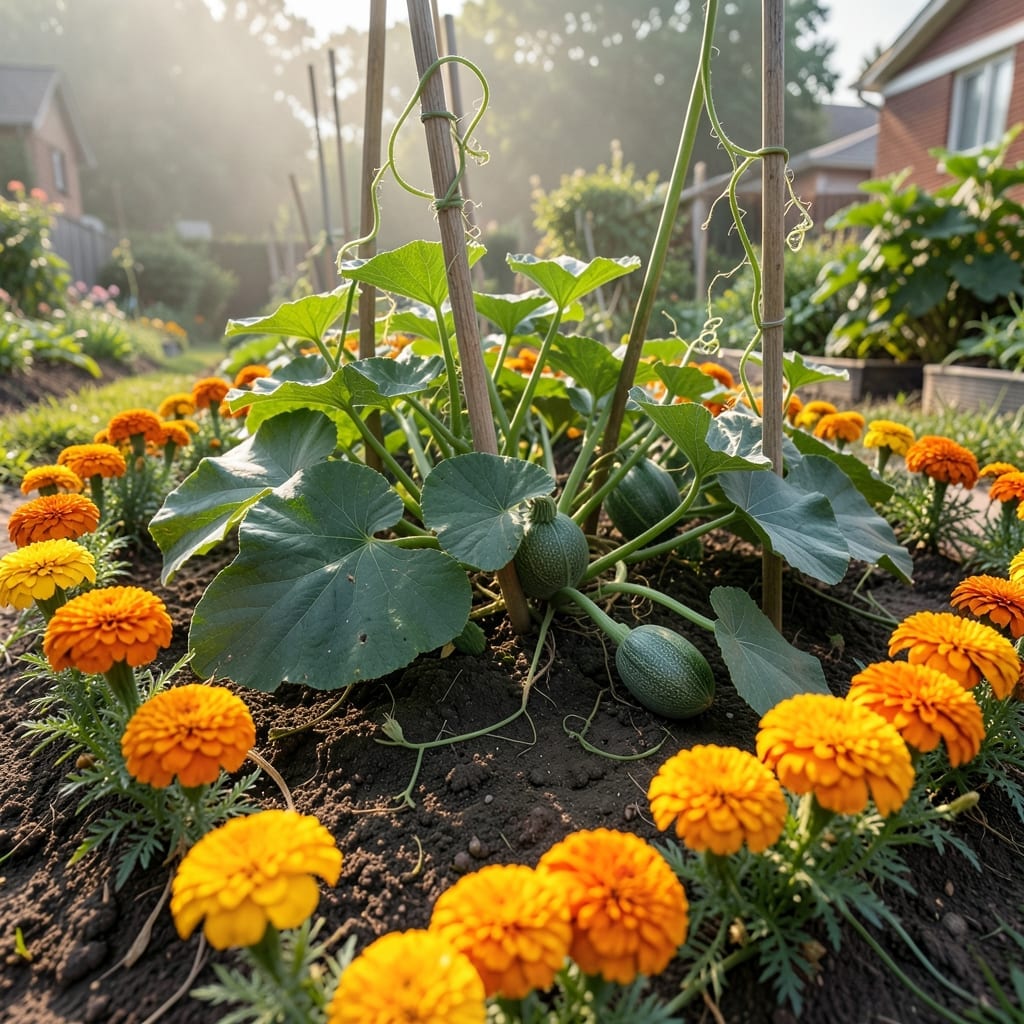
Invisible enemies like root-knot nematodes can stunt your Crenshaw melon plants before you even notice. French marigolds offer a natural defense, releasing nematode-suppressing chemicals from their roots.
Plant these bright flowers as a border around your melon patch. Their alpha-terthienyl compounds deter soil nematodes for up to a 2-foot radius, creating a protective zone. For best results, plant them 2-3 months before melon transplanting.
This method is perfect for organic growers wanting chemical-free protection for their melon roots. 🌱
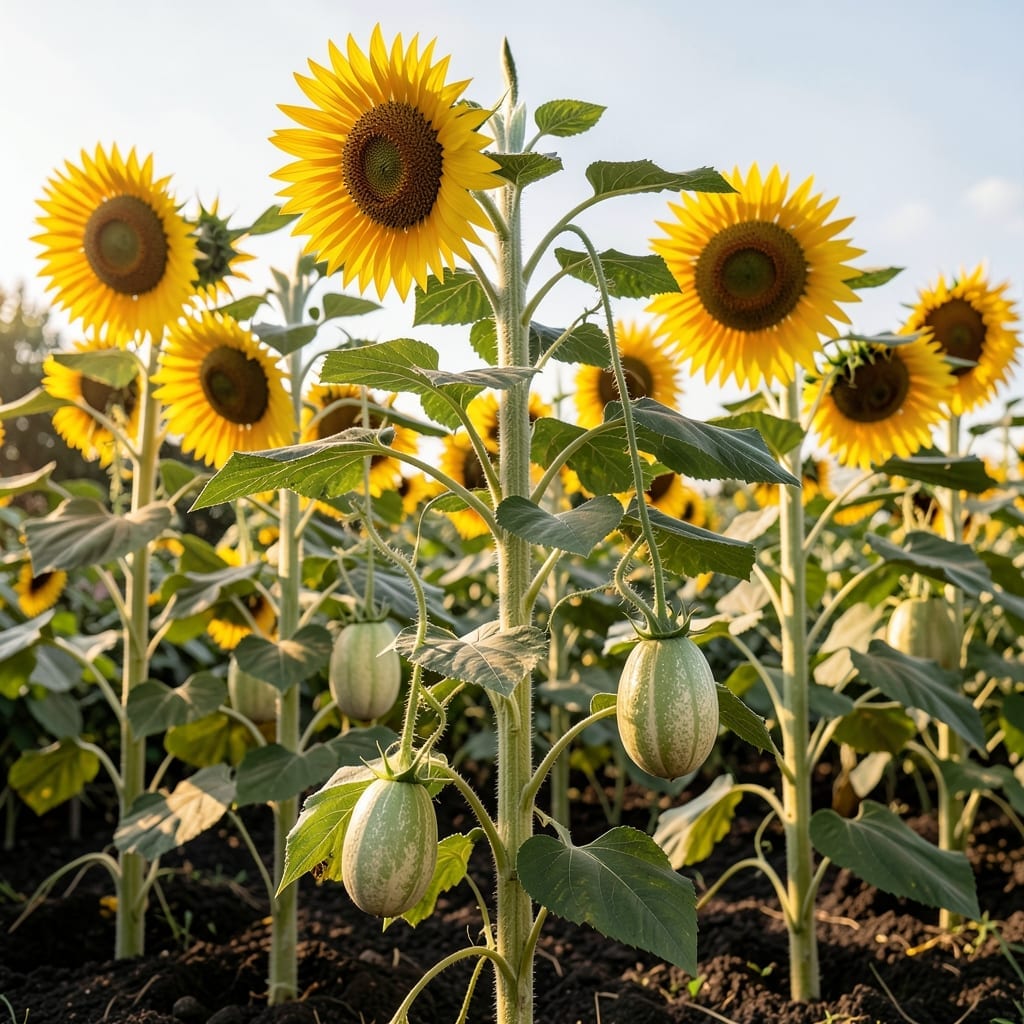
Maximize your garden space by pairing sunflowers with Crenshaw melon plants. These towering giants create a living trellis, allowing melon vines to climb upward instead of sprawling across precious ground space.
The sturdy sunflower stalks support the weight of growing melons while improving air circulation around the plants, reducing the risk of fungal diseases. Plant sunflowers in a staggered pattern so vines have multiple climbing points as they grow.
This vertical approach is perfect for small-space gardeners or those wanting to add height to their melon patch. 🌻
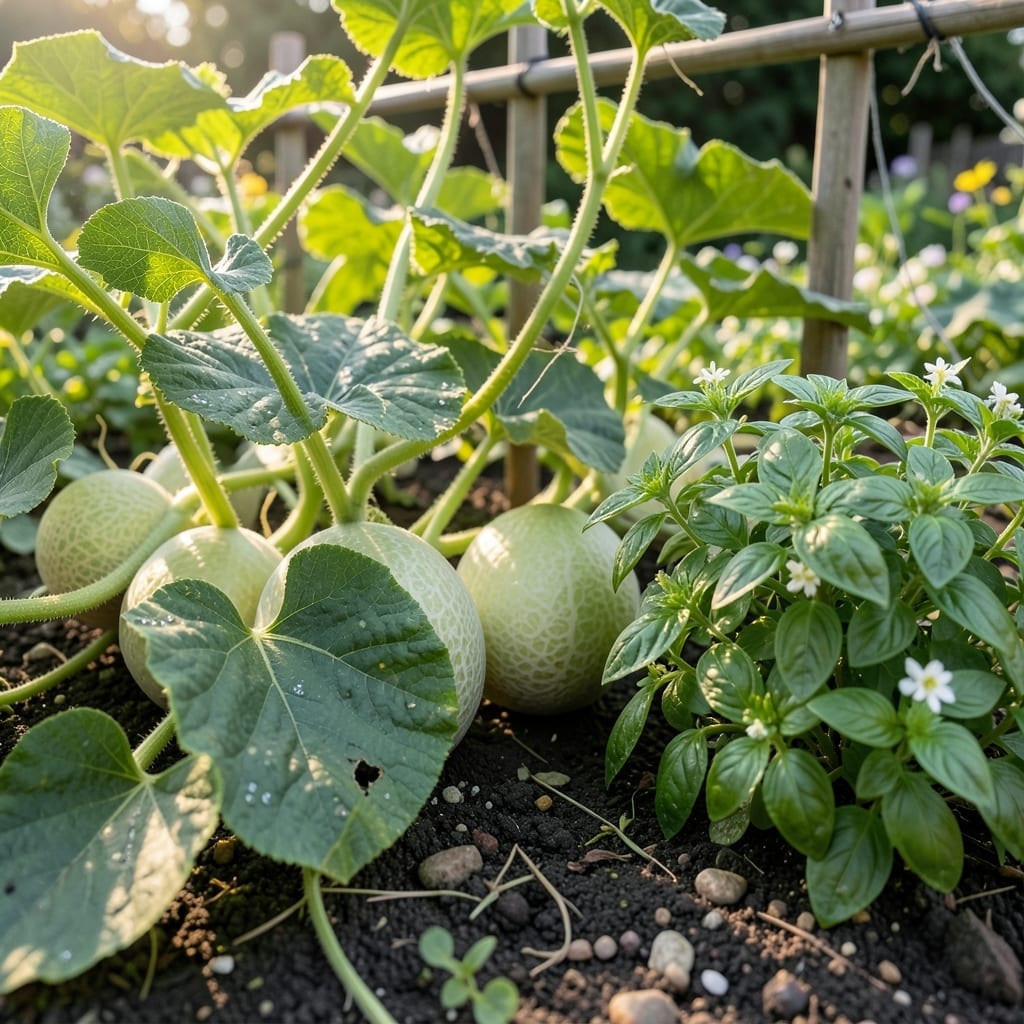
Want sweeter Crenshaw melons with less effort? Basil might be your secret ingredient. This aromatic herb does more than flavor your kitchen—it can actually enhance the natural sweetness of your melons when planted nearby.
Basil’s strong scent confuses and repels troublesome pests like thrips and whiteflies, which often target melon plants. For best results, plant basil at the base of your melon vines or intersperse it between hills, allowing its protective qualities to spread.
This pairing is perfect for organic gardeners looking to boost both flavor and pest resistance in their melon patch. 🌿
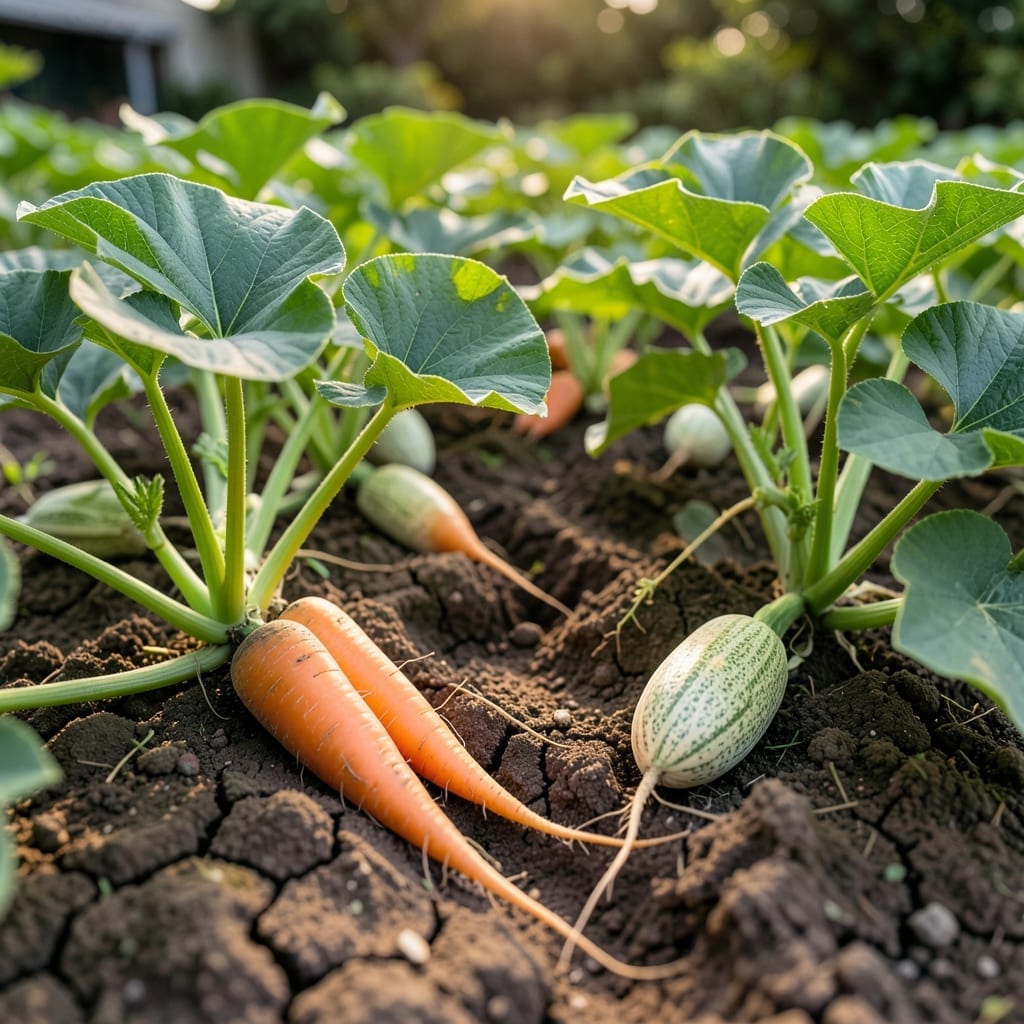
Does your garden soil feel as hard as concrete? Carrots are nature’s little plows, driving their deep taproots through compacted earth to loosen it up for your Crenshaw melon plants.
As carrots grow, they create channels that improve airflow and drainage, which is perfect for melons that hate soggy roots. Plant them between melon hills or in a border—just be sure to harvest carrots before they start competing for space.
This dynamic duo is ideal for gardeners with heavy clay soil or those establishing new beds. 🌱
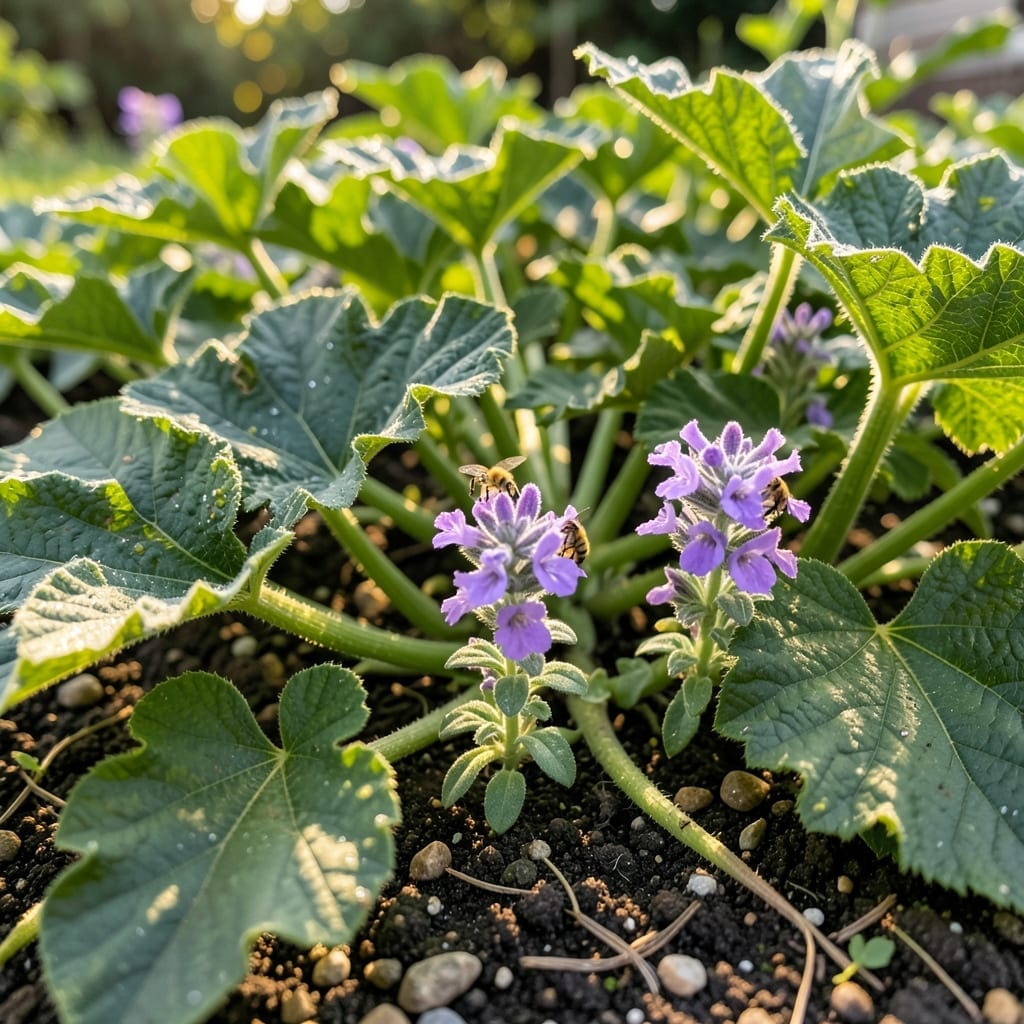
Without bees and other pollinators, your Crenshaw melon plants won’t produce fruit—no matter how well you tend them. That’s where oregano comes in, with its tiny purple flowers that act like a pollinator magnet.
This hardy herb blooms all summer long, providing a constant food source for bees and beneficial insects. Plant it near your melon patch, and you’ll notice more buzzing activity, leading to better fruit set and higher yields.
Oregano is low-maintenance, drought-tolerant once established, and thrives in the same sunny conditions your melons love. 🌿
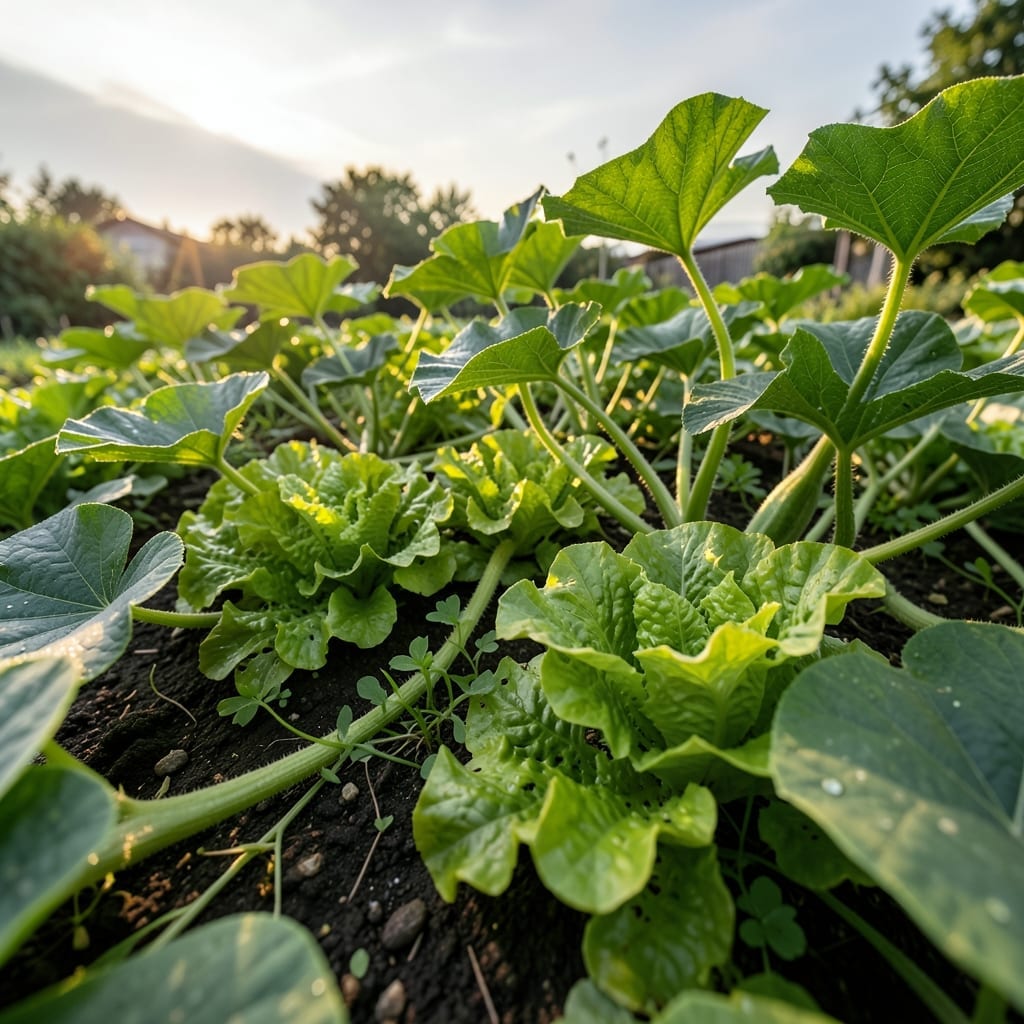
Struggling with weeds and dry soil around your Crenshaw melon plants? Leaf lettuce offers a simple, edible solution as a living ground cover. Its shallow roots form a dense mat that blocks sunlight from reaching weed seeds while maintaining soil moisture.
Plant leaf lettuce thickly between melon rows, allowing it to spread and create a natural mulch layer. The lettuce won’t compete with your melons for nutrients, and you’ll get a bonus harvest of fresh greens throughout the growing season.
This method works beautifully for gardeners who want to maximize space and reduce maintenance while keeping their melon patch thriving. 🌱