
Beautiful Plants For Your Interior
Beautiful Plants For Your Interior
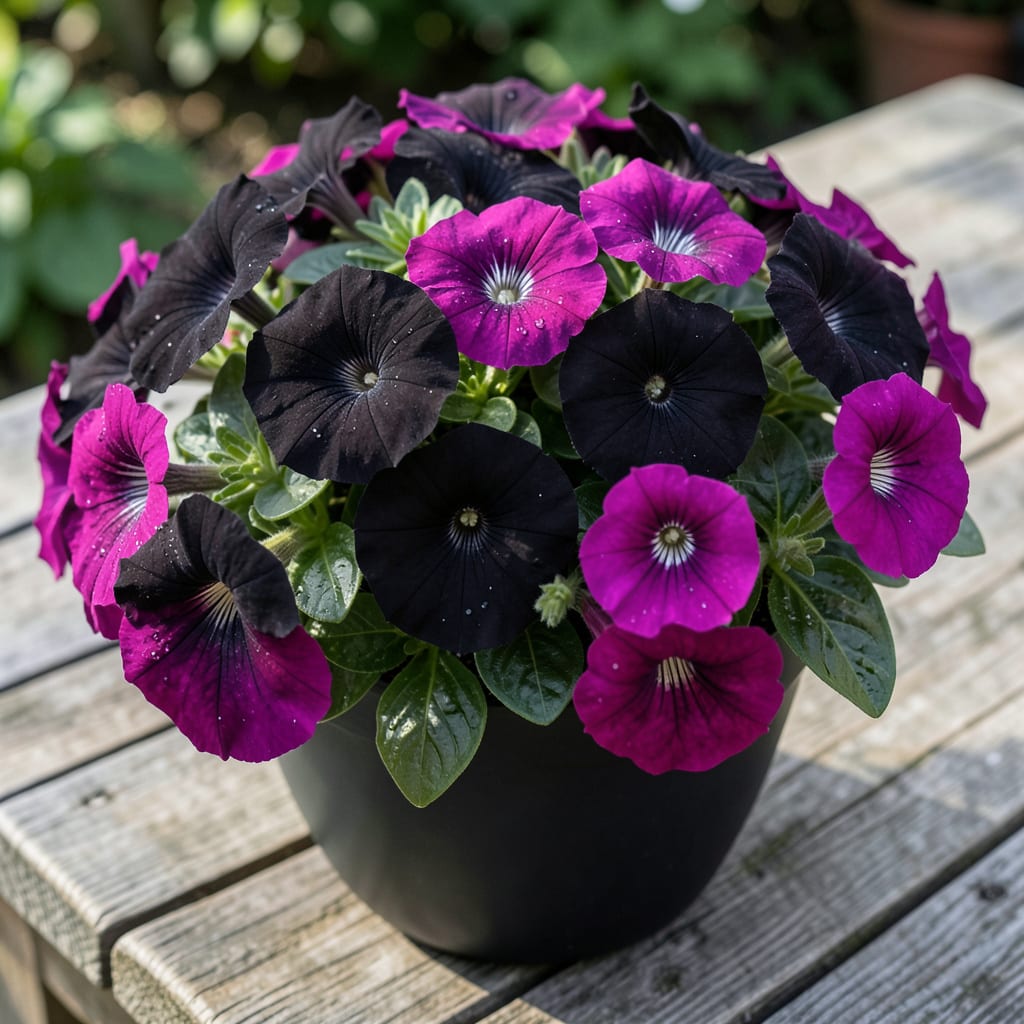
This petunia stops people in their tracks. I planted Black Mamba last spring and watched its deep purple-black blooms create jaw-dropping contrast against bright greens and whites in my borders.
It thrives in full sun with well-draining soil, and the heat tolerance means it keeps blooming when other petunias fade. You’ll get continuous color from late spring until first frost with minimal deadheading.
📚 In This Guide
Here’s the method I use to grow these striking black petunias for maximum visual impact.
Select a spot that receives full sun for at least 6-8 hours daily. This variety thrives in bright light, which intensifies its deep, velvety black blooms. I’ve found that morning sun with some afternoon shade works in hotter climates to prevent petal scorch.
Ensure the area has good air circulation to prevent fungal diseases. A location near a fence or trellis can provide subtle support for the trailing habit. The soil should drain well—standing water will quickly damage the roots.
Work the soil to a depth of 12-15 inches, removing any weeds or debris. Black Mamba petunias prefer slightly acidic to neutral soil with a pH of 6.0-7.0. I always mix in 2-3 inches of compost to improve fertility and drainage.
If planting in containers, use a high-quality potting mix with perlite or vermiculite for aeration. The container should be at least 12 inches deep to accommodate the root system. Avoid heavy clay soils, which retain too much moisture.
Dig a hole slightly larger than the root ball of your petunia. Place the plant so the top of the root ball is level with the soil surface. Space plants 12-18 inches apart to allow for their spreading habit.
Water thoroughly after planting to settle the soil around the roots. I like to add a 1-2 inch layer of mulch to retain moisture and suppress weeds, but keep it away from the stem to prevent rot. You’ll see new growth within 7-10 days if conditions are right.
Water deeply at the base of the plant when the top 1 inch of soil feels dry. Avoid overhead watering to prevent leaf spot diseases. These petunias are somewhat drought-tolerant once established, but consistent moisture produces the best blooms.
Feed with a balanced, water-soluble fertilizer every 2-3 weeks during the growing season. I switch to a high-phosphorus formula when buds form to encourage more flowers. Deadhead spent blooms regularly to promote continuous blooming.
Trim back leggy stems by one-third every 4-6 weeks to encourage bushier growth. This also helps maintain the plant’s shape and prevents it from becoming too straggly. Use clean, sharp shears to avoid damaging the stems.
Pinch off faded flowers weekly to redirect energy into new blooms. If the plant looks stressed during extreme heat, provide temporary afternoon shade. With proper care, you’ll enjoy dramatic black flowers from late spring until the first frost.
Here’s what I’ve learned through trial and error to get the most dramatic blooms.
Light Exposure: That 6-8 hours of full sun daily in Step 1 is non-negotiable for deep black blooms. In scorching climates, I’ve found that morning sun with afternoon shade prevents petal scorch while still delivering that intense color. Don’t skimp on light—it’s what makes these petunias pop.
Soil Depth: Working the soil to 12-15 inches deep in Step 2 ensures roots have room to establish. I once planted in shallow soil and watched the plants struggle. The extra effort upfront pays off with stronger, more resilient growth.
Pruning Schedule: Sticking to that every 4-6 weeks trimming in Step 5 keeps plants bushy and flowering profusely. I set a calendar reminder—it’s easy to forget, but the difference between pruned and unpruned plants is striking.
Watering Technique: Watering at the base and checking that top 1 inch of soil in Step 4 prevents leaf diseases while keeping roots happy. I use my finger to test moisture—simple but effective. Overhead watering is the fastest way to ruin these beauties.
Keep them in full sun (6+ hours daily) and water when the top inch of soil is dry. Fertilize weekly with a balanced liquid feed for vibrant blooms.
These petunias bloom from late spring until the first frost, offering striking black-purple flowers all season with proper care.
Yes! Try ‘Phantom’ or ‘Black Velvet’ petunias for similar deep hues. Both offer dramatic contrast but may vary in size or trailing habits.
Wilting often signals underwatering or heat stress. Check soil moisture and provide afternoon shade in extreme heat. Trim leggy stems to encourage bushiness.
