
Beautiful Plants For Your Interior
Beautiful Plants For Your Interior
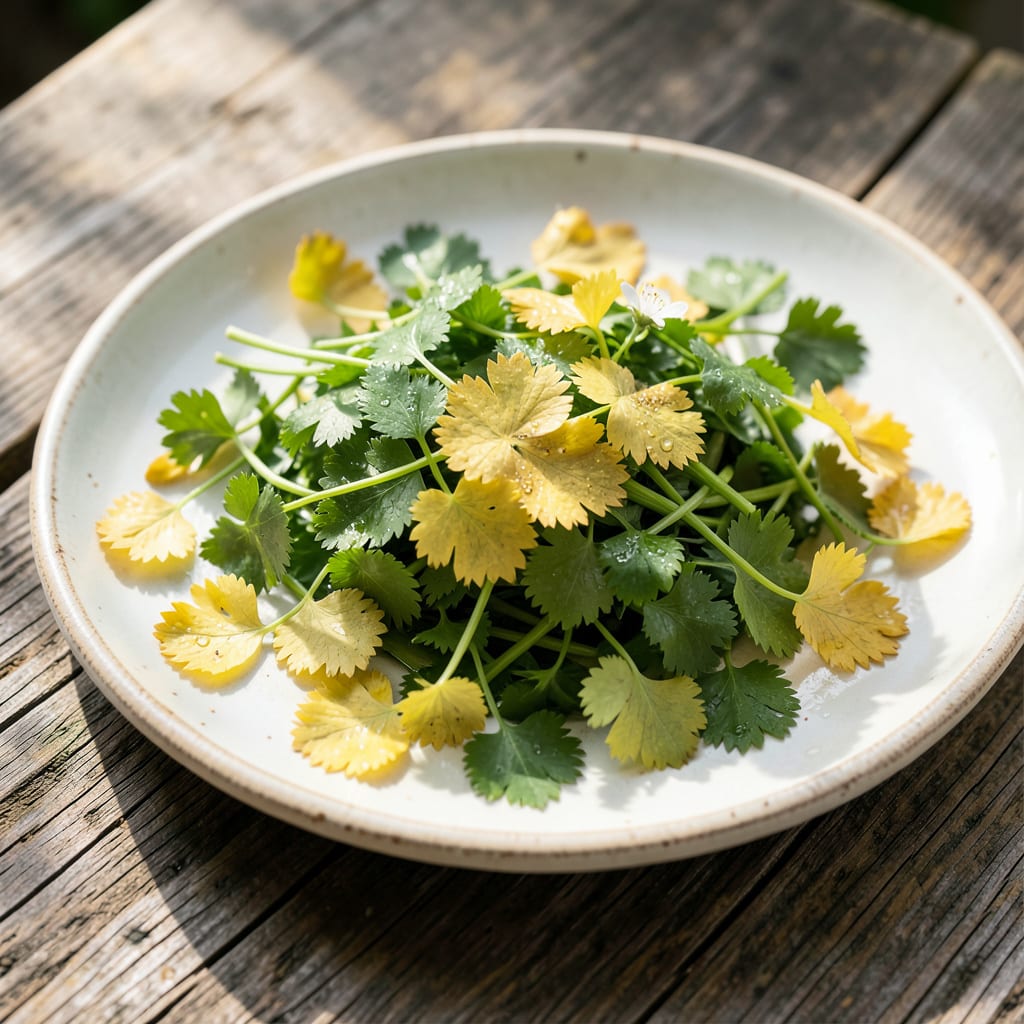
Yellowing coriander leaves always signal something’s off. I’ve saved countless plants by catching the early signs—whether it’s too much water, not enough food, or soil that’s thrown off balance.
Most times, it’s a simple fix: adjust your watering schedule, check for root rot, or test your soil’s pH. Coriander thrives in slightly acidic to neutral conditions, and even small imbalances can turn leaves pale.
Pests and diseases are less common but worth ruling out. A quick inspection of stems and undersides of leaves will reveal any unwelcome guests before they do real damage.
With a few tweaks, your plants can bounce back to their vibrant green in 1-2 weeks. Here’s how to diagnose and treat the issue for good.
Yellowing coriander leaves often signal underlying issues that disrupt the plant’s health. Below are the most frequent causes, explained with actionable insights.
Coriander thrives on nitrogen, potassium, and magnesium. A nitrogen deficiency causes uniform yellowing (chlorosis) in older leaves first, as the plant redirects nutrients to new growth. Potassium shortages appear as yellow edges on leaves, while magnesium deficiency creates interveinal yellowing (yellow between veins). Fix: Use a balanced fertilizer (10-10-10) or organic compost to replenish soil nutrients.
Coriander prefers cool weather (60–75°F). Heat stress above 85°F accelerates bolting (premature flowering) and triggers yellowing. Conversely, cold snaps below 50°F slow metabolism, causing chlorosis. Fix: Provide shade cloth in hot climates or grow in containers for temperature control.
Soggy soil suffocates roots, reducing oxygen uptake and nutrient absorption. This leads to yellowing leaves, often accompanied by wilting or root rot. Fix: Ensure well-draining soil and water only when the top inch is dry. Use pots with drainage holes if growing in containers.
Coriander prefers slightly acidic to neutral soil (pH 6.2–6.8). Alkaline soil (pH >7.5) locks out iron and manganese, causing yellowing between veins (interveinal chlorosis). Fix: Test soil pH and amend with sulfur (to lower pH) or lime (to raise pH) as needed.
Aphids, spider mites, or fungal infections (e.g., powdery mildew) stress the plant, leading to yellow spots or widespread discoloration. Fix: Inspect leaves for pests or white fungal growth. Treat with neem oil or insecticidal soap for pests; improve airflow to prevent fungi.
Don’t let yellow coriander leaves slow you down! Target the root cause with these practical fixes and prevention tips to restore vibrant green growth.
Fix: Treat nitrogen, iron, or magnesium shortages with the right amendments. For nitrogen, work compost or blood meal into the soil. For iron, apply chelated iron as a foliar spray. For magnesium, use Epsom salt (1 tablespoon per gallon of water) every 2 weeks.
Prevention: Start with nutrient-rich, well-draining soil. Mix in aged compost before planting, and feed with a balanced organic fertilizer every 4–6 weeks.
Fix: Test your soil with a pH kit. If it’s too acidic (below 6.0), add lime to raise it. If it’s too alkaline (above 7.5), amend with sulfur or peat moss to lower it. Coriander thrives in a pH range of 6.2–6.8.
Prevention: Retest soil pH every season. Use organic matter like compost to naturally buffer pH over time.
Fix: Let the top inch of soil dry out between waterings. If roots are waterlogged, improve drainage by mixing in perlite or coarse sand. For potted coriander, ensure containers have drainage holes.
Prevention: Water deeply but infrequently—about 1–2 times per week depending on climate. Use mulch to retain moisture without soggy roots.
Fix: Move plants to partial shade if they’re scorched by direct sun, or provide shade cloth during peak hours. If temperatures drop below 50°F (10°C), protect them with row covers or move pots indoors.
Prevention: Plant coriander in a spot with 4–6 hours of morning sun and dappled afternoon shade. Avoid extreme temperature swings by hardening off seedlings gradually.
💡 Pro Tip: Rotate crops yearly to prevent nutrient depletion and disease buildup in the soil. Healthy soil equals happy coriander!
Water when the top 1 inch of soil feels dry, usually 1-2 times per week. Overwatering causes root rot, leading to yellow leaves. Always use well-draining soil and pots with drainage holes.
Coriander thrives in slightly acidic to neutral soil (pH 6.2–6.8). Test your soil and amend with sulfur to lower pH or lime to raise it if needed. Imbalances can lock out essential nutrients.
Yes, if you catch the issue early. Address the cause—like adjusting water, fixing nutrient deficiencies, or improving drainage—and new growth should return to vibrant green in 1-2 weeks.
Check for aphids or spider mites under leaves. These pests sap nutrients, causing yellow spots or widespread discoloration. Treat with neem oil or insecticidal soap if found.
