
Beautiful Plants For Your Interior
Beautiful Plants For Your Interior
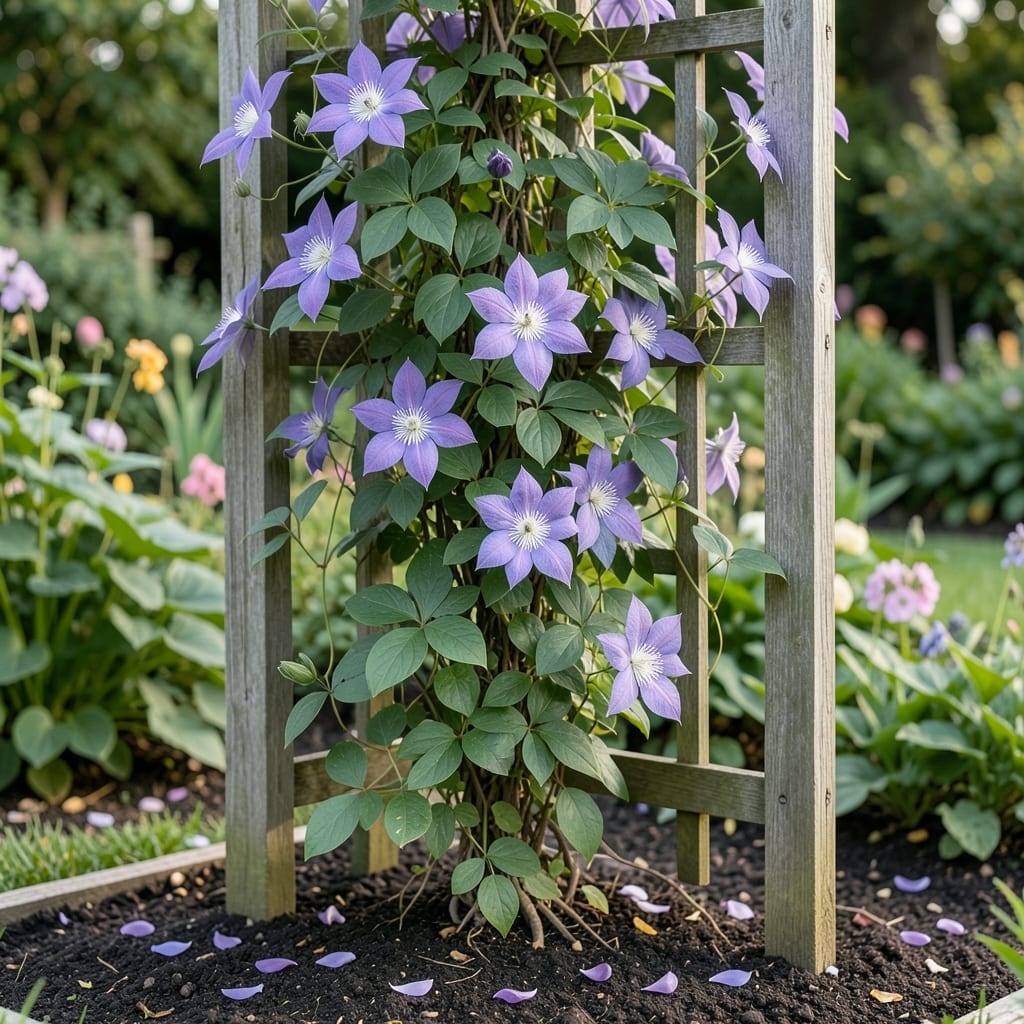
Clematis vines can transform any garden with their stunning blooms, but getting their light requirements right is the key to vibrant, healthy growth.
Too much sun can scorch their leaves, while too little may prevent the 🌸 Clematis from flowering entirely. It’s all about finding that perfect balance.
I’ve seen gardeners struggle with wilting vines or sparse blooms, and the issue often comes down to light exposure. The good news? A few simple adjustments can make all the difference.
Discover how to match your Clematis to the ideal sun and shade conditions for thriving vines in zones 4-9. Let’s get started.
 Best Window Placement
I’ve found that clematis light requirements vary significantly by group. Early bloomers like Clematis alpina thrive in partial shade, while mid-season varieties such as Clematis montana prefer full sun with root protection.
Late-flowering types, including Clematis viticella, are the most sun-tolerant and can handle 6+ hours of direct sunlight if their root zone stays cool and shaded.
| Variety Group | Light Needs | Example Varieties |
|---|---|---|
| Early Bloomers | Partial shade | Alpina, Macropetala |
| Mid-Season | Full sun to partial shade | Montana, Nelly Moser |
| Late Bloomers | Full sun | Viticella, Jackmanii |
In my experience, Group 1 clematis (early spring bloomers) do best with morning sun and afternoon shade. This protects their delicate flowers from harsh midday rays while ensuring enough light for growth.
Group 2 varieties, which bloom in late spring and early summer, can handle more sun but still benefit from some shade during the hottest part of the day. I recommend planting them where they’ll get dappled sunlight or light shade.
For Group 3 clematis, the late summer and fall bloomers, full sun is ideal. These varieties are the most sun-tolerant but still need cool roots. I always mulch heavily at their base to maintain moisture and temperature.
If your garden has limited sunlight, don’t worry. Many clematis varieties, like Clematis armandii, thrive in bright, indirect light and can even tolerate full shade, though they may produce fewer blooms.
For those with hot climates, I suggest choosing varieties like Clematis texensis, which are more heat-tolerant. Even these, however, will benefit from some afternoon shade to prevent leaf scorch.
Remember, the key to healthy clematis is balancing light exposure. Most varieties need at least 6 hours of sunlight daily for optimal blooming, but their roots must stay cool and shaded. ✂️
I’ve had great success with companion planting to provide natural shade. Low-growing plants like hostas or heucheras at the base of my clematis trellises keep the roots cool while allowing the vines to reach for the sun.
Finally, don’t forget that seasonal changes affect light availability. In my garden, I adjust the positioning of potted clematis as the sun’s angle shifts throughout the year to maintain consistent light exposure. 🌿
Getting clematis light requirements just right can make the difference between lackluster vines and a spectacular floral display. I always recommend positioning clematis where their tops can bask in 6+ hours of sunlight while keeping their roots cool and shaded.
One of my favorite tricks is using a trellis or arbor to create dappled shade for the base. This mimics their natural habitat where vines climb toward light while roots stay protected under leaf litter. It’s a simple way to boost blooming potential without complex adjustments.
I’ve found that morning sun is particularly beneficial for clematis. It dries dew quickly, reducing disease risk, while afternoon shade prevents leaf scorch in hotter climates. This balance works well for most varieties, especially in USDA zones 6-8.
For gardeners with limited sun, don’t despair. Some clematis varieties like ‘Nelly Moser’ or ‘Hagley Hybrid’ tolerate partial shade beautifully. I’ve seen them thrive with just 4-6 hours of dappled sunlight daily.
Remember that light needs change with the seasons. What’s perfect in spring might be too intense by July. I recommend monitoring your plants and adjusting with shade solutions as needed. A little observation goes a long way in keeping clematis happy.
Finally, don’t forget that root temperature matters as much as light. A 2-inch mulch layer at the base works wonders for maintaining cool, moist soil. This simple step has saved many of my clematis from heat stress during summer heatwaves.☀️