
Beautiful Plants For Your Interior
Beautiful Plants For Your Interior
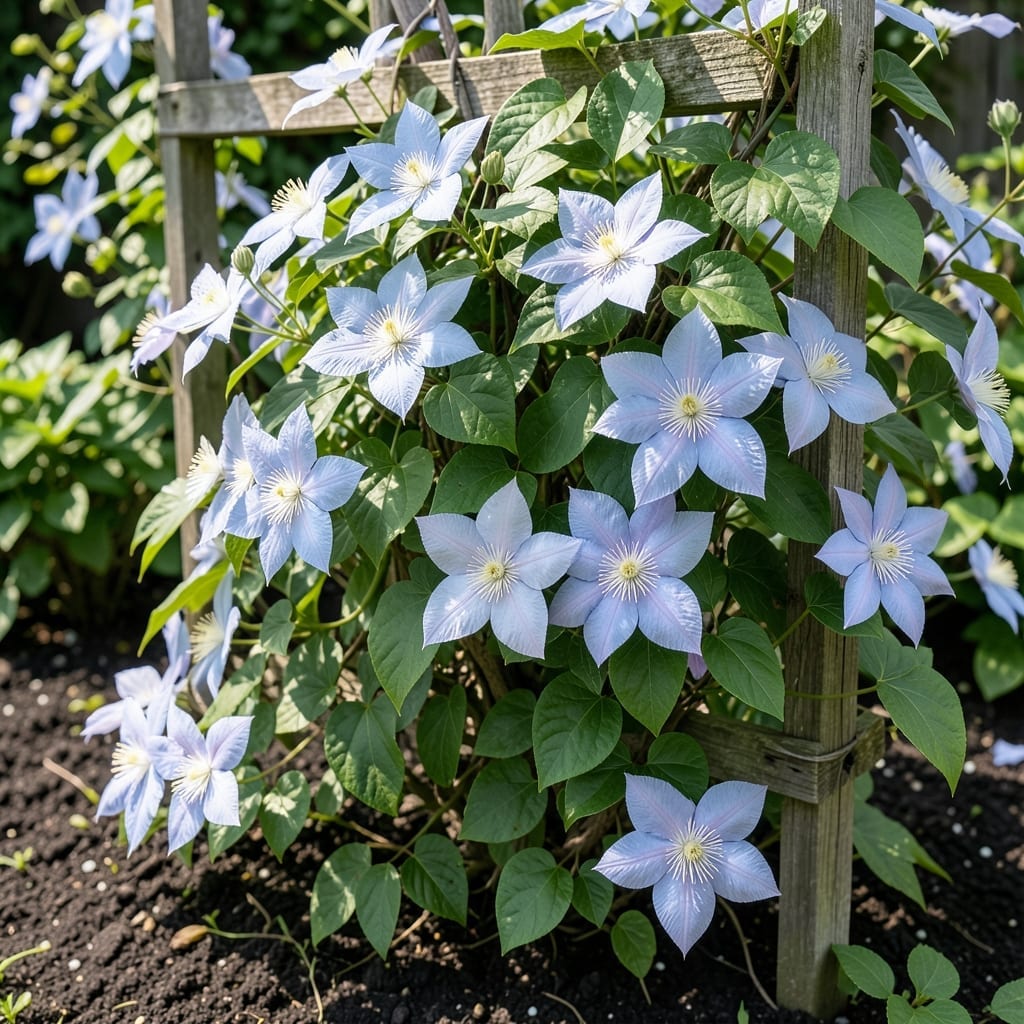
Imagine your garden transformed by a cascade of striking lavender-blue blooms. That’s the magic of Clematis Blue Light, but there’s a catch – its beauty hinges on perfect sun exposure.
Get this wrong, and you’ll face sparse flowers and weak growth. I’ve seen it happen too often, and it’s heartbreaking to watch such potential go to waste.
What if you could unlock vibrant, healthy blooms with just the right light balance? The good news is, it’s absolutely possible with this cultivar.
Let me show you exactly how to give your Clematis the ideal conditions it craves for those show-stopping displays you dream of.
 Best Window Placement
To coax the most vibrant blooms from Clematis ‘Blue Light’, I always aim for 6-8 hours of sunlight daily. This cultivar thrives in full sun to partial shade, but it’s the quality of light that truly matters for those lavender-blue flowers.
The ideal setup gives the vine morning sun and afternoon shade, especially in hotter climates. This balance prevents leaf scorch while ensuring robust growth and abundant flowering throughout the season.
| Requirement | Specification |
|---|---|
| Daily Sunlight | 6-8 hours |
| Ideal Light | Morning sun, afternoon shade |
| Minimum Light | 4-6 hours |
| Light Type | Direct to bright indirect |
| USDA Zones | 4-9 |
In my experience, too much harsh afternoon sun can stress the plant, leading to wilted leaves and fewer blooms. If your garden gets intense midday rays, consider a trellis on the east side of a structure for natural shade.
For cooler climates, I push the sunlight to 8 hours to compensate for lower light intensity. The vine will still produce lavender-blue flowers, but they may be slightly smaller without that extra warmth.
If you’re growing Clematis ‘Blue Light’ in containers, rotate the pot weekly to ensure even light distribution. This prevents the vine from growing lopsided and encourages fuller foliage and more blooms.
Remember, consistent light is key. Sudden changes from deep shade to full sun can shock the plant, so I always acclimate it gradually when moving it to a sunnier spot.
In USDA Zones 4-9, this clematis adapts well, but in Zone 9, I’ve found that dappled shade during peak summer months works best to prevent heat stress.
For the healthiest vines, I pair proper light with well-draining soil and regular watering. The right sun exposure ensures strong stems and vibrant blooms that last all season long.
If your Clematis ‘Blue Light’ isn’t flowering, check its light first. Often, just a few extra hours of sun can transform a lackluster vine into a showstopper in your garden. ☀️
I’ve found that Clematis ‘Blue Light’ thrives with 6+ hours of sunlight daily, but climate plays a huge role. In hotter regions, afternoon shade prevents leaf scorch while still encouraging blooms.
For cooler climates, full sun is ideal to maximize flower production and vine growth. The key is balancing light intensity with protection from extremes.
In my experience, east-facing locations work well in most areas, offering gentle morning sun and afternoon shade. This mimics the natural light cycle clematis loves.
For container-grown ‘Blue Light’, move pots to follow the sun. This gives you full control over light exposure as seasons change.
Avoid deep shade—this cultivar needs bright light to produce its signature lavender-blue flowers. Even in hot areas, some direct sun is essential.
I always recommend monitoring leaf color. Pale or yellowing leaves often signal too much sun, while sparse blooms may mean not enough light. ✂️