
Beautiful Plants For Your Interior
Beautiful Plants For Your Interior
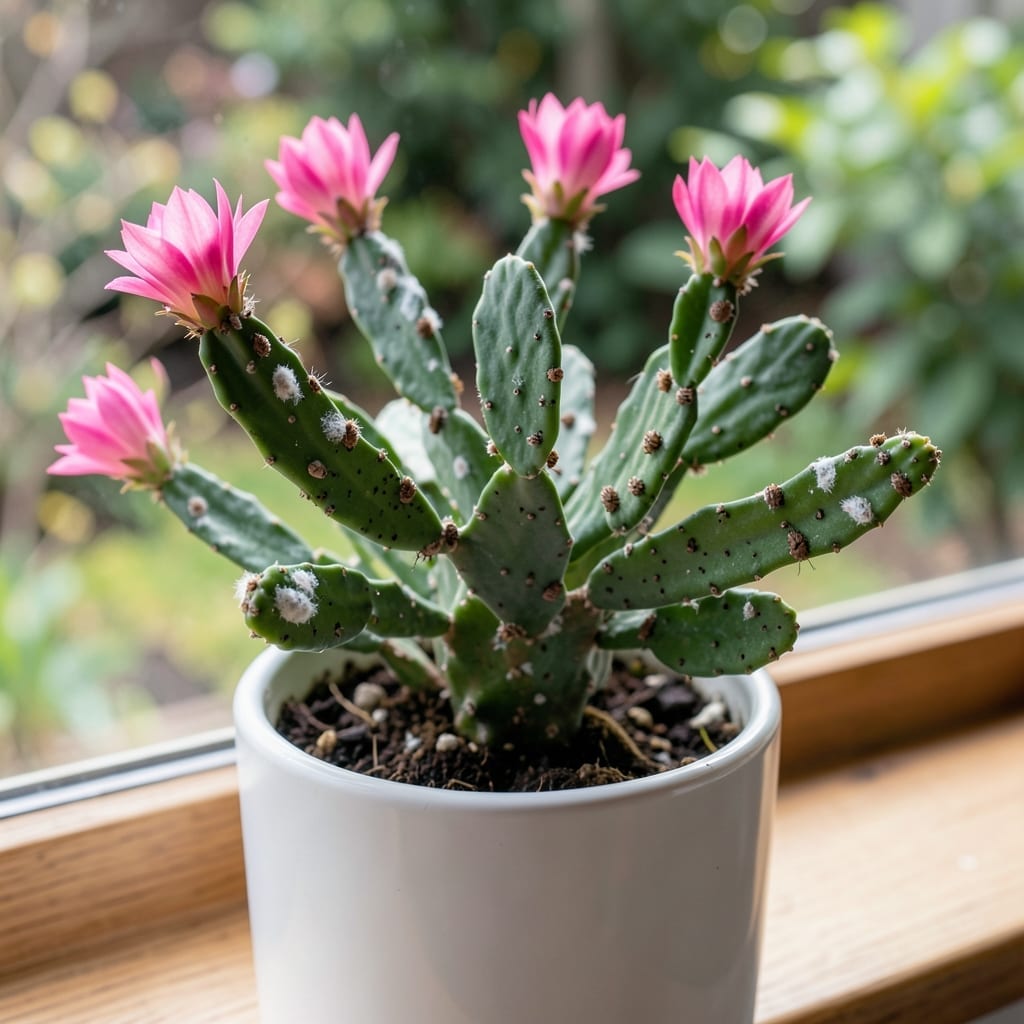
Your Christmas cactus should be thriving, not under attack. I’ve battled every pest that targets these holiday favorites, from mealybugs to spider mites, and I know the early signs most gardeners miss.
The key is catching them before they spread. White cottony clusters, tiny webbing, or sticky residue are your first warnings. Left unchecked, these pests weaken plants and stunt that gorgeous holiday bloom you’re counting on.
You’ll learn to spot each invader and remove them safely without harsh chemicals. Most treatments use items you already have at home—soapy water, rubbing alcohol, or a simple spray bottle.
Works for all Schlumbergera varieties, whether you have one plant or a collection. Here’s how to protect yours.
Christmas cacti are hardy plants, but certain conditions can make them a magnet for pests. Understanding the root causes helps you prevent infestations before they start. Here’s why pests may appear on your plant:
Christmas cacti thrive in stable environments with moderate humidity and indirect light. When conditions are too dry (below 40% humidity) or too humid (above 60%), pests like spider mites and mealybugs thrive. Low humidity dries out the plant’s natural defenses, while excessive moisture encourages fungal growth, which attracts fungus gnats and scale insects.
Placing your Christmas cactus in a crowded space with other plants or against walls limits air circulation. Stagnant air traps moisture and creates microclimates ideal for pests. Scale insects and aphids love these cozy, undisturbed spots, where they can feed undetected.
Inconsistent watering weakens the plant, making it vulnerable. Overwatering leads to root rot, which attracts fungus gnats that lay eggs in soggy soil. Meanwhile, underwatering stresses the plant, reducing its ability to fend off spider mites and mealybugs, which thrive on weakened tissues.
Dead leaves, fallen blooms, and dust on the plant’s surface provide hiding spots and food sources for pests. Failing to clean your plant regularly allows thrips and whiteflies to take hold. Even healthy plants can become infested if debris accumulates in the pot or saucer.
Pests often hitch a ride on newly purchased plants or unsterilized potting mix. Scale insects and mealybugs can lie dormant in soil for weeks before emerging. Always quarantine new plants and use pasteurized potting mix to avoid introducing pests to your collection.
Dealing with pests on your Christmas cactus? Here’s how to tackle common invaders and restore your plant’s health with simple, effective fixes.
Blast mites off with a strong stream of water or wipe leaves with a soapy cloth (1 tsp mild soap per 1 liter of water). Isolate the plant to prevent spreading. For severe cases, use neem oil (mix 1 tbsp oil + 1 tsp dish soap per 1 quart of water) and spray weekly until gone.
Prevention tip: 💡 Mist leaves regularly—mites thrive in dry air!
Dab visible bugs with a cotton swab soaked in rubbing alcohol (70%). For clusters, spray with insecticidal soap or neem oil. Repeat every 3–4 days to break the life cycle.
Prevention tip: 🌡️ Avoid over-fertilizing—mealybugs love nitrogen-rich plants.
Gently scrape off scales with a soft toothbrush or cloth. Apply horticultural oil to suffocate remaining pests. Reapply weekly for 3 weeks to ensure full removal.
Prevention tip: ✨ Inspect new plants before bringing them near your cactus.
Let the soil dry completely between waterings to kill larvae. Use yellow sticky traps to catch adults. For stubborn cases, mix a 1:1 hydrogen peroxide and water solution (3%) and water the plant—it’ll fizz and kill larvae on contact.
Prevention tip: 🎯 Use well-draining soil and avoid overwatering.
Consistency is key! Treat until pests are gone, then keep up with regular inspections to catch new issues early.
Look for tiny webs between segments or yellowing leaves. Spider mites are nearly invisible but leave fine silk threads and speckled damage on the plant surface.
Only mild soaps like Castile or dish soap work. Avoid detergents with additives. Use 1 tsp per liter of water to avoid harming the plant.
Check weekly during active growth and after bringing new plants home. Early detection prevents major outbreaks.
Incomplete treatment or untreated surrounding plants cause reinfestation. Isolate affected plants and treat all nearby ones simultaneously.