
Beautiful Plants For Your Interior
Beautiful Plants For Your Interior
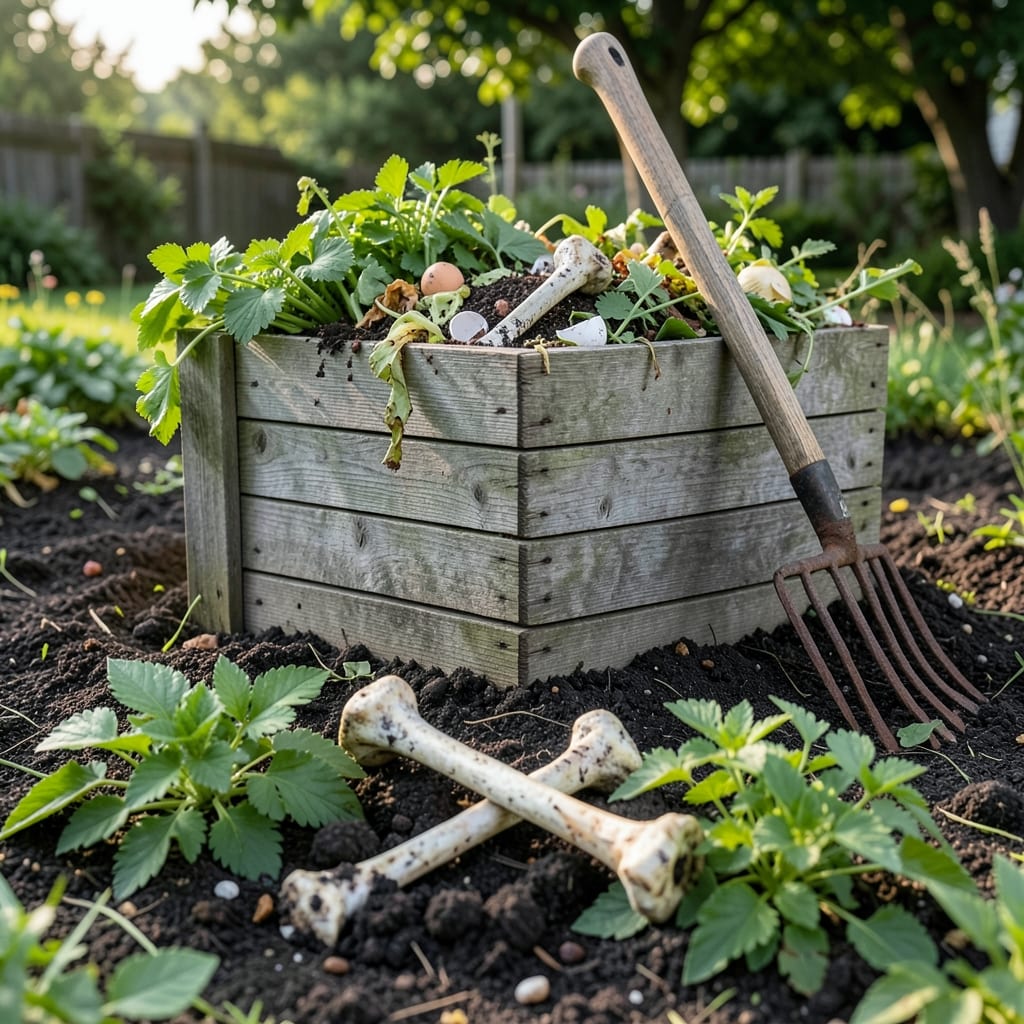
Chicken bones can decompose in compost but take 6 months to several years. They add calcium and phosphorus but may attract pests if not buried deep or crushed into small pieces.
I’ve learned that smaller bone pieces break down faster due to increased surface area for microbes to work on. 🔥 The nutrients they release are excellent for plant growth, but proper preparation prevents unwanted visitors. In my experience, burying them 12 inches deep in a well-managed pile significantly reduces pest issues.
💡 In This Article
The process begins with microbial action. Bacteria and fungi in your compost pile secrete enzymes that gradually dissolve the collagen and minerals in bones. This biological breakdown is slow because bones are dense, containing about 30% organic matter (mostly protein) and 70% minerals like calcium phosphate.
The microbes need time to penetrate the hard structure and access the nutrients inside. 🔥
Temperature and moisture are key factors in decomposition speed. In a well-managed compost pile maintained at 130-160°F, bones may break down in 6-12 months if crushed into small pieces. Cooler piles (below 110°F) can take 2-5 years or more.
Moisture levels of 40-60% (like a damp sponge) optimize microbial activity, while dry conditions halt the process entirely. ✨
Size dramatically affects the timeline. A whole chicken femur might take 5+ years to fully decompose, while the same bone crushed to 1-inch pieces could break down in 1-2 years. The increased surface area gives microbes more entry points. I’ve found that running bones through a meat grinder first accelerates this significantly. 💫
The nutrients released are valuable for your garden. Bones contribute calcium (for cell wall strength), phosphorus (for root development), and trace minerals. Unlike green materials that decompose quickly, bones act as a slow-release fertilizer, feeding your plants over an extended period. This is why they’re sometimes called “nature’s time capsules” in composting circles. ⚡
What most people don’t realize is that the pH of your compost affects bone decomposition. Slightly acidic conditions (pH 6-7) help dissolve the mineral components faster. Adding fruit scraps or coffee grounds can help maintain this optimal pH range while also providing additional organic material for the microbes to process alongside the bones. 🌟
Small, crushed pieces may decompose in 6-12 months in an active pile, while whole bones can take 2-5 years or longer. Temperature and moisture levels significantly affect the timeline.
They slowly release calcium for plant cell walls and phosphorus for root development. These minerals act as a long-term fertilizer, benefiting your garden over time.
Yes, if not prepared properly. Always bury them 12 inches deep and crush into small pieces. Boiling for 10-15 minutes first removes odors that attract rodents.
Avoid this as sauces can introduce unwanted fats or pathogens. Stick to plain, raw bones and pre-process them by boiling to remove any remaining meat or grease.