
Beautiful Plants For Your Interior
Beautiful Plants For Your Interior
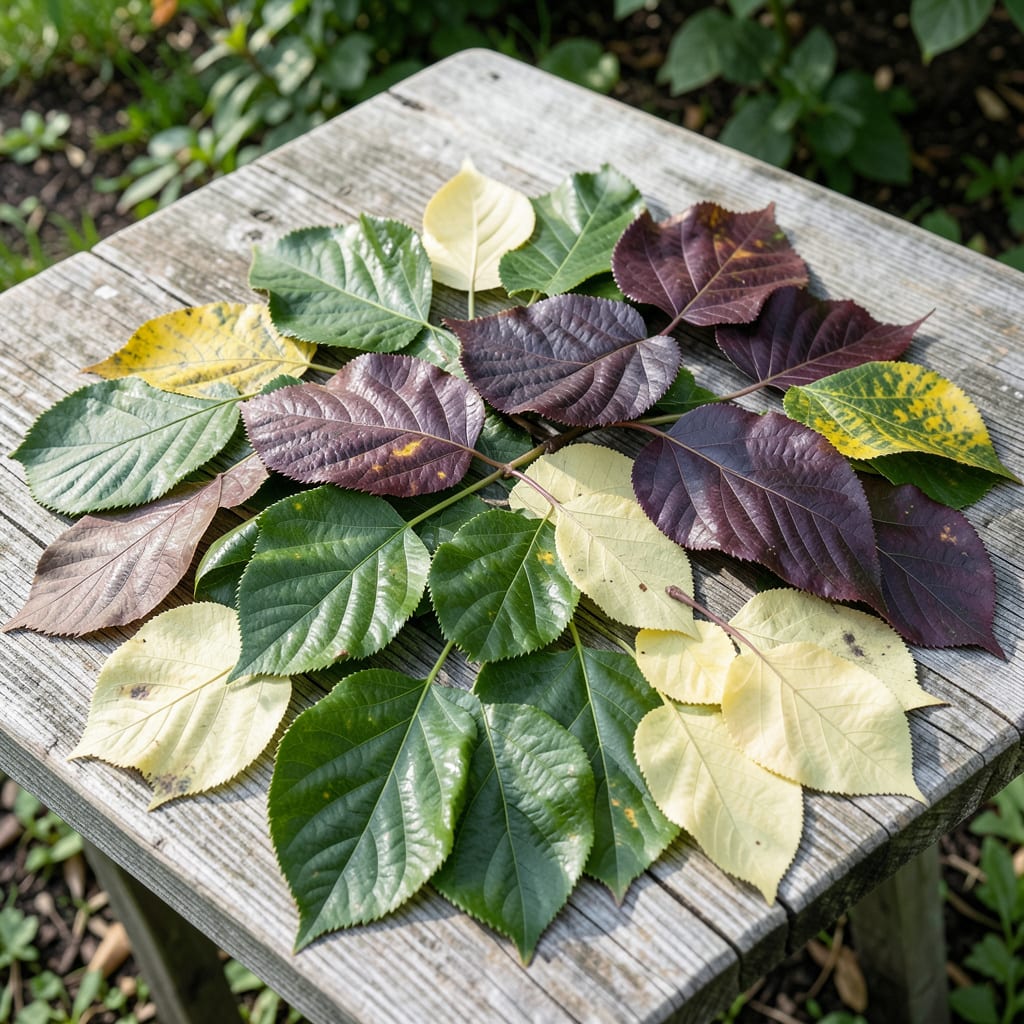
My cherry tree’s leaves turned yellow overnight last summer. I panicked until I realized it wasn’t a death sentence—just the tree telling me something was off.
Most leaf problems aren’t mysterious. Spotted, curled, or dropping leaves usually point to pests, disease, or stress. The good news? Fixable solutions exist for nearly every issue.
📚 In This Guide
Here’s the method I use to quickly identify and treat leaf issues before they spread.
Start by inspecting the upper and lower leaf surfaces for discoloration patterns. Yellowing between veins often signals iron deficiency, while uniform yellowing suggests nitrogen shortage. I look for purple or reddish tints too—these frequently indicate phosphorus deficiency in cherry trees.
Check for mottling or mosaic patterns, which are classic symptoms of viral infections. Leaf curl or distortion usually points to aphid damage or herbicide drift. I’ve found that early morning inspections reveal the most accurate leaf color, as afternoon heat can temporarily mask some symptoms.
Look for holes, tears, or chewed edges that indicate pest activity. Tiny holes often come from beetles, while ragged edges suggest caterpillar damage. I pay special attention to the leaf margins—brown, crispy edges usually mean underwatering or salt burn from fertilizers.
Check for sticky residue on leaves, which is honeydew from aphids or scale insects. Black sooty mold growing on this residue confirms a pest infestation. Also examine for leaf spots—circular brown spots with yellow halos typically indicate fungal diseases like leaf spot or anthracnose.
Run your fingers over the leaf surfaces to detect abnormalities. Powdery or dusty coatings usually indicate powdery mildew, a common fungal issue in cherry trees. Sticky or shiny surfaces often mean aphid infestation or bacterial ooze from fire blight.
Look for blisters or pustules on the undersides of leaves—these are signs of rust diseases. I’ve learned that gentle leaf rubbing can reveal downy mildew, which produces a downy or fuzzy growth on the lower leaf surface. Any unusual texture changes warrant closer investigation.
Note how leaves are attached to the tree. Wilted leaves that remain attached often indicate verticillium wilt. Premature leaf drop can signal environmental stress, pest damage, or disease. I check if leaves are dropping from specific branches or uniformly across the tree.
Look for leaves that hang limply or appear scorched—these are classic signs of heat stress or sunburn. Also examine the leaf stems (petioles) for swelling or discoloration, which can indicate bacterial infections. The pattern of leaf drop often reveals the underlying cause more clearly than the leaves themselves.
Factor in recent weather conditions. Prolonged wet periods often precede fungal infections, while drought stress manifests as wilting or leaf scorch. I’ve noticed that cherry trees frequently show leaf problems 2-3 weeks after major weather changes.
Consider the tree’s location and recent care. Over-fertilization can cause leaf burn, while under-fertilization leads to pale, undersized leaves. Check for recent herbicide applications in the vicinity, as drift can cause distinctive leaf distortion. Seasonal patterns often provide the final clue in diagnosing persistent leaf problems.
Small details make the difference between a quick fix and a spreading problem.
Inspection Timing: I always conduct leaf examinations in the early morning as mentioned in Step 1. The cooler temperatures and morning light reveal the most accurate color patterns—afternoon heat can temporarily mask symptoms like yellowing or purple tints, leading to misdiagnosis.
Texture Detection Method: In Step 3, when assessing leaf surfaces, use the gentle rubbing technique I described. This is particularly effective for identifying downy mildew, which often goes unnoticed until it’s too late. The fuzzy growth on the underside is a dead giveaway for this specific fungal issue.
Pattern Recognition: Pay special attention to the leaf drop patterns mentioned in Step 4. Uniform leaf drop across the entire tree typically indicates environmental stress, while drop concentrated on specific branches often points to localized pest infestations or disease. This distinction can save you from treating the wrong problem.
Seasonal Correlation: Remember the 2-3 week delay I noted in Step 5 between weather changes and visible leaf problems. If your area recently experienced heavy rains or drought, start monitoring your cherry tree closely after this timeframe—fungal infections and stress symptoms often appear with this exact delay.
Yellowing leaves often signal nutrient deficiencies (like nitrogen or iron) or overwatering. Check soil moisture and fertilizer levels. If the issue persists, test soil pH—cherry trees prefer slightly acidic (6.0–6.8) conditions.
Brown spots may indicate fungal diseases like leaf spot or bacterial infections. Prune affected leaves, improve air circulation, and apply a copper-based fungicide. Avoid overhead watering to prevent further spread.
Act at the first sign of trouble! Early spring or fall is ideal for preventive treatments (e.g., fungicides). For active infections, treat immediately and reapply as directed on the product label.
Yes! Neem oil is a natural fungicide and insecticide for issues like powdery mildew or aphids. Mix with water and spray weekly until symptoms improve. Always test on a small area first to avoid leaf burn.
