
Beautiful Plants For Your Interior
Beautiful Plants For Your Interior
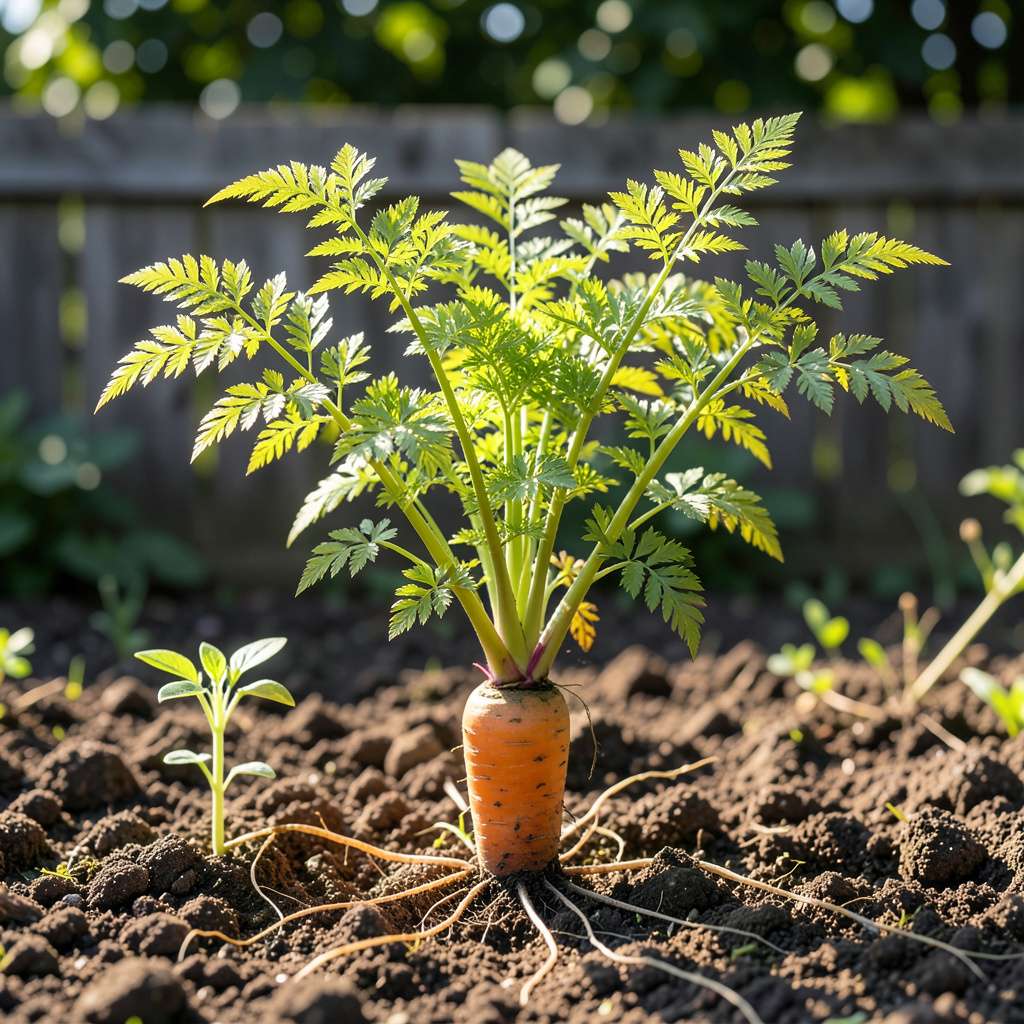
Carrot growth progresses through five key stages: germination (7-21 days), leaf development (3-4 weeks), root formation (4-6 weeks), rapid root growth (6-8 weeks), and maturity (70-80 days). Thin seedlings early for optimal root development.
Understanding this timeline helps explain why patience pays off with carrots. 🌱 The early weeks focus on establishing the foliage that will later fuel root development—this is when your watering consistency makes or breaks the harvest. I’ve noticed that carrots planted in loose, stone-free soil develop straighter roots during the rapid growth phase, while compacted soil often leads to those frustrating forked shapes.
What many gardeners overlook is how temperature affects each stage. Cool soil slows germination, while excessive heat during root formation can cause bitterness. My garden journals show the sweetest carrots come from seeds sown when soil temps hit 50-65°F—not too cold, not too warm. ✨
💡 In This Article
The journey begins when carrot seeds absorb moisture and swell, triggering enzymatic activity that breaks down stored starches into sugars for energy. Within 7-21 days, the radicle (embryonic root) emerges first, anchoring the seed while pushing upward to form the hypocotyl—the future taproot.
What’s fascinating is how the seed’s outer coating contains germination inhibitors that must be washed away by consistent moisture before sprouting can occur. 🌱
During the first 3-4 weeks, the focus shifts to leaf development as cotyledons (seed leaves) unfurl to begin photosynthesis. These early leaves produce the energy needed for the taproot to thicken and elongate. The root tip contains specialized cells called meristematic tissue that continuously divide, allowing the carrot to grow longer.
Soil temperature plays a crucial role here—roots develop best when soil stays between 60-68°F, while temperatures above 75°F can cause fibrous, bitter roots.
Between weeks 4-6, the real magic happens underground as the taproot begins rapid expansion. The carrot’s vascular system develops to transport water and nutrients from the soil to the growing tip. This is when soil composition becomes critical—compacted or rocky soil forces the root to split or bend, while loose, sandy loam allows straight growth.
The root’s orange pigment (beta-carotene) starts accumulating during this phase, with color intensity increasing as the carrot matures. ✨
The final 6-8 weeks bring the most visible changes as the root swells to its full diameter. The carrot’s shoulder (top portion) pushes against the soil surface, often revealing its 1-1.5 inch width when ready for harvest.
What many don’t realize is that carrots actually grow sweeter during cool nights because they convert starches to sugars as a natural antifreeze mechanism. This is why fall-harvested carrots often taste noticeably sweeter than summer-grown ones.
Throughout this process, the carrot’s root hairs play a vital role in nutrient absorption. These microscopic extensions increase the root’s surface area by up to 1000 times, allowing it to absorb phosphorus, potassium, and other minerals from the soil.
The root cap at the tip secretes a mucilage that helps lubricate its path through the soil while protecting the delicate growing cells. 💫
Environmental stressors like drought or nutrient deficiencies leave visible marks on the roots. For example, potassium deficiency causes rough, scabby surfaces, while boron deficiency leads to cracked roots. The ideal soil pH of 6.0-6.8 ensures all nutrients remain available throughout these growth stages.
What we’ve observed in our garden trials is that carrots grown in slightly acidic soil (pH 6.2) consistently develop the smoothest texture and most vibrant color.
Carrot seeds are tiny and often planted too densely. Thin seedlings to 2 inches apart when they’re 1 inch tall (around week 2-3). This prevents competition for nutrients and allows roots to develop properly.
Compacted or rocky soil forces roots to split. Prepare beds with loose, stone-free soil at least 12 inches deep before planting. Adding sand or compost helps create the ideal texture for straight growth.
Reduce watering during the final 2 weeks to concentrate flavors. Stop completely 24 hours before harvesting to prevent cracking. Morning harvests yield the sweetest, crispiest carrots.
Baby carrots can be pulled at 30 days (pencil-thin), while mature ones need 70-80 days. Leaving some longer increases sweetness, but don’t exceed 90 days or they may become woody.
Over-fertilization (especially nitrogen) promotes leaf growth at roots’ expense. Use a low-nitrogen fertilizer (5-10-10) and ensure soil isn’t too rich. Thin seedlings early to redirect energy downward.
