
Beautiful Plants For Your Interior
Beautiful Plants For Your Interior
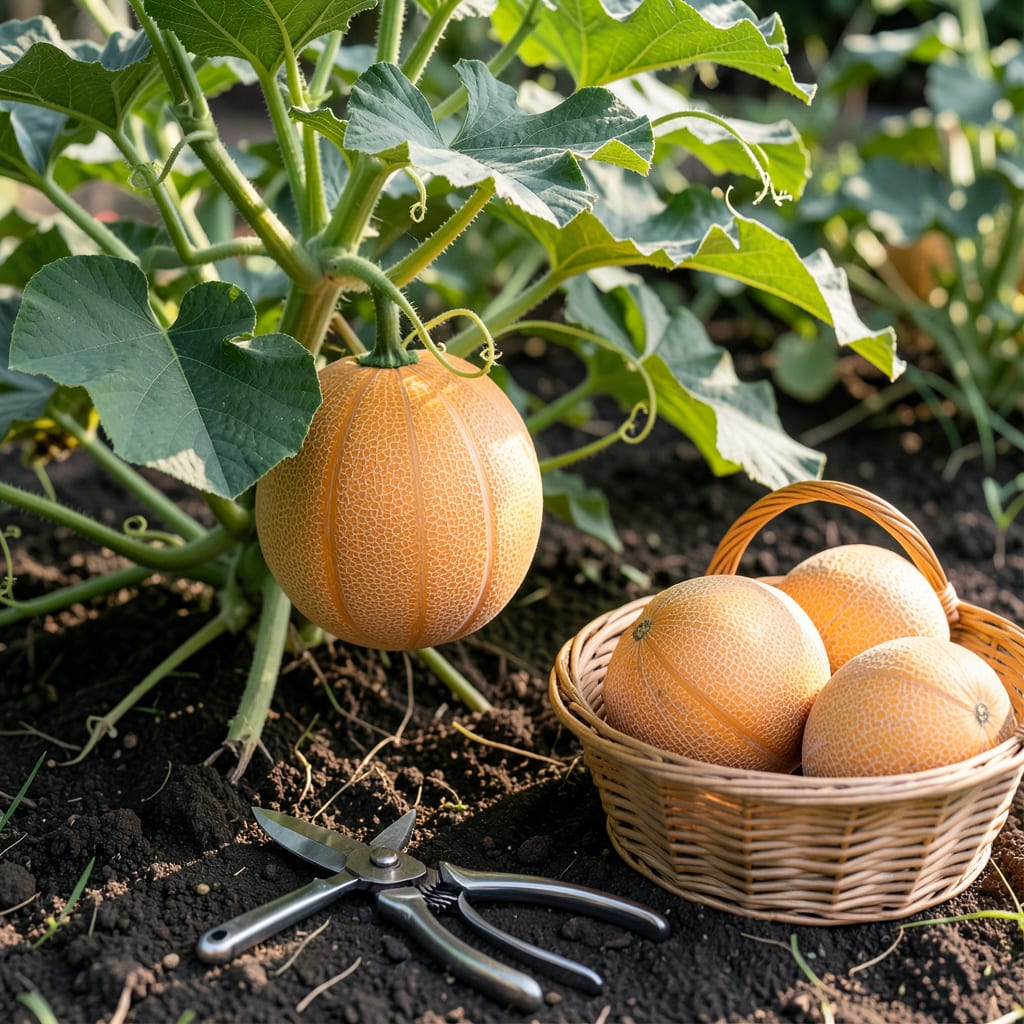
Nothing beats the taste of a homegrown 🍈 Cantaloupe, but timing is everything. Picking too early or late can ruin that perfect sweetness you crave.
I’ll show you the exact timeline and signs to watch for. With 75-85 days from planting to harvest, you’ll know precisely when your melons are ready to enjoy.


Growing cantaloupes at home is rewarding, but timing your harvest is crucial. Most varieties take 75-85 days from planting to reach full maturity, though this can vary slightly by climate and care.
I’ve found that tracking the growth stages helps predict harvest time. From seed germination to vine development, each phase brings you closer to those sweet, juicy melons. ☀️
| Stage | Days | Key Development |
|---|---|---|
| Germination | 5-10 days | Seeds sprout with first true leaves |
| Vine Growth | 20-30 days | Vines elongate and spread rapidly |
| Flowering | 35-45 days | Yellow flowers appear, pollination begins |
| Fruit Set | 45-55 days | Small melons form after successful pollination |
| Maturation | 75-85 days | Full size and ripeness achieved |
The first true leaves appear quickly, usually within 5-10 days of planting. This is your sign that the seeds have successfully germinated and are ready to grow.
By 20-30 days, the vines begin to stretch and spread. I recommend providing trellis support at this stage to keep the plants healthy and improve air circulation.
At 35-45 days, you’ll see the first yellow flowers. These are critical for pollination, so I avoid using pesticides that might harm bees during this period.
Once pollination occurs, small melons form around 45-55 days. This is an exciting phase, but patience is key—they still need time to grow and sweeten.
Finally, at 75-85 days, your cantaloupes should reach full maturity. Look for the stem to slip easily from the vine, a sure sign they’re ready to pick. 🌱
Remember, these are general guidelines. Factors like soil temperature, watering consistency, and sunlight exposure can all influence the exact timeline.
In my experience, well-draining soil and full sun help cantaloupes reach maturity faster. If your plants are lagging, check these conditions first.
Timing your cantaloupe harvest perfectly ensures maximum sweetness. I rely on four key tests to confirm ripeness: stem slip, color change, aroma, and the tap test.
Each method reveals different aspects of maturity. Combining them gives you the most accurate read on whether your melons are truly ready to come off the vine. 🌱
4 Ways to Test Cantaloupe Ripeness:
The stem slip test is my favorite indicator. When the melon separates cleanly from the vine with minimal effort, it’s at the perfect stage for picking.
Watch for the rind color to change from green to a cream or tan hue beneath the netting. This visual cue is often the first sign that harvest time is approaching.
A strong sweet aroma at the stem end is another reliable sign. If you can smell the cantaloupe’s sweetness before even cutting it, you know it’s ready to enjoy.
Finally, the tap test works well for confirmation. A ripe cantaloupe produces a hollow sound when tapped, while an unripe one sounds solid. ✂️
Remember, these tests work best together. I never rely on just one method, as environmental factors can sometimes create false positives. Always cross-check with multiple indicators.
Not all cantaloupe varieties follow the same timeline. While most take 75-85 days to mature, some finish faster or slower depending on their genetics and growing conditions.
I’ve tested several types in my garden, and the differences are noticeable. Short-season varieties can ripen in as little as 70 days, while larger heirlooms may need up to 100 days. 🌱
| Variety | Days to Harvest | Key Trait |
|---|---|---|
| Hale’s Best | 80-90 days | Classic flavor and large size |
| Athena | 75-85 days | Disease-resistant and consistent |
| Ambrosia | 85-95 days | Extra-sweet with fine netting |
| Minnesota Midget | 70-75 days | Cold-tolerant and compact |
Hale’s Best is a classic choice, but it needs 80-90 days to reach peak flavor. If you have a shorter growing season, Minnesota Midget matures in just 70-75 days.
Athena cantaloupes are reliable and disease-resistant, making them great for beginners. They typically ripen in 75-85 days, perfect for most climates.
For the sweetest melons, Ambrosia is my top pick, though it requires 85-95 days. The extra wait is worth it for that rich, honey-like flavor. ☀️
Picking too soon results in underripe fruit with little sweetness. The melons won’t continue ripening off the vine like some fruits do. Always wait for the stem to slip easily.
No reliable method exists to rush cantaloupe maturity. Provide optimal conditions: full sun, consistent watering, and warm soil. Patience is key for the best flavor.
Overripe melons often have soft spots, fermented smells, or split skins. The stem may detach too easily before the 75-85 day window. Harvest at first signs of readiness.
Cool temperatures or excessive rain can delay maturity by 1-2 weeks. Heat waves may speed it slightly. Monitor your plants closely during unusual weather patterns.
